


What makes a handbag collectible: key factors explained
BVPRIVE Editorial Team on 17th Mar 2026
What makes a handbag collectible: key factors explained
Many collectors assume rarity or brand prestige alone determines whether a handbag becomes truly collectible. The reality is far more nuanced. True collectibility emerges from a sophisticated interplay of condition, design heritage, market demand, and material quality. Understanding these factors separates casual buyers from strategic collectors who build portfolios that appreciate over time. This guide unpacks the essential attributes that define luxury handbag collectibility, helping you make informed acquisition decisions that balance passion with investment potential. Whether you’re expanding an existing collection or making your first significant purchase, these insights will sharpen your evaluation skills.
Table of Contents
- Understanding The Foundational Factors That Make A Handbag Collectible
- How Condition, Color, And Size Influence Handbag Value And Desirability
- The Role Of Rarity, Limited Editions, And Personalization In Collectibility
- Investment Outlook And Practical Tips For Collectors In 2026
- Explore Exclusive Luxury Handbags And Expert Guidance At Bvprive
- Frequently Asked Questions About Collectible Handbags
Key takeaways
| Point | Details |
|---|---|
| Hermès models dominate | Birkin and Kelly bags consistently command the strongest resale values in the luxury market. |
| Condition is critical | Pristine bags can fetch 2 to 3 times retail value, while visible wear reduces value by 30% or more. |
| Classic colors win | Neutral shades like Black, Gold, and signature pinks outperform trendy colors in long-term desirability. |
| Rarity requires context | Production scarcity and exotic materials drive premiums, but personalization significantly lowers resale potential. |
| Strong investment class | Luxury handbags appreciated 85% over the past decade, outperforming many alternative asset classes. |
Understanding the foundational factors that make a handbag collectible
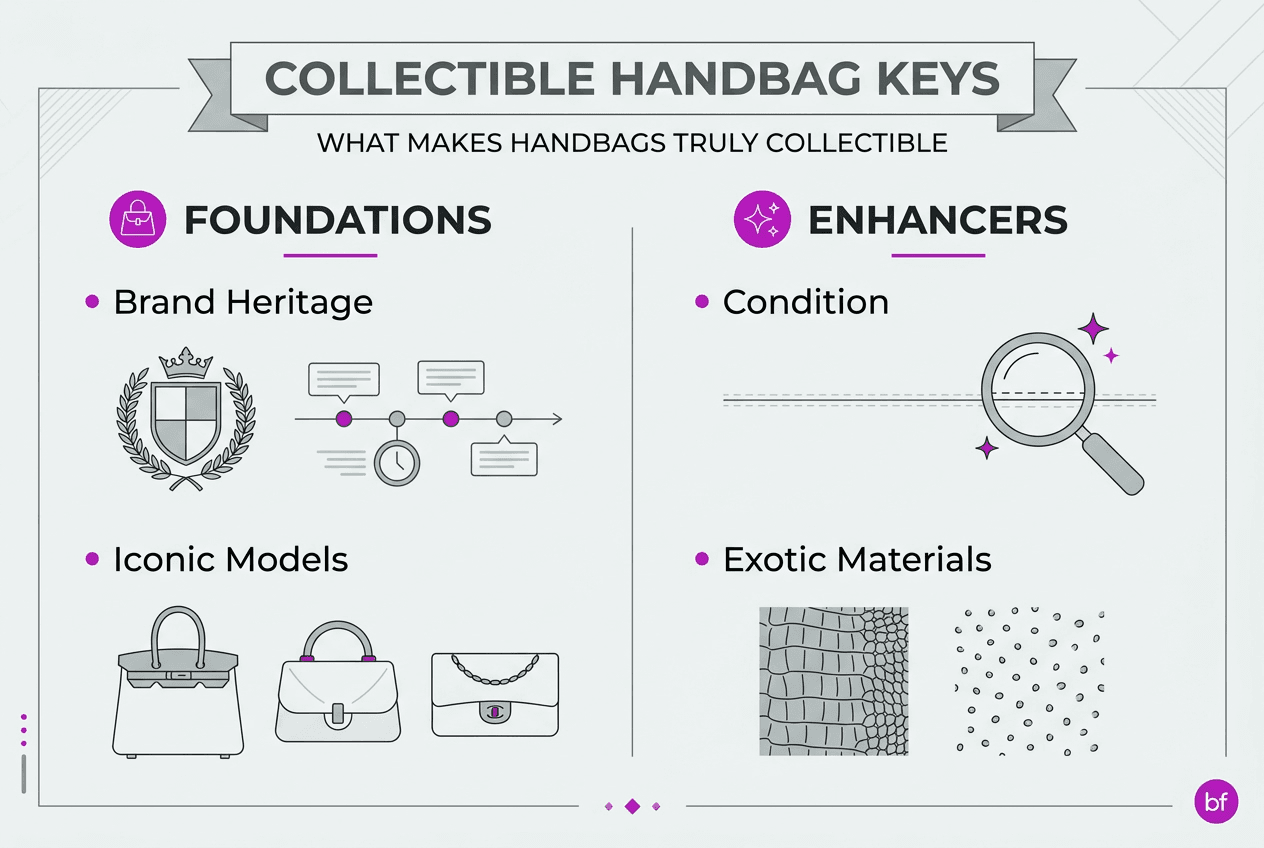
Iconic models establish the benchmark for what collectors pursue. The Hermès Birkin and Kelly bags represent the gold standard, recognized globally as symbols of elegance and exceptional craftsmanship. These pieces maintain their status because they embody decades of artisanal tradition, where each bag requires 18 to 24 hours of meticulous handwork by a single craftsman. This level of dedication creates an emotional and financial value that transcends fashion cycles.
Brand heritage matters profoundly in collectibility. Houses like Hermès, Chanel, and Louis Vuitton carry centuries of craftsmanship legacy that newer luxury brands cannot replicate overnight. Collectors gravitate toward brands with documented histories of quality control, innovative design, and cultural significance. When you acquire a piece from an established maison, you’re buying into a narrative that has been refined across generations. This heritage translates directly into market confidence and resale stability.
Classic timeless designs consistently outperform trend-driven pieces in value retention. While seasonal collections generate excitement, they often lose appeal as fashion preferences shift. A black Chanel 2.55 flap bag or a gold Birkin 30 remains desirable regardless of current runway trends. These designs have proven their staying power through decades of consistent demand, making them safer choices for collectors prioritizing long-term appreciation over momentary novelty.
Authenticity verification and material quality reinforce both value and demand. Genuine exotic leathers like crocodile, alligator, and ostrich command significant premiums because of their rarity and the specialized skills required to work with them. Collectors must ensure proper authentication, as counterfeit markets have become increasingly sophisticated. Reputable platforms and authentication services provide the documentation necessary to protect your investment and facilitate future resale.
Pro Tip: Prioritize models with established global collector demand rather than regional favorites. Bags that sell well across multiple markets provide greater liquidity and price stability when you decide to sell or trade.
- Focus on brands with multi-generational craftsmanship histories
- Verify authenticity through certified experts before purchase
- Choose classic silhouettes over seasonal trend pieces
- Invest in quality materials that age gracefully
- Research auction results to understand current market preferences
How condition, color, and size influence handbag value and desirability
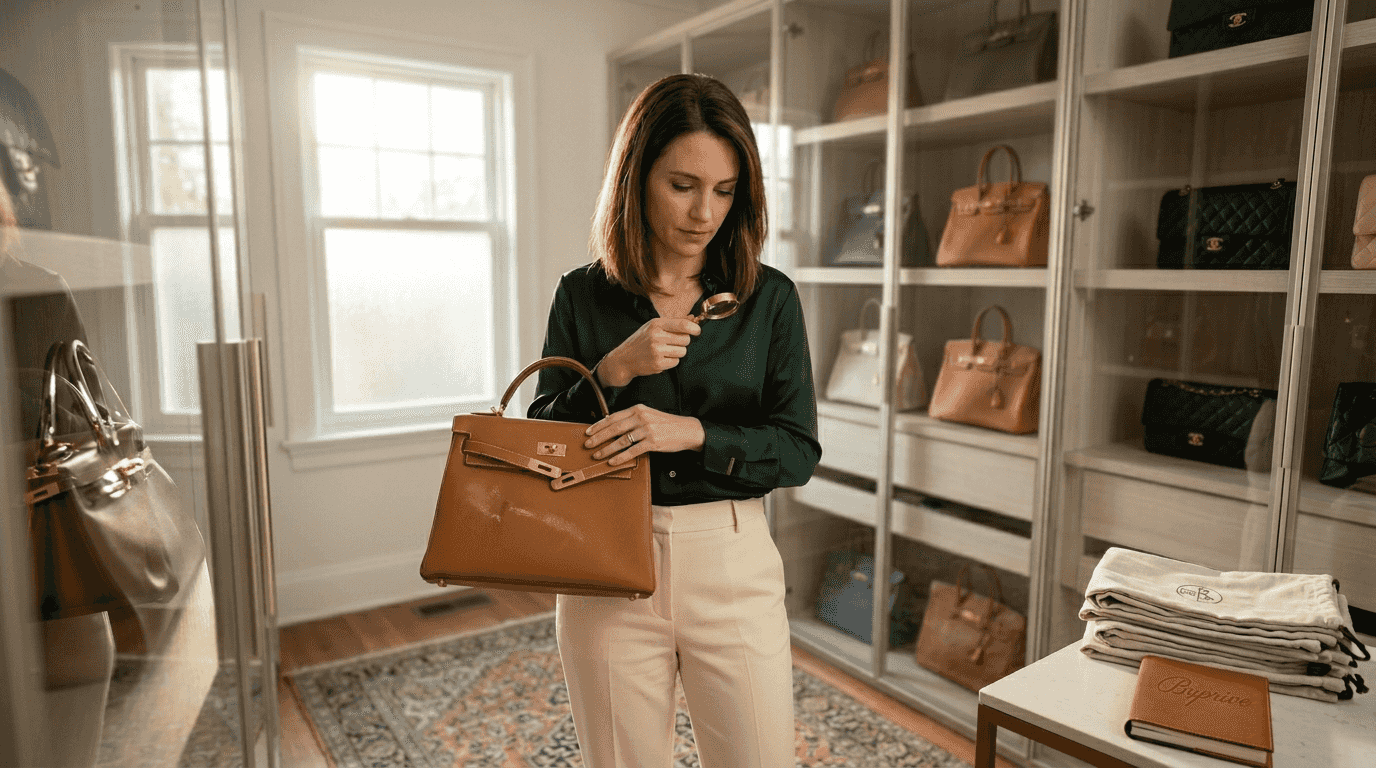
Condition represents perhaps the single most influential factor in determining a bag’s market value. Pristine condition handbags can command 2 to 3 times their original retail price, while bags showing significant wear may lose 30% or more of their value. Collectors scrutinize every detail: hardware scratches, corner wear, handle darkening, and interior staining all impact appraisal. Store-fresh bags with original packaging, receipts, and protective materials achieve the highest premiums because they offer new-like ownership experiences.
Color selection dramatically affects both immediate desirability and long-term value retention. Neutral shades consistently outperform bold or seasonal colors in the secondary market. Black remains the most universally desired color, followed closely by Gold, Etoupe, and signature Hermès pinks like Rose Sakura. These colors complement diverse wardrobes and appeal to broader buyer pools. Dark colors also maintain their appearance better over time, showing less visible wear and simplifying authentication processes for future buyers.
| Color Category | Market Demand | Value Retention | Versatility |
|---|---|---|---|
| Neutrals (Black, Gold, Etoupe) | Highest | Excellent | Maximum |
| Signature Pinks (Rose Sakura, Rose Confetti) | Very High | Very Good | High |
| Bold Colors (Blue Electric, Rouge Casaque) | Moderate | Good | Moderate |
| Seasonal Trends | Variable | Fair | Limited |
Size considerations play a crucial role in collectibility and pricing. Smaller sizes often command highest prices in the secondary market, with Mini Kelly 20 II and Birkin 25 models achieving remarkable premiums. This counterintuitive pricing reflects both production scarcity and contemporary lifestyle preferences. Smaller bags require similar craftsmanship hours as larger versions but use less material, making them rarer in production allocation. Additionally, modern collectors often prefer compact sizes that transition easily from day to evening wear.
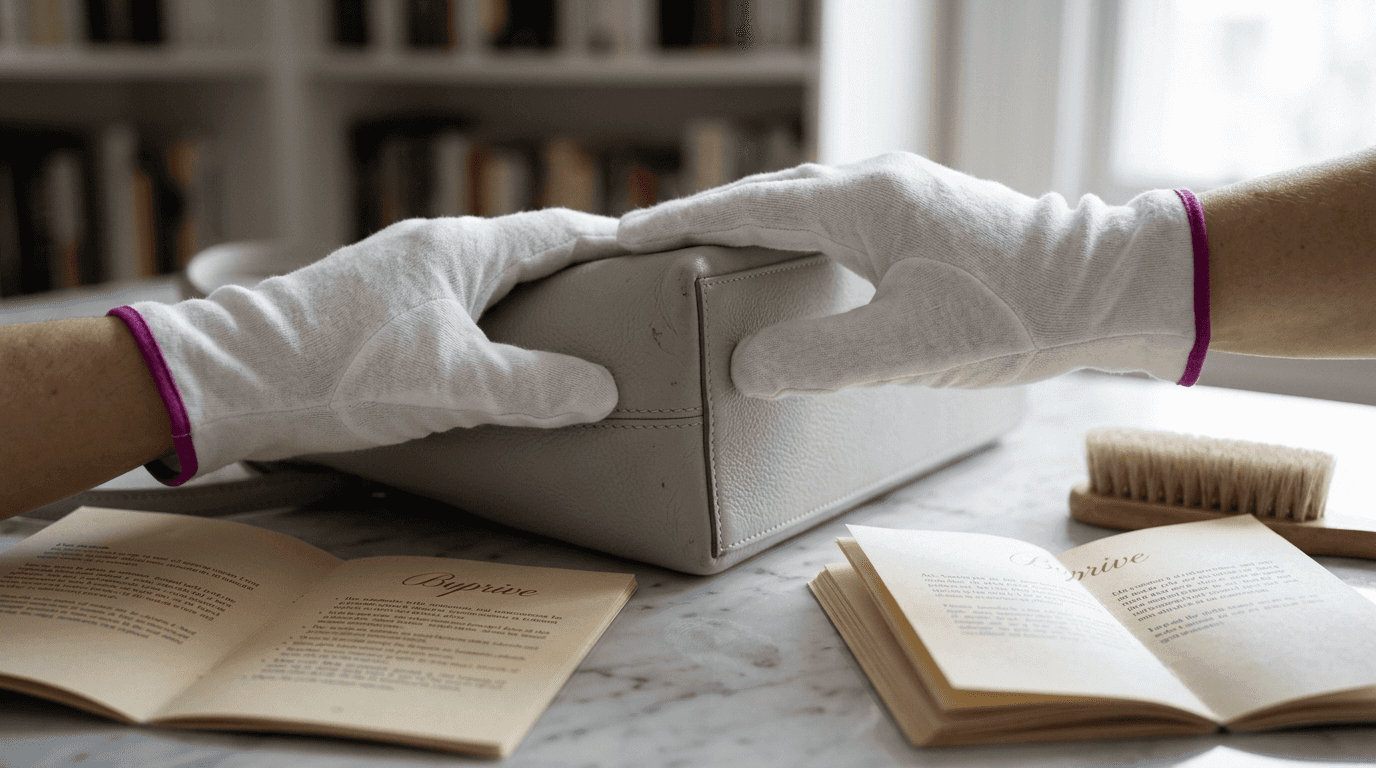
Proper storage and maintenance directly impact long-term value preservation. Store bags in dust covers within climate-controlled environments, avoiding direct sunlight and humidity extremes. Stuff bags with acid-free tissue to maintain shape, and rotate display pieces to prevent permanent creasing. Regular professional cleaning for delicate materials ensures your investment remains pristine. These care practices protect both aesthetic appeal and structural integrity.
Pro Tip: When acquiring pre-owned bags, request detailed condition reports with close-up photographs of hardware, corners, handles, and interior. Minor imperfections that are documented upfront prevent disputes and help you negotiate fair pricing.
- Prioritize bags with original packaging and authentication cards
- Choose colors that complement multiple wardrobe styles
- Consider smaller sizes for stronger appreciation potential
- Invest in professional cleaning and restoration when needed
- Document condition thoroughly with photographs for insurance and resale
The role of rarity, limited editions, and personalization in collectibility
True rarity stems from production scarcity, unique collaborations, or extraordinary materials rather than limited edition labels alone. Classic editions often outperform limited editions in resale value unless the limited piece generates exceptional demand through celebrity association or cultural significance. A standard black Birkin 30 in Togo leather may appreciate more consistently than a limited edition piece in an unconventional color or material that appeals to a narrower collector base.
Exotic materials represent genuine rarity that commands substantial premiums. Crocodile, alligator, and ostrich leathers require specialized sourcing and craftsmanship skills that few artisans possess. These materials age beautifully, developing unique patinas that enhance rather than diminish value. A Birkin in Porosus crocodile can sell for five to ten times the price of a standard leather version, reflecting both material costs and the heightened expertise required for flawless execution.
Limited edition collaborations achieve exceptional value when they combine prestigious brand partnerships with cultural relevance. Christie’s set a world auction record with a unique Chanel piece, demonstrating how provenance and scarcity intersect to create extraordinary valuations. However, these outcomes remain exceptions rather than rules. Most limited editions appreciate modestly unless they capture significant collector attention through design innovation or celebrity ownership.
| Factor | Classic Editions | Limited Editions |
|---|---|---|
| Resale Value Stability | Very High | Variable |
| Market Demand Breadth | Broad | Narrow to Moderate |
| Authentication Complexity | Standard | Higher |
| Appreciation Predictability | Consistent | Unpredictable |
Personalization and monogramming significantly reduce resale value, typically by 40% to 60%, because they limit the potential buyer pool. Custom initials, special hardware, or unique color combinations reflect personal taste that rarely translates to broader market appeal. These modifications also complicate authentication processes, as authenticators must verify both the base item and the customization legitimacy. Collectors seeking maximum investment return should avoid personalization entirely, reserving such choices for pieces they intend to keep permanently.
Provenance can elevate certain rare Hermès bags to extraordinary valuations when documentation proves celebrity ownership or historical significance. Bags owned by style icons like Jane Birkin herself or featured in significant cultural moments achieve premiums that transcend typical market metrics. However, provenance must be thoroughly documented with photographs, receipts, or credible authentication to add value. Unverified claims provide no market advantage.
- Exotic leathers offer genuine scarcity and premium appreciation
- Limited editions require exceptional demand to outperform classics
- Avoid personalization if you prioritize resale value
- Document provenance meticulously with credible evidence
- Research auction results for comparable limited pieces before purchasing
Investment outlook and practical tips for collectors in 2026
Luxury handbags remain robust appreciating assets with steady global demand. Handbags showed 85% appreciation over the past decade, outperforming many traditional alternative investments including wine, art, and classic cars. The Knight Frank Luxury Investment Index reported 2.8% growth in 2024, demonstrating resilience even during economic uncertainty. This performance reflects the dual nature of luxury handbags as both functional accessories and investment vehicles.
Market trends evolve continuously, requiring collectors to stay informed about emerging designers and key auction results. While established houses like Hermès and Chanel dominate, certain contemporary brands are building collectibility through limited production and innovative design. Track major auction houses like Sotheby’s, Christie’s, and Heritage Auctions to understand which pieces achieve remarkable results. These sales provide real-time market intelligence that guides acquisition strategies.
Luxury handbags uniquely combine personal enjoyment with financial appreciation, offering collectors tangible assets they can use and admire while building wealth. Unlike stocks or bonds, these pieces enhance daily life while serving as portfolio diversification.
Top five strategies for acquiring and preserving collectible handbags:
- Research thoroughly before purchasing by comparing prices across multiple platforms, reviewing recent auction results, and consulting authentication experts to ensure you pay fair market value.
- Prioritize condition and authenticity by purchasing from reputable dealers who provide comprehensive authentication documentation and detailed condition reports with professional photographs.
- Invest in proper storage solutions including climate-controlled environments, acid-free tissue stuffing, dust bags, and protective display cases that prevent UV damage and environmental deterioration.
- Maintain detailed records of purchase receipts, authentication certificates, professional cleaning services, and condition photographs to facilitate insurance claims and future resale transactions.
- Diversify your collection strategically across brands, models, and price points to balance high-appreciation potential pieces with stable classics that provide liquidity when needed.
Balancing passion with investment strategy creates the most rewarding collector experience. Acquire pieces you genuinely love and would enjoy owning long-term, even if market conditions shift. This approach prevents forced sales during downturns and allows you to appreciate your collection both aesthetically and financially. The most successful collectors view their handbags as long-term investments that enhance their lifestyle while building wealth gradually.
- Monitor auction results quarterly to track market trends
- Build relationships with reputable dealers for early access to exceptional pieces
- Consider insurance policies specifically designed for luxury collectibles
- Join collector communities to share insights and market intelligence
- Review your collection annually to identify underperforming pieces for strategic sales
Explore exclusive luxury handbags and expert guidance at BVPRIVE
Now that you understand what makes handbags truly collectible, discovering the right pieces for your portfolio becomes essential. BVPRIVE offers expertly curated luxury handbag collections featuring iconic and rare models from Hermès, Chanel, Louis Vuitton, and other prestigious houses. Each piece undergoes rigorous authentication and condition verification, ensuring you acquire genuine articles that meet the highest collectibility standards.
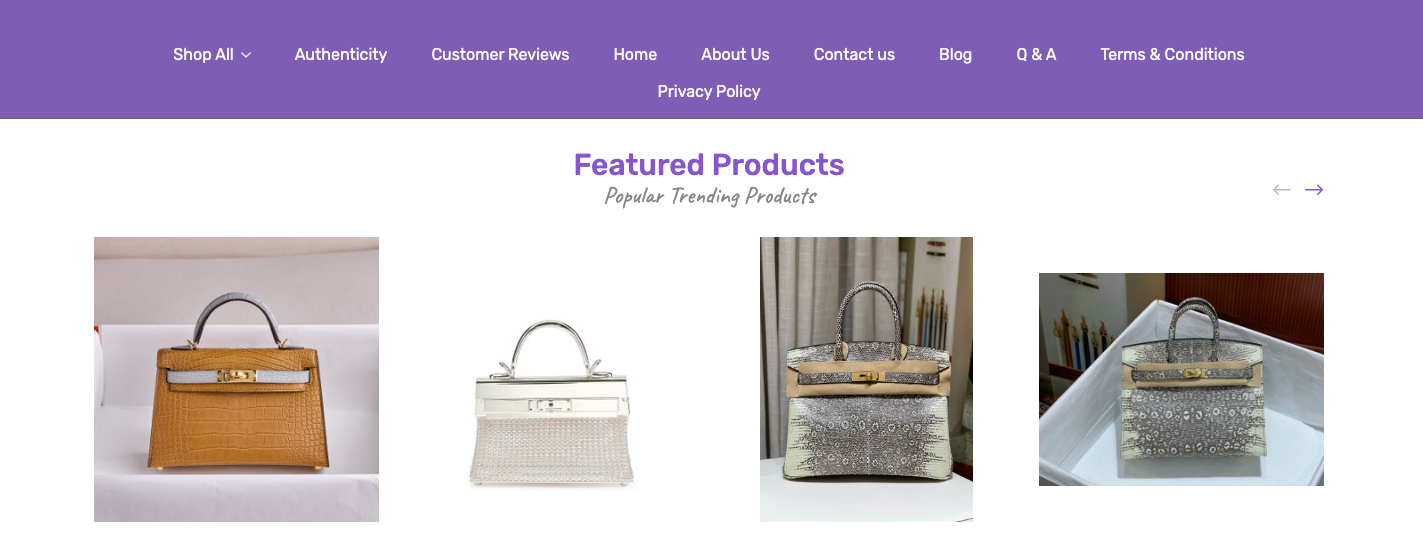
Benefit from market insights and personalized concierge services tailored specifically to affluent handbag enthusiasts. Whether you’re seeking a pristine Birkin in a coveted color or exploring emerging collectible pieces, BVPRIVE’s team provides the expertise and access that serious collectors require. Tax-free worldwide delivery and VIP shopping services ensure a seamless acquisition experience that matches the caliber of the pieces themselves.
Frequently asked questions about collectible handbags
Why do smaller Hermès bags often have higher resale value?
Smaller sizes like Mini Kelly 20 II and Birkin 25 require similar craftsmanship hours as larger versions but use less material, making them rarer in production allocation. Modern collectors also prefer compact sizes that transition easily between occasions, increasing demand relative to limited supply.
How does provenance enhance a handbag’s collectibility?
Documented celebrity ownership or historical significance can elevate a bag’s value substantially beyond typical market rates. Provenance must be thoroughly verified with photographs, receipts, or credible authentication to add genuine value, as unverified claims provide no market advantage.
Are limited editions always better investments than classic bags?
No, classic editions often outperform limited editions in resale value unless the limited piece generates exceptional demand through celebrity association or cultural significance. Standard models in neutral colors typically appreciate more consistently because they appeal to broader collector bases.
What care steps maintain a handbag’s resale value?
Store bags in dust covers within climate-controlled environments, avoiding direct sunlight and humidity. Stuff bags with acid-free tissue to maintain shape, rotate display pieces to prevent creasing, and invest in professional cleaning for delicate materials to preserve both appearance and structural integrity.
Does personalization ever add to a handbag’s market value?
Personalization typically reduces resale value by 40% to 60% because custom features limit the potential buyer pool to those who share similar taste. The only exception occurs when personalization connects to significant provenance, such as initials of a celebrity owner, but this remains extremely rare.