


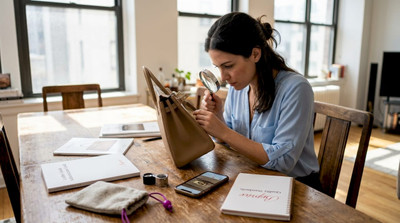
How to spot fake designer bags: expert guide 2026
BVPRIVE Editorial Team on 20th Mar 2026
How to spot fake designer bags: expert guide 2026
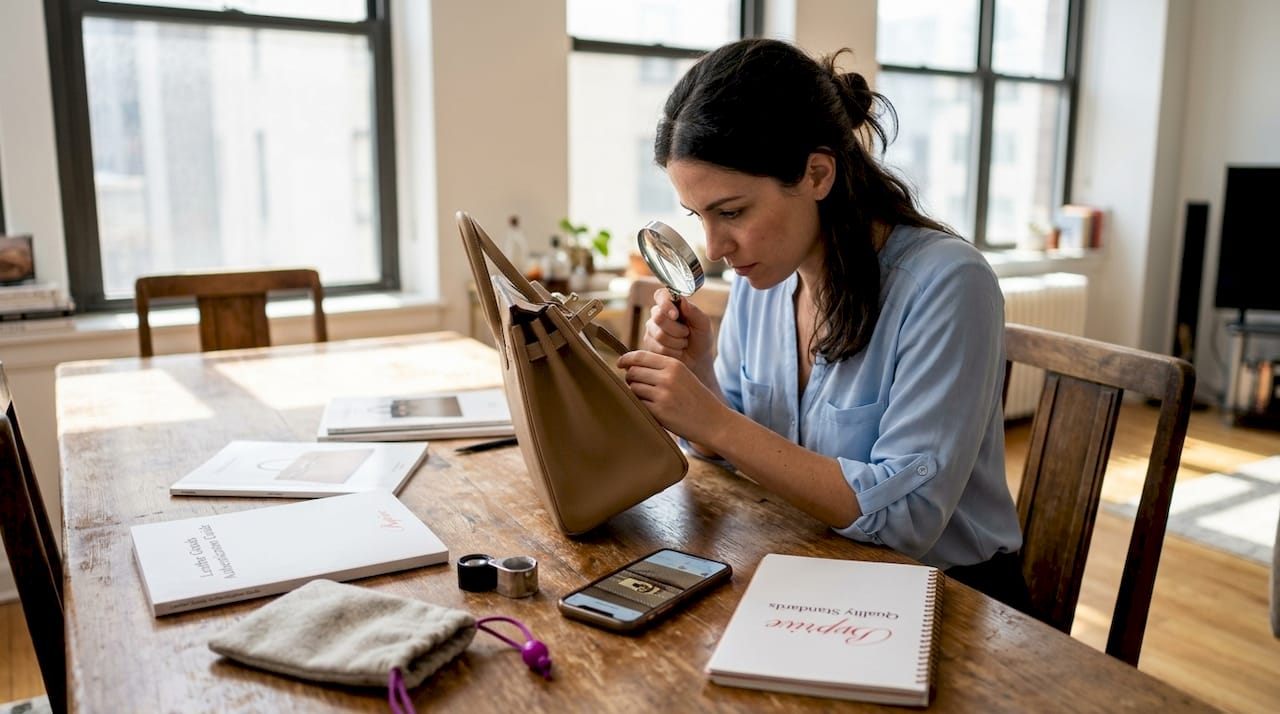
Spotting a fake designer bag can save you thousands of dollars and protect your reputation as a discerning collector. The luxury handbag market faces a growing counterfeit crisis, with sophisticated replicas flooding online marketplaces and even some brick-and-mortar stores. This comprehensive guide equips you with expert techniques to authenticate designer bags confidently, covering essential preparation steps, detailed inspection methods, common verification pitfalls, and final authentication strategies. Whether you’re purchasing your first luxury piece or expanding an established collection, these proven spotting techniques ensure every investment meets the highest standards of authenticity.
Table of Contents
- What You Need To Prepare Before Authenticating A Designer Bag
- Step-By-Step Guide To Spotting Fake Designer Bags
- Troubleshooting Common Mistakes And Verification Tips
- Benefits Of Authentic Designer Bags And Final Verification
- Discover Authentic Designer Bags At BVPRIVE
- FAQ
Key takeaways
| Point | Details |
|---|---|
| Authentication tools | Use magnifying glass, UV light, and loupe to examine stitching, hardware, and materials closely |
| Documentation matters | Original receipts, certificates, and brand cards provide crucial verification against counterfeit bags |
| Inspection checklist | Evaluate stitching quality, hardware engraving, leather texture, serial numbers, and packaging systematically |
| Common mistakes | Never rely solely on price or seller reputation as indicators of authenticity |
| Professional verification | Consult expert appraisers and trusted retailers to confirm authenticity before major purchases |
What you need to prepare before authenticating a designer bag
Successful authentication starts long before you examine the bag itself. Gathering the right tools and reference materials creates a foundation for accurate evaluation and helps you spot even the most convincing counterfeits.
Start with essential inspection tools. A quality magnifying glass reveals stitching inconsistencies invisible to the naked eye. UV lights expose fake holograms and security features that counterfeiters often miss. A jeweler’s loupe provides detailed views of hardware engravings and leather grain patterns. These tools transform your inspection from casual observation to forensic analysis.
Collect all available documentation before beginning your evaluation. Original purchase receipts establish provenance and purchase date. Authenticity certificates from the brand or authorized dealers provide official verification. Dust bags, care cards, and original packaging offer additional authentication clues through material quality and printing accuracy. Missing documentation doesn’t automatically indicate a fake, but it requires extra scrutiny during inspection.
Build a reference library of authentic examples for comparison. Study official brand websites, authorized retailer catalogs, and museum collections featuring your target brands. Photograph authenticated bags from multiple angles, focusing on hardware details, stitching patterns, and interior stamps. This visual database becomes invaluable when evaluating suspicious features. Following a step-by-step authentication guide ensures you use a checklist and certified documents systematically.
Create a standardized evaluation checklist tailored to your target brands. Include brand-specific details like Hermès blind stamps, Chanel hologram stickers, or Louis Vuitton date codes. Document hardware specifications, including screw types, zipper brands, and clasp mechanisms. List interior features such as lining materials, pocket configurations, and stamp locations. A consistent checklist prevents oversight and builds authentication confidence over time.
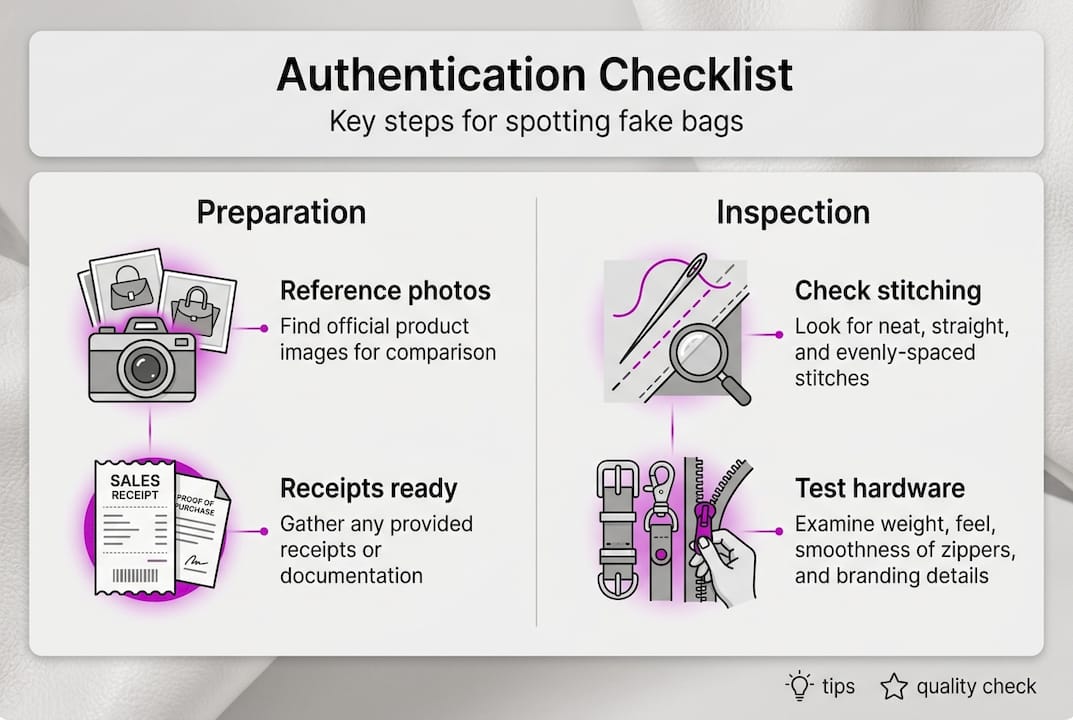
Pro Tip: Maintain a digital folder with high-resolution images of authenticated bags organized by brand, model, and year. Include close-ups of hardware, stamps, stitching, and unique features. This personalized reference library proves more valuable than generic online guides because it reflects the specific models and variations you encounter most frequently.
Essential authentication tools
| Tool | Purpose | Key Features |
|---|---|---|
| Magnifying glass | Examine stitching and stamps | 10x magnification minimum |
| UV light | Verify security features | Reveals hidden holograms |
| Jeweler’s loupe | Inspect hardware details | 20x magnification ideal |
| Digital scale | Check weight accuracy | Precision to 0.1 gram |
| Measuring tape | Verify dimensions | Flexible fabric type |
Step-by-step guide to spotting fake designer bags
Authentication requires systematic inspection of every component, from exterior materials to interior finishing. This methodical approach catches counterfeits that pass casual inspection but fail detailed scrutiny.
Begin with stitching analysis, the most reliable authenticity indicator. Genuine designer bags feature perfectly consistent stitch length, spacing, and tension throughout the entire piece. Count stitches per inch in multiple locations; authentic bags maintain exact counts even in curved or difficult areas. Examine thread quality under magnification. Luxury brands use specialized thread that resists fraying and maintains uniform thickness. Counterfeiters often use standard thread that shows irregularities under close inspection. Check stitch direction and angle; authentic bags follow precise geometric patterns that counterfeits rarely replicate accurately.
Inspect hardware with forensic attention to detail. Authentic luxury hardware feels substantial, with smooth edges and precise engravings. Test zipper operation; genuine YKK, Lampo, or brand-specific zippers glide effortlessly without catching. Examine screw heads for consistent slot depth and clean edges. Counterfeit screws often show rough finishing or incorrect head styles. Study brand engravings on clasps, buckles, and feet. Authentic engravings display crisp, even depth with perfect letter spacing. Fakes frequently show blurred edges, inconsistent depth, or incorrect fonts.
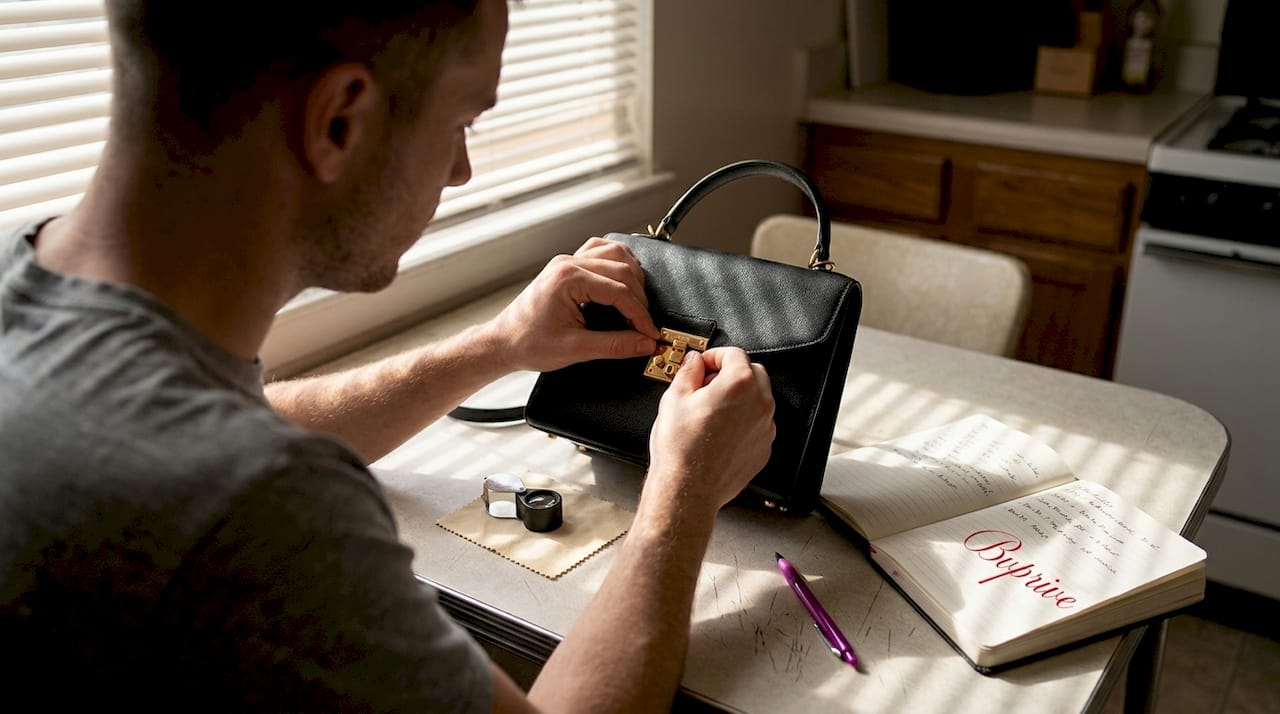
Evaluate material quality through touch and visual inspection. Authentic leather develops a natural patina and feels supple yet substantial. Press the leather gently; it should spring back immediately without creasing. Examine grain patterns under magnification. Genuine leather shows natural variation and pore structure, while fake leather displays repetitive, printed patterns. For canvas bags, check weave tightness and pattern alignment. Luxury brands align patterns precisely at seams, a detail counterfeiters struggle to replicate. Materials and construction quality separate authentic pieces from sophisticated fakes.
Verify identification features systematically. Locate and photograph serial numbers, date codes, or blind stamps. Cross-reference these codes with brand-specific databases or authentication services. Check hologram stickers under UV light; authentic holograms display multiple security layers and specific brand patterns. Examine interior stamps for correct font, spacing, and heat-press depth. Counterfeit stamps often appear too dark, too light, or use incorrect typefaces. Compare logo placement and size against verified examples. Even millimeter differences in logo positioning can indicate counterfeits.
Inspect packaging and accompanying materials with equal rigor. Dust bags should feature correct logo placement, quality fabric, and proper stitching. Authenticity cards must display correct hologram placement, card stock quality, and printing clarity. Care booklets should match current brand standards for paper quality and printing precision. Box construction, tissue paper quality, and ribbon materials all provide authentication clues. When purchasing remotely, request detailed photos of these elements before committing.
Pro Tip: Arrange side-by-side comparisons with verified authentic examples whenever possible. Visit authorized boutiques to examine current models, noting every detail from hardware weight to leather scent. This hands-on experience develops an intuitive sense for authenticity that photographs alone cannot provide.
Authentication inspection checklist
- Examine stitching consistency, thread quality, and stitch count across all areas
- Test hardware operation, weight, and engraving quality on all metal components
- Assess leather texture, grain pattern, and flexibility through touch and magnification
- Verify serial numbers, date codes, and stamps against brand databases
- Check hologram authenticity under UV light and compare security features
- Inspect packaging quality including dust bags, boxes, and documentation
- Compare overall proportions and dimensions against official specifications
- Document findings photographically for future reference or expert consultation
For additional guidance on authentication techniques, explore our resources on spotting rare designer bags and signs of genuine designer handbags.
Troubleshooting common mistakes and verification tips
Even experienced collectors fall victim to authentication errors that sophisticated counterfeiters exploit. Understanding these pitfalls and implementing robust verification practices protects your investment and reputation.
Never assume price guarantees authenticity. Counterfeiters increasingly price fakes near retail value to create legitimacy illusions. A $5,000 asking price doesn’t validate a $6,000 retail bag. Similarly, avoid the opposite assumption that deeply discounted bags must be fake. Estate sales, divorces, and urgent financial needs create legitimate opportunities for below-market purchases. Evaluate every bag on its physical merits, not its price point.
Question seller reputation critically, regardless of platform or storefront. Established sellers occasionally receive counterfeit inventory unknowingly, especially when accepting consignment pieces. Online ratings and positive reviews don’t guarantee authentication expertise. Even luxury consignment shops have sold counterfeits after inadequate inspection. Request detailed authentication credentials and ask specific questions about their verification process. Legitimate sellers welcome scrutiny and provide comprehensive answers.
Beware of overly perfect details that suggest digital reproduction rather than handcrafted authenticity. Luxury bags display subtle imperfections from hand assembly, including minor variations in stitching tension or slight asymmetries in hand-painted edges. Logos that appear flawlessly centered with mathematically perfect spacing often indicate laser-cut counterfeits. Examine hardware for tiny casting marks or polishing variations that confirm metal casting rather than stamping. Perfection paradoxically suggests inauthenticity in handcrafted luxury goods.
Always verify documentation against brand databases and authentication services. Major luxury houses maintain customer service departments that verify serial numbers and date codes. Provide clear photographs of all identification features and request official confirmation. Third-party authentication services like Entrupy, Real Authentication, or Authenticate First offer professional verification for reasonable fees. Certification cards and official documentation provide your strongest defense against sophisticated counterfeits.
When purchasing remotely, demand comprehensive photographic documentation before payment. Request images in natural lighting from multiple angles, including close-ups of hardware, stamps, stitching, and any wear patterns. Ask for video walkthroughs showing zipper operation and leather flexibility. Insist on return privileges with professional authentication contingencies. Reputable sellers accommodate these requests without hesitation.
Maintain healthy skepticism even with seemingly legitimate provenance. Counterfeiters forge receipts, authenticity cards, and even boutique shopping bags. Verify receipt details against store locations, date formats, and transaction number patterns. Check authenticity card holograms under UV light and compare against known genuine examples. Contact the issuing boutique directly to confirm transaction details when possible.
Certification cards are your strongest defense against counterfeits.
Red flags requiring immediate expert consultation
- Seller refuses detailed photographs or video documentation of specific features
- Documentation shows inconsistencies in fonts, logos, or hologram placement
- Hardware feels lightweight or shows rough finishing on edges and engravings
- Stitching displays irregular spacing, loose threads, or inconsistent tension
- Leather lacks natural grain variation or shows repetitive printed patterns
- Price significantly undercuts market value without clear explanation
- Seller pressures quick purchase decisions or discourages authentication services
Understanding the value of authentic designer bags reinforces why thorough verification matters for every purchase.
Benefits of authentic designer bags and final verification
Authentic designer bags deliver tangible financial and experiential advantages that justify rigorous authentication efforts. Understanding these benefits motivates thorough verification and informed purchasing decisions.
Genuine luxury handbags function as appreciating assets rather than depreciating accessories. Limited edition Hermès Birkins, classic Chanel flaps, and vintage Louis Vuitton trunks often sell for multiples of their original retail prices. Authentic designer bags retain over 80% of their purchase value even after years of use. This investment potential transforms luxury purchases from expenses into portfolio diversification. Counterfeit bags hold zero resale value and represent complete financial loss.
Authentic pieces offer superior craftsmanship that delivers decades of reliable use. Luxury brands employ master artisans who hand-assemble bags using techniques perfected over generations. Saddle-stitching by Hermès craftspeople creates seams stronger than the leather itself. Chanel’s signature quilting maintains its shape through proprietary construction methods. This exceptional quality means authentic bags withstand daily use while counterfeits deteriorate rapidly, requiring replacement within months.
Implement final verification steps before completing any significant purchase. Schedule professional appraisals with certified luxury goods experts who provide written authentication reports. These documents prove essential for insurance coverage and future resale. Major auction houses like Christie’s and Sotheby’s offer authentication services that carry industry-wide credibility. Independent authenticators with brand-specific expertise provide detailed analysis of questionable pieces.
Purchase exclusively from sources with robust authentication guarantees and return policies. Authorized brand boutiques offer absolute certainty but limited selection of vintage or discontinued models. Reputable luxury consignment platforms like The RealReal, Fashionphile, or Vestiaire Collective employ authentication teams and guarantee authenticity. Established auction houses authenticate all luxury lots before sale. These channels provide recourse if authentication questions arise post-purchase.
Document your authentication process comprehensively for future reference and resale. Photograph every detail during initial inspection, including date codes, hardware engravings, and stitching patterns. Retain all original documentation, receipts, and authentication certificates in a dedicated file. Create a digital record with purchase details, authentication notes, and condition reports. This documentation increases resale value and streamlines future authentication for subsequent buyers.
Authentic versus counterfeit comparison
| Feature | Authentic Designer Bag | Counterfeit Bag |
|---|---|---|
| Resale value | Retains 80%+ of purchase price | Zero resale value |
| Material quality | Premium leather with natural patina | Synthetic materials or low-grade leather |
| Craftsmanship | Hand-assembled by master artisans | Machine-produced with inconsistent quality |
| Hardware | Solid metal with precise engravings | Lightweight alloy with rough finishing |
| Longevity | Decades of reliable use | Deteriorates within months |
| Investment potential | Appreciates over time | Complete financial loss |
| Documentation | Complete provenance and certificates | Forged or missing documentation |
For comprehensive guidance on making informed purchases, review our designer handbag buying guide tailored for discerning collectors.
Discover authentic designer bags at BVPRIVE
After mastering authentication techniques, you need a trusted source for verified luxury handbags that meet the highest standards. BVPRIVE specializes in authenticated designer bags from Hermès, Chanel, Louis Vuitton, and other prestigious houses, offering collectors confidence in every purchase.
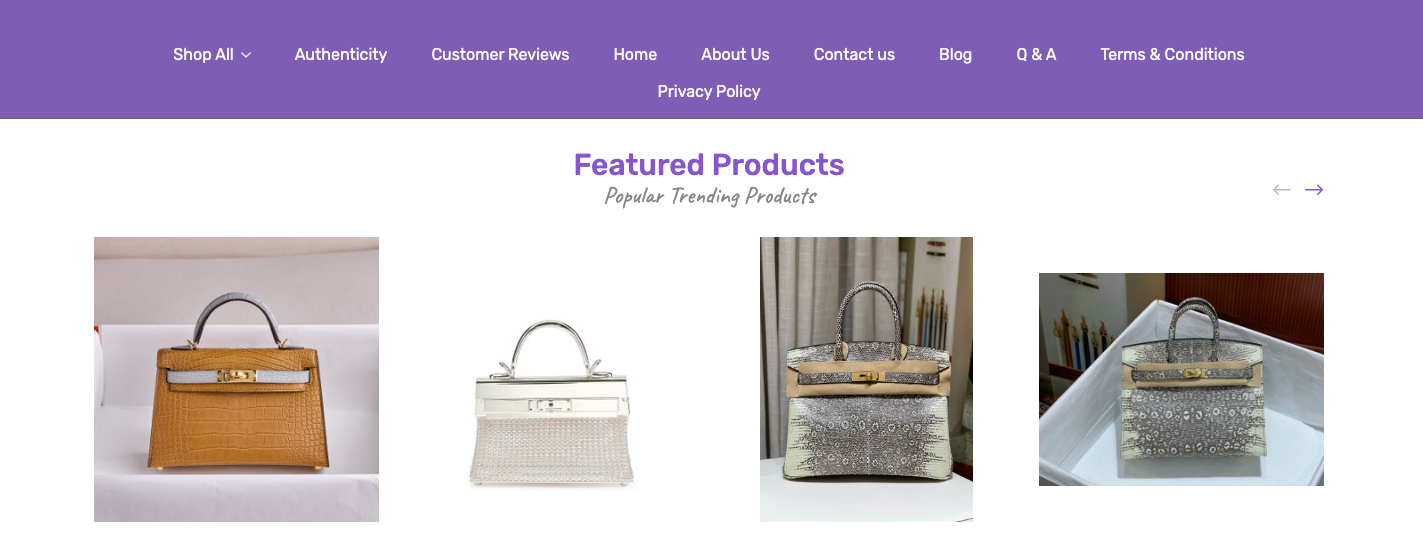
Every piece in our curated collection undergoes rigorous multi-point authentication by luxury goods experts. We verify materials, construction, hardware, and documentation against brand standards before listing any item. Our authentication guarantee protects your investment with comprehensive return policies and detailed provenance documentation. Whether you seek a classic Birkin, limited edition Kelly, or rare vintage Chanel, our inventory features exclusively verified authentic pieces.
Explore our authentic designer bags collection to discover investment-grade handbags backed by expert verification and exceptional customer service. Our VIP personal shopping service connects you with luxury specialists who understand your collection goals and source specific pieces to match your requirements. With tax-free worldwide delivery and authentication certificates for every purchase, BVPRIVE transforms luxury handbag acquisition from risky transaction to confident investment.
FAQ
How can I tell the difference between a real and fake designer bag?
Focus on stitching consistency, hardware quality, and material authenticity as primary indicators. Genuine bags display perfectly even stitching with consistent thread tension, while counterfeits show irregular spacing and loose threads. Examine hardware weight and engraving precision; authentic pieces use solid metal with crisp engravings, whereas fakes feel lightweight with blurred markings. Use detailed checklists comparing your bag against verified authentic examples, paying special attention to serial numbers, interior stamps, and packaging quality.
Is it safer to buy designer bags from authorized retailers or online?
Authorized brand boutiques guarantee authenticity but offer limited inventory of vintage or discontinued models. Online purchases from reputable luxury consignment platforms provide broader selection with professional authentication services and return policies. When buying online, verify the seller’s authentication process, request comprehensive photographs, and insist on return privileges contingent on independent authentication. Established platforms like specialized luxury retailers employ expert authentication teams and stand behind their guarantees. Review our handbag buying guide for platform-specific recommendations and safety protocols.
What documents should I request to confirm a designer bag’s authenticity?
Request the original purchase receipt showing transaction details, store location, and date. Obtain the certificate of authenticity featuring brand holograms and unique serial numbers. Collect all brand guarantee cards, care booklets, and registration documents that accompanied the original sale. Certification cards and receipts enable cross-referencing with brand customer service departments who verify serial numbers against their databases. Dust bags, original boxes, and shopping bags provide additional authentication evidence through material quality and printing accuracy.
How can I identify rare designer bags to avoid counterfeit versions?
Examine exclusive features like limited edition stamps, special hardware finishes, and exotic leather characteristics that counterfeiters struggle to replicate accurately. Verify rare bag authenticity through official brand archives, auction house catalogs, and museum collections documenting specific production details. Material and hardware quality prove especially critical for rare pieces, as counterfeiters rarely invest in premium exotic leathers or custom hardware. Compare dimensions, weight, and construction methods against documented specifications for the specific limited edition. Consult specialists who focus on rare luxury pieces and maintain comprehensive authentication databases for discontinued models.