



What makes a fashion collector bag: definition, rarity, value
BVPRIVE Editorial Team on 12th Apr 2026
What makes a fashion collector bag: definition, rarity, value
TL;DR:
- True collector bags are defined by rarity, craftsmanship, provenance, and cultural significance.
- Limited editions, discontinued exotic leathers, and iconic silhouettes drive higher value and desirability.
- Authenticity and provenance are essential for verifying legitimacy and protecting investment value.
Not every luxury handbag earns the title of collector bag. Many affluent buyers assume that a high price tag or a recognizable logo is enough to qualify a piece as truly collectible, yet the reality is far more selective. A fashion collector bag is sought after for its rarity, historical significance, exceptional craftsmanship, and potential to appreciate in value over time. This article breaks down exactly what separates collector-grade pieces from ordinary luxury bags, how rarity and provenance shape value, and what every serious collector needs to know before making a significant investment.
Table of Contents
- What defines a fashion collector bag?
- Key drivers of rarity and value
- Authenticity and provenance: Ensuring collector bag legitimacy
- Risks and rewards: Investing in fashion collector bags
- A collector’s eye: What most guides miss about luxury bags
- Explore collector-level luxury and insights with BVPRIVE
- Frequently asked questions
Key Takeaways
| Point | Details |
|---|---|
| Collector bag criteria | Collector bags are judged by rarity, craftsmanship, and historical significance—not by price alone. |
| Rarity drives value | Limited editions and discontinued models typically retain or appreciate in value far better than mainstream luxury bags. |
| Authenticity is essential | Proper documentation and trusted sources are vital for verifying the legitimacy of a collector bag. |
| Investment risks exist | Ownership of collector bags involves risks like illiquidity and maintenance, requiring careful evaluation. |
| Expert strategy helps | Prioritizing timeless designs and learning from experienced collectors maximizes both enjoyment and value retention. |
What defines a fashion collector bag?
Not all luxury bags are created equal. A bag can carry a prestigious label and still fail to qualify as a collector piece. True collectibility is determined by a precise set of criteria that goes well beyond brand recognition or retail price.
Collector bags typically stand out for rarity, craftsmanship, and potential appreciation. This means a piece must be scarce in production, meticulously crafted using premium materials, and carry a design that resonates across decades rather than just a single season. Think of the Hermès Birkin or the Chanel 2.55: both tell a story of tradition and brand evolution that ordinary bags simply cannot replicate.
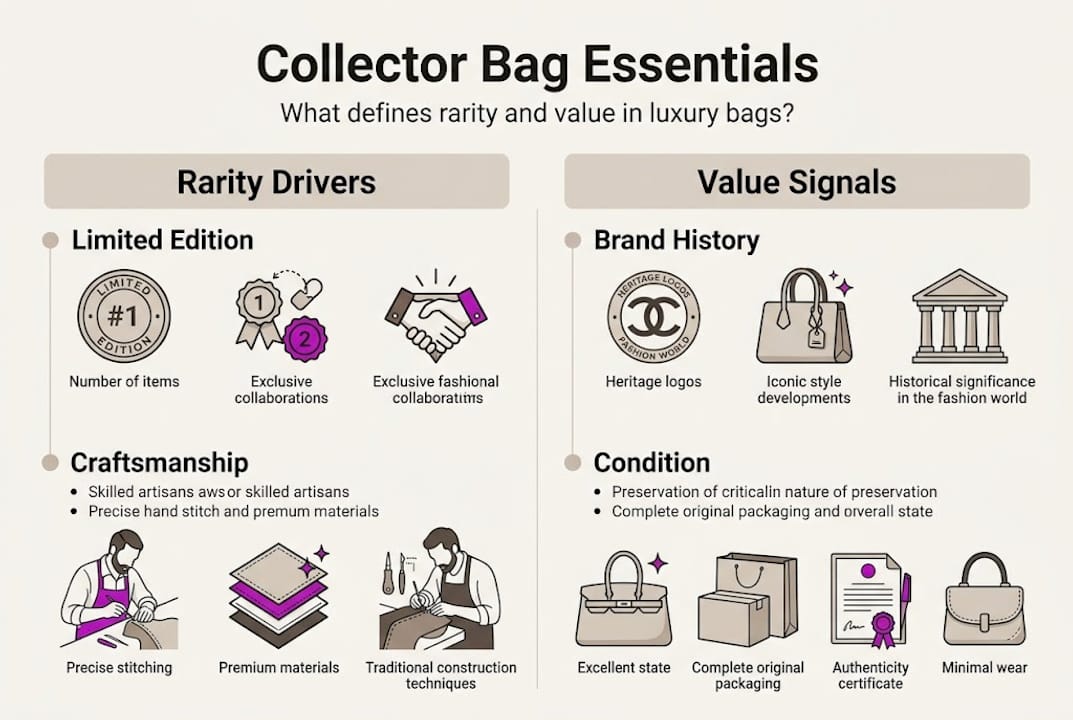
Provenance and historical context also play a defining role. A bag connected to a pivotal moment in a brand’s history, a celebrated designer’s debut collection, or a discontinued material carries a weight that inflates its desirability. Collectors and resale experts who track collectible luxury handbags consistently point to brand legacy as one of the strongest indicators of long-term value.
Here are the core characteristics that define a fashion collector bag:
- Rarity: Limited production runs, discontinued styles, or exclusive regional releases
- Design significance: Architectural innovation or iconic silhouettes that shaped fashion history
- Provenance: Documented origin, retail receipts, and verifiable ownership history
- Craftsmanship: Hand-stitching, exotic leathers, and construction techniques that demand skilled artisanship
- Brand legacy: Association with a house whose history and reputation reinforce long-term desirability
“A fashion collector bag is not simply expensive. It is a physical record of a brand’s most significant creative and cultural moments.”
It is equally important to understand what does not qualify. Mass-produced styles, trend-driven silhouettes, and bags released in high volumes rarely hold collector status. Even pieces from prestigious houses can fail this test if they were produced at scale or designed primarily for commercial appeal. Knowing which bags with best resale value genuinely qualify requires research, patience, and a trained eye.
Key drivers of rarity and value
Having defined collector bags, let’s uncover what truly elevates their rarity and financial value. Rarity does not happen by accident. It is engineered through deliberate production choices, material sourcing, and brand strategy.
The most powerful value drivers fall into two categories: supply-side scarcity and demand-side desirability. Limited editions, special orders, and discontinued exotic leathers restrict supply. Meanwhile, cultural relevance, celebrity association, and brand prestige sustain demand. When both forces align, value compounds.
Empirical benchmarks show 70 to 173% resale value retention for top models, with the Hermès Birkin and Chanel Double Flap consistently leading the category. These figures are not accidental. They reflect decades of controlled scarcity and unwavering brand discipline.
Here is how rarity drives value across the collector market:
- Limited edition releases: Bags produced in numbered quantities or for exclusive events command immediate premiums
- Discontinued exotic leathers: Crocodile, ostrich, and lizard skins that are no longer available in new production are especially prized
- Special orders: Custom Hermès pieces, known as “special orders,” are virtually impossible to replicate and carry significant premiums
- Iconic silhouettes: Shapes like the Kelly or the 2.55 have proven staying power across market cycles
- Neutral and classic colorways: Black, gold, and natural tones outperform seasonal colors in resale markets
| Model | Resale retention | Key driver |
|---|---|---|
| Hermès Birkin | 100 to 173% | Controlled scarcity, exotic leathers |
| Chanel Double Flap | 70 to 100% | Iconic design, limited production |
| Louis Vuitton Speedy (standard) | Below 50% | Mass production, wide availability |
| Chanel 25 (trend-driven) | Variable | Hype, not architectural significance |
Pro Tip: Prioritize timeless styles over short-lived trends. A limited edition Chanel in a classic colorway will almost always outperform a seasonal novelty piece over a five-year horizon.
Authenticity and provenance: Ensuring collector bag legitimacy
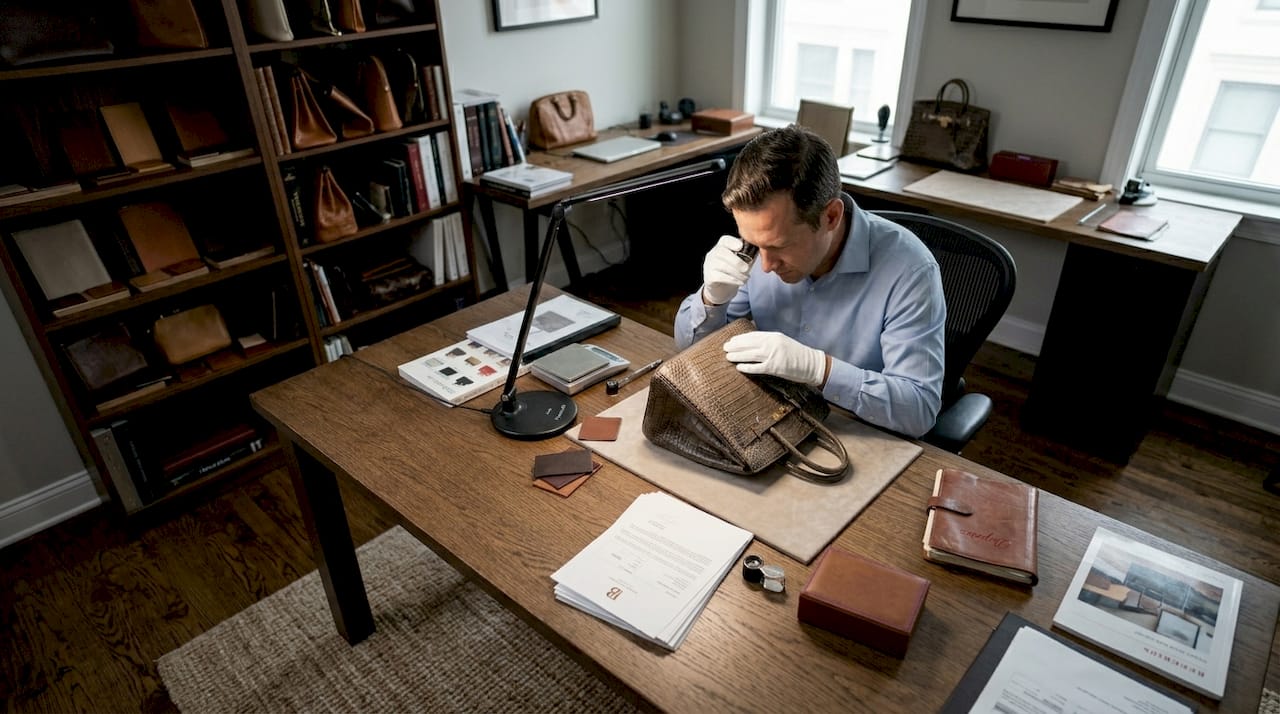
After appreciating rarity, the crucial step is confirming authenticity and legitimacy. In a market where forgeries are increasingly sophisticated, provenance documentation is your strongest protection.
Authentic collector bags come with a paper trail. Retail receipts, certificates of authenticity, original dust bags, and box packaging all contribute to a piece’s verifiable history. Auction house records from Christie’s or Sotheby’s add another layer of credibility for secondary market purchases. Collector pieces often represent brand evolution or scarcity, and resale experts favor architectural shifts over hype items precisely because those pieces carry more traceable histories.
Here is what to look for when verifying authenticity:
- Serial numbers and date codes: Each major house uses unique internal coding systems that can be cross-referenced
- Hardware quality: Authentic pieces use solid metal hardware with consistent weight and finish
- Stitching consistency: Hand-stitched seams are even, tight, and use brand-specific thread colors
- Lining materials: Interior fabrics and leathers should match documented production standards for the specific model and year
- Provenance documentation: Original receipts, authenticity cards, and purchase history from authorized retailers
| Documentation type | Importance level | What it confirms |
|---|---|---|
| Original retail receipt | Very high | First purchase, authorized source |
| Certificate of authenticity | High | Brand or third-party verification |
| Auction house record | High | Provenance chain, previous ownership |
| Original dust bag and box | Medium | Completeness, care history |
Pro Tip: When collecting limited edition handbags, always request the full documentation chain before completing a purchase. A bag without provenance is a bag without verifiable value.
Common pitfalls include purchasing from unverified resellers, accepting incomplete paperwork, and relying solely on visual inspection. Even experienced collectors have been misled by high-quality forgeries. Trusting reputable platforms that specialize in authentication is not optional. It is essential.
Risks and rewards: Investing in fashion collector bags
Once authenticity is secured, collectors should understand the financial risk and reward landscape before investing. Collector bags can be genuinely rewarding assets, but they are not without complexity.
On the reward side, iconic and rare pieces have delivered returns that rival or exceed traditional asset classes. The Hermès Birkin, for instance, has outperformed both the S&P 500 and gold over select periods. That kind of performance draws serious investors, not just fashion enthusiasts.
However, not all luxury bags qualify as sound investments. Mass-produced or trendy styles depreciate quickly. Discontinued exotics post the 2019 Chanel ban and Hermès Special Orders sit at the premium end, but even these carry risks including maintenance costs and illiquidity compared to stocks or bonds.
Key rewards of investing in rare handbags:
- Tangible asset with intrinsic aesthetic value
- Strong resale markets through established auction houses and platforms
- Potential for significant appreciation on iconic and limited models
- Portfolio diversification beyond traditional financial instruments
Key risks to consider:
- Illiquidity: Selling a collector bag takes time and the right buyer
- Maintenance costs: Leather conditioning, storage, and climate control are ongoing expenses
- Market demand shifts: Trends in luxury can affect resale prices unpredictably
- Authentication risk: Forgeries and misrepresented pieces can result in significant financial loss
“Exotics and special orders are especially prized because they cannot be replicated. That irreplaceability is what separates a true investment piece from a luxury purchase.”
Smart collectors use luxury bag investment tips to build focused, research-driven portfolios rather than acquiring pieces on impulse. Diversifying across models, houses, and price points reduces exposure to any single market shift.
A collector’s eye: What most guides miss about luxury bags
Most collector guides focus on what to buy. Far fewer address why certain pieces earn lasting status while others fade. The difference is rarely about price. It is about what a bag represents within a brand’s creative timeline.
True collector bags mark architectural shifts: the moment a house redefined its aesthetic, introduced a new construction technique, or responded to a cultural turning point. The Chanel 2.55 is not valuable because it is expensive. It is valuable because it changed how women carried themselves. That narrative is irreplaceable.
Resale experts favor architectural shifts over hype items like the Chanel 25 precisely because hype is temporary. Scarcity rooted in design significance is not. Collectors who chase trending pieces often find themselves holding depreciating assets within a few seasons.
The wisdom that experienced collectors develop over time centers on restraint and focus. Classic materials, neutral tones, and iconic models from houses with disciplined production practices consistently outperform novelty. Exploring the benefits of owning rare designer bags reveals that the most enduring value is found not in what is popular today, but in what will still matter a decade from now.
Explore collector-level luxury and insights with BVPRIVE
Understanding what makes a bag truly collectible is the foundation of every smart acquisition. Whether you are building your first curated collection or refining an established portfolio, having access to authenticated, rare pieces and expert guidance makes all the difference.
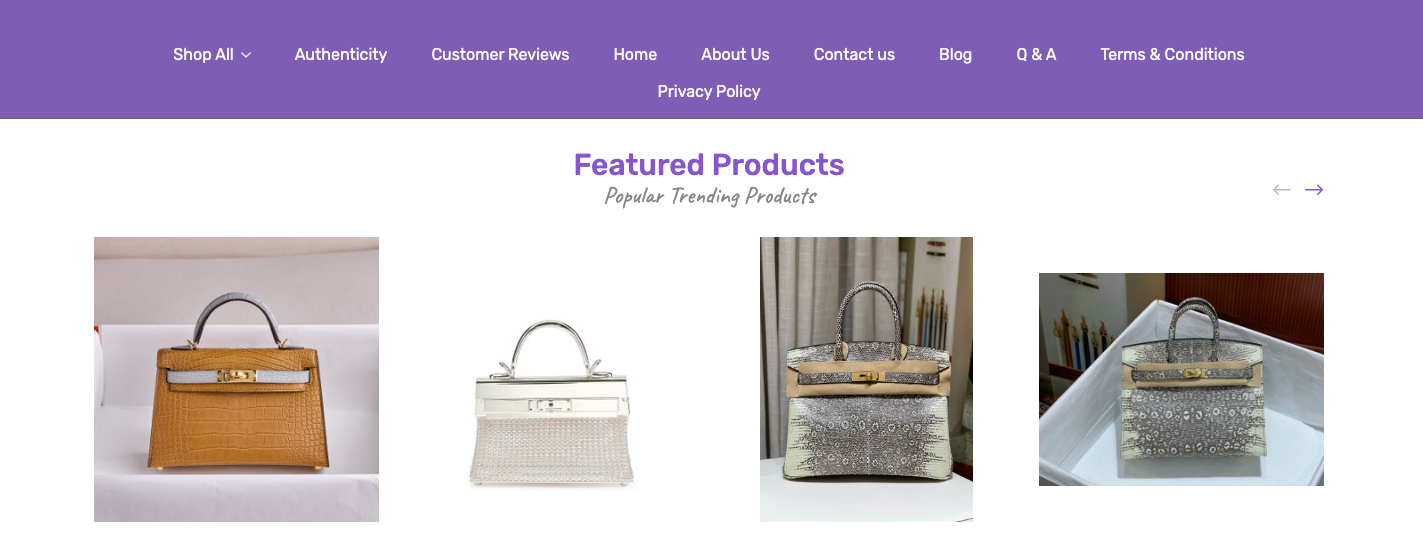
At BVPRIVE, we specialize in exactly that. Our platform offers a meticulously curated selection of authentic, rare, and limited-edition pieces from Hermès, Chanel, Louis Vuitton, and more, each verified for provenance and authenticity. For collectors ready to go deeper, our editorial resources including guides on must-have luxury bags for collectors provide the knowledge base to invest with confidence. Your next collector piece deserves the same level of care and expertise that went into crafting it.
Frequently asked questions
How can you tell if a luxury bag qualifies as a collector piece?
A collector bag must show rarity, historical significance, and potential future value, often documented through provenance and authenticity certificates. Iconic models from houses with disciplined production histories are the strongest candidates.
Do all luxury bags appreciate in value?
No. Only select models, usually iconic and rare, show consistent appreciation. Mass-produced or trendy styles depreciate, especially when produced at high volume or designed for short-term commercial appeal.
What risks should collectors consider before investing?
Risks include illiquidity, maintenance costs, authenticity issues, and shifting market demand. Maintenance costs and illiquidity are particularly significant compared to more liquid investment vehicles like stocks. Careful research and verified provenance are essential safeguards.
Where can I learn more about investment strategies for collector bags?
Professional guides such as those found at BVPRIVE’s blog offer detailed, actionable tips on investing in rare handbags, covering everything from model selection to authentication best practices.