


What luxury consignment is and how it works for collectors
BVPRIVE Editorial Team on 22nd Mar 2026
What luxury consignment is and how it works for collectors
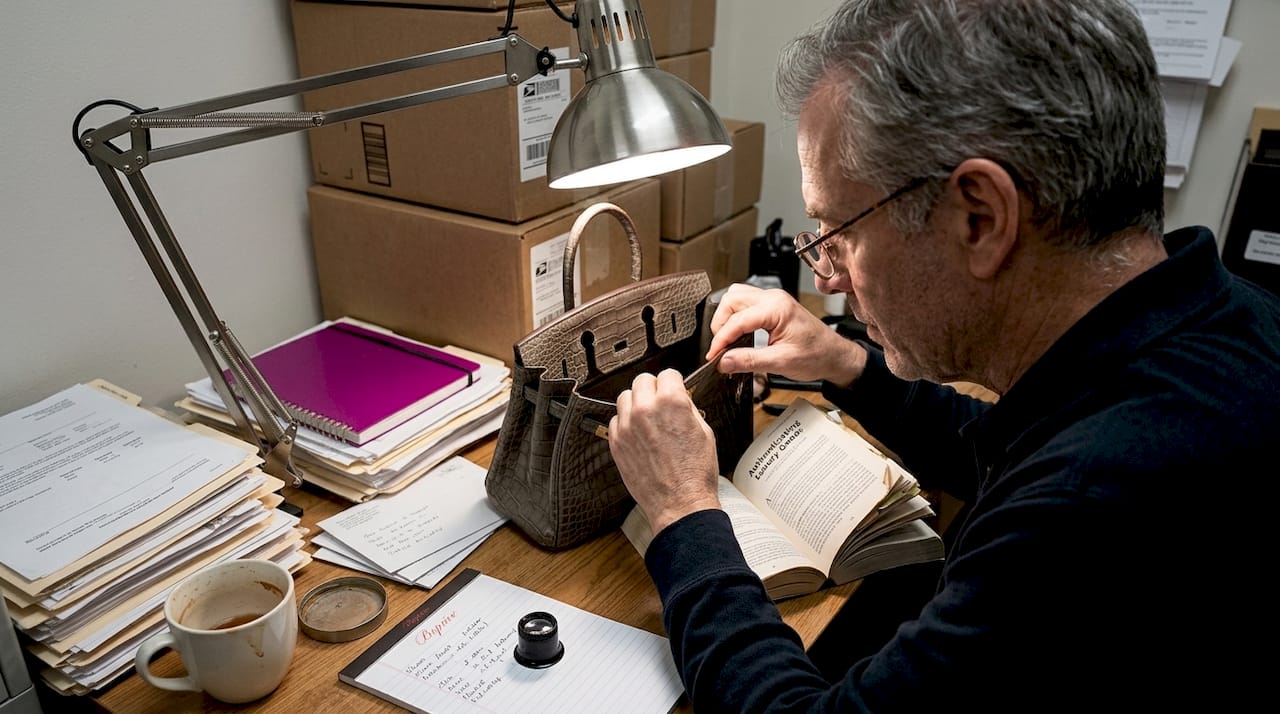
Luxury consignment transforms how collectors buy and sell high-end handbags and designer accessories. You submit items to trusted platforms that authenticate, price, market, and sell them on your behalf while you earn a percentage of the sale. Despite its growing popularity among affluent collectors, many misunderstand authentication rigor, commission structures, and potential risks. This guide clarifies the complete consignment process, explains how condition and authentication determine value, compares platform fees and payouts, and reveals strategic best practices to maximize returns while minimizing risks when consigning premium items worth thousands of dollars.
Table of Contents
- Key takeaways
- Understanding the luxury consignment process
- How condition and authentication impact value and pricing
- Choosing platforms and understanding commission and payout structures
- Risks, nuances, and best practices in luxury consignment
- Explore luxury consignment services with BVPRIVE
- Frequently asked questions about luxury consignment
Key Takeaways
| Point | Details |
|---|---|
| Authentication and marketing | Luxury consignment relies on authentication, professional photography, and targeted marketing to reach qualified buyers. |
| Commission varies by platform | Sellers typically net 55 to 85 percent of the sale price after platform fees. |
| Condition and brand impact value | Pricing and sale speed depend on condition grade and brand desirability, with pristine items often commanding higher prices. |
| Risks and legal considerations | Authentication failures and associated legal risks are notable challenges in the luxury consignment market. |
Understanding the luxury consignment process
The process involves item submission, expert and AI authentication, professional photography, pricing based on market comparisons, marketing, and payout after commission deduction. Each step ensures your luxury handbag or accessory reaches qualified buyers at optimal prices while protecting both parties from fraud.
The journey begins when you submit your item for evaluation. Consignment specialists examine physical condition, checking for wear patterns, hardware integrity, stitching quality, and material degradation. Items must meet strict luxury standards to qualify. A Chanel 2.55 with significant corner wear might be rejected while a pristine Hermès Kelly advances immediately.
Authentication follows evaluation and represents the most critical phase. Experts inspect construction details, serial numbers, date codes, and material composition. Advanced platforms employ AI tools like Entrupy alongside human expertise, achieving near-perfect accuracy. This dual approach catches sophisticated counterfeits that might fool individual inspectors. You can learn detailed authentication techniques through our how to authenticate luxury bags guide.
Pro Tip: Submit multiple high-resolution photos from various angles before shipping your item. This pre-screens obvious condition issues and saves return shipping costs if the piece doesn’t meet platform standards.
Pricing uses comparative market analysis. Specialists research recent sales of identical or similar items, adjusting for condition, rarity, and current demand. Top-tier pieces often price between 40% and 120% of original retail depending on scarcity and desirability. A limited edition Fendi Peekaboo might command 95% of retail while a common Louis Vuitton Speedy settles at 45%.
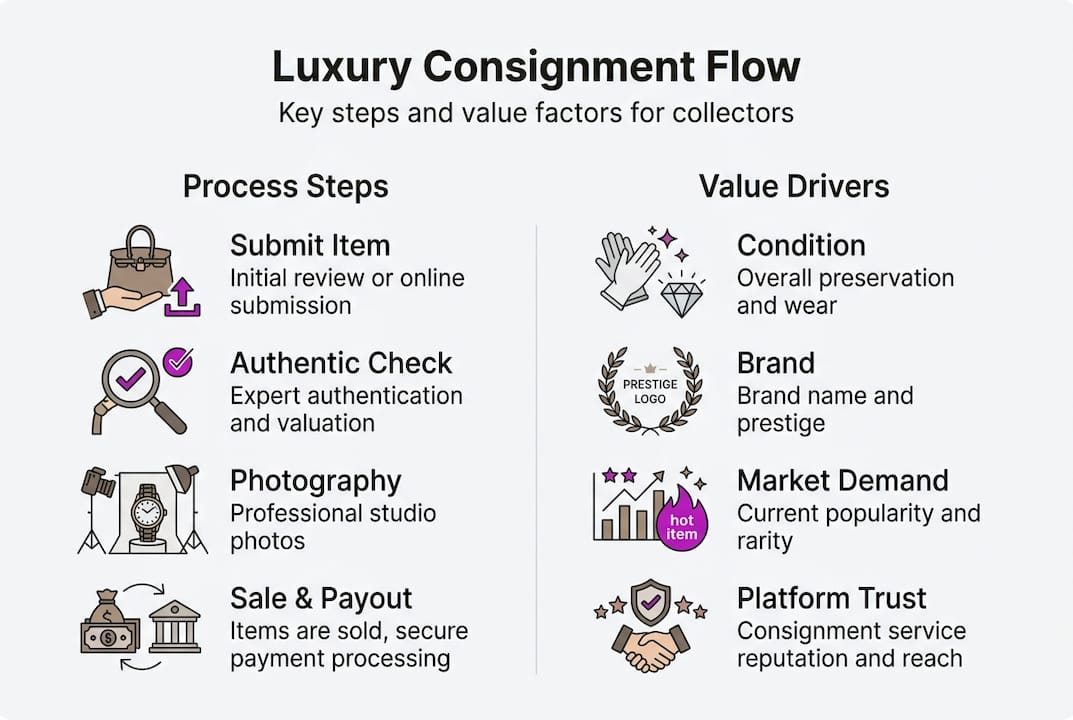
Marketing happens entirely through the platform. Professional photographers capture your item in optimal lighting with detailed close-ups of hardware, interior, and any unique features. Platforms then promote listings across their website, email campaigns, and social media channels to reach qualified buyers actively seeking luxury pieces. Your involvement ends after submission.
Payout occurs after sale completion. Platforms deduct their commission percentage and transfer remaining funds via check, direct deposit, or store credit. Timeframes vary from immediate to 30 days depending on payment method and platform policies. Higher-value items often trigger faster processing to maintain seller satisfaction.
How condition and authentication impact value and pricing
Condition grading ranges from pristine to fair and significantly impacts pricing and resale value, sometimes doubling or halving worth. Understanding these grades helps you set realistic expectations and choose optimal selling timing.
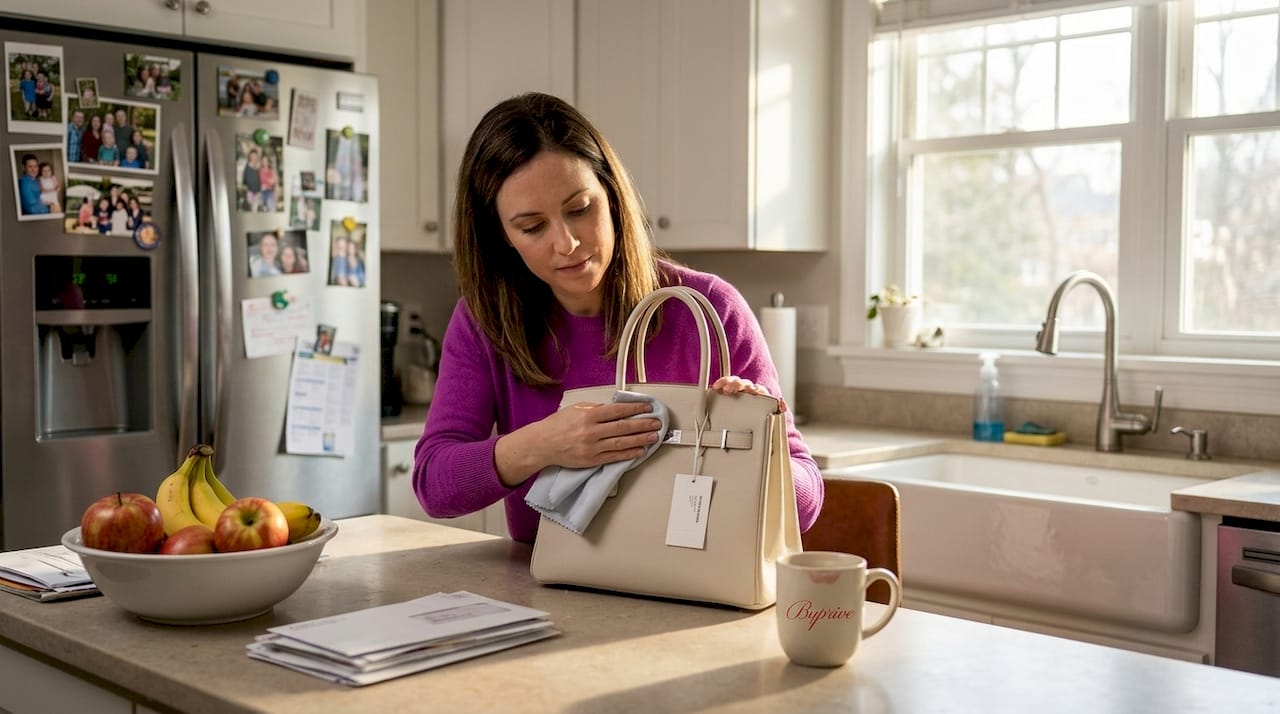
Condition categories include four primary tiers. Pristine or new items show zero signs of use with intact protective films, dust bags, and original packaging. Excellent or like-new pieces display minimal wear visible only under close inspection. Good or gently used items exhibit normal wear patterns like light scratches on hardware or minor corner softening. Fair condition means significant visible wear including deep scratches, stains, or structural issues requiring repair.
Better condition commands premium prices and accelerates sales. A pristine Hermès Birkin 30 in Togo leather might sell for $18,000 while the identical bag in fair condition struggles to reach $9,000. Buyers pay substantial premiums for pieces requiring no immediate maintenance or repair. Sale velocity also improves dramatically as pristine items attract competitive bidding while worn pieces languish for months.
Authentication ensures buyers trust item legitimacy, critical given 22% of submissions fail authentication checks on major platforms. This shocking statistic reveals how prevalent counterfeits remain even among sellers who believe their items are genuine. Rigorous screening protects buyer confidence and maintains platform reputation.
Pro Tip: Maintain original receipts, authenticity cards, and dust bags. These provenance documents can boost resale value by 15-25% and expedite authentication processes significantly.
Authentication methods combine multiple verification layers:
- Expert review by specialists trained in specific brands who examine construction techniques, materials, and design details
- Serial number and date code verification against manufacturer databases and known formatting patterns
- Material analysis including leather grain patterns, hardware composition, and fabric weave consistency
- AI-powered microscopic imaging that detects counterfeits with near 99% accuracy by analyzing surface textures invisible to human eyes
Trustworthiness of authentication boosts seller confidence and maximizes sale price. When buyers know platforms reject one in five submissions, they trust accepted items are genuine. This confidence eliminates haggling over authenticity and supports premium pricing. Explore detailed verification techniques through our signs of genuine designer handbags resource.
Choosing platforms and understanding commission and payout structures
Commission rates and payouts vary significantly: The RealReal offers sellers 40-85% with higher splits over $10,000, Vestiaire fees range 12-25%, boutiques take 30-50%, and average net payouts settle around 55-70%. Understanding these structures helps you select platforms aligned with your item value and urgency.
Commission fees follow tiered structures based on sale price. Lower-value items under $1,000 typically yield 40-55% to sellers as platforms need higher percentages to cover fixed authentication and marketing costs. Mid-range pieces between $1,000 and $5,000 net 55-70%. Premium items exceeding $10,000 can earn sellers up to 85% as platforms profit sufficiently from smaller percentage cuts on large transactions.
| Platform Type | Commission Range | Seller Payout | Best For |
|---|---|---|---|
| The RealReal | 15-60% | 40-85% | Items over $10,000 |
| Vestiaire Collective | 12-25% | 75-88% | International buyers |
| Boutique consignment | 30-50% | 50-70% | Local markets |
| Rebag | Flat buyout | 60-70% | Immediate cash |
The RealReal dominates the ultra-luxury segment for items exceeding $10,000. Their tiered commission structure rewards high-value consignments with seller splits reaching 85%, meaning you keep $8,500 from a $10,000 Hermès Birkin sale. They also provide white-glove pickup service for collections worth over $20,000, eliminating shipping logistics for nervous sellers.
Vestiaire Collective and boutique consignments serve different buyer segments. Vestiaire attracts international collectors willing to pay premiums for rare European pieces, though their 12-25% commission seems lower until you factor in currency conversion fees and international shipping costs. Local boutiques offer personal relationships and faster turnaround but take larger cuts and reach smaller audiences. Consider exploring top designer bag resellers to compare options.
Payout speed and fee transparency vary between platforms:
- The RealReal processes payments 5-10 days after sale with clear commission breakdowns
- Vestiaire holds funds 14 days post-delivery for buyer inspection periods
- Boutique shops often pay monthly regardless of sale date
- Rebag offers instant buyouts at lower percentages for immediate liquidity
Selection depends on item value, desired convenience, and risk tolerance. Consign a $25,000 Hermès Kelly through The RealReal for maximum payout. Sell a $3,000 Chanel WOC through Vestiaire for international exposure. Use boutiques for $1,500 Gucci pieces when you want local pickup and personal service. Choose Rebag when you need cash within 48 hours despite accepting 10-15% lower returns.
Risks, nuances, and best practices in luxury consignment
Challenges include authentication failure rates around 22%, risks of theft or damage especially if shops close, automatic markdowns, and legal risks from intellectual property suits or misrepresentation. Understanding these pitfalls helps you navigate consignment safely while protecting valuable assets.
Authentication failures lead to declined consignments and lost fees. When your item fails authentication, platforms return it at your shipping expense. If you paid for authentication services separately, those fees are forfeited. Worse, you’ve wasted weeks believing your item would sell. This happens most frequently with vintage pieces lacking clear provenance or items purchased from unverified resellers years ago.
Shop bankruptcies pose serious risks of loss or delayed payout to consignors. When consignment businesses fail, your inventory becomes part of bankruptcy proceedings. Creditors may seize items or courts may freeze assets for months during litigation. In 2025, several boutique consignment shops closed unexpectedly, leaving sellers fighting to recover merchandise worth tens of thousands collectively.
Automatic markdowns reduce final sale price significantly after set time periods. Most platforms implement 10-20% reductions every 30-60 days until items sell. A $5,000 Dior Saddle bag might drop to $4,000 after two months and $3,200 after four months. While markdowns accelerate sales, they devastate returns if you consigned expecting full asking price.
“The luxury resale market’s rapid growth has attracted legal scrutiny as brands challenge platforms over authentication warranties and unauthorized use of trademarks in marketing materials, creating new liability exposures for consignment businesses.”
Legal liability arises if consignment platforms imply counterfeit warranties or unauthorized brand associations. Major luxury houses have sued resale platforms for trademark infringement and false advertising. While these suits target platforms rather than individual consignors, business disruptions during litigation can delay payouts or freeze inventory access.
Best practices minimize risks and maximize consignment success:
- Negotiate contracts for clear fee and payout terms before submitting items
- Verify platform authentication claims by researching their expert credentials and technology partnerships
- Time sales seasonally for premium pricing, consigning winter bags in fall and summer styles in spring
- Maintain comprehensive documentation including purchase receipts, authentication certificates, and condition photos
- Diversify across platforms rather than consigning your entire collection to one business
Pro Tip: Audit consignment agreements carefully and prioritize platforms with proven authentication track records for high-value items. Request insurance coverage details and confirm who bears loss risk during transit and storage periods.
Expert collectors also leverage market timing strategically. Consign Hermès Birkins during peak gifting seasons when demand surges. List seasonal pieces three months before their prime usage period. Avoid consigning during market downturns when luxury spending contracts. Review our luxury handbag investment guide for advanced timing strategies that optimize returns.
Explore luxury consignment services with BVPRIVE
Navigating luxury consignment requires expertise in authentication, market pricing, and platform selection. BVPRIVE offers comprehensive resources and services tailored specifically for collectors of high-end handbags and designer accessories who demand authenticity and value.
Access our detailed authentication guide for luxury bags to verify items before consignment or purchase. Compare platforms through our top designer bag resellers analysis to identify optimal consignment partners for your collection’s value tier. Leverage BVPRIVE’s industry expertise and curated marketplace to maximize your luxury consignment experience with trusted, secure solutions that protect your investment while connecting you with serious collectors worldwide. Explore our full range of luxury consignment services designed for discerning collectors who refuse to compromise on authenticity or service quality.
Frequently asked questions about luxury consignment
What is luxury consignment?
Luxury consignment is selling high-end items like designer handbags through a trusted intermediary who authenticates, prices, markets, and sells pieces on your behalf in exchange for a commission percentage. The platform handles all buyer interactions while you retain ownership until sale completion. This model provides authentication credibility and market access individual sellers cannot achieve alone.
How is authentication performed in luxury consignment?
Authentication combines expert inspection by brand specialists with advanced technology like AI-powered microscopic imaging. Specialists examine construction techniques, materials, serial numbers, and design details against manufacturer standards. Platforms like Rebag and The RealReal employ multiple authentication layers achieving near 99% accuracy rates. Learn comprehensive verification methods through our how to authenticate luxury bags guide.
What are typical consignment fees and seller payouts?
Consignment fees range from 15-60% depending on platform and item value, netting sellers 40-85% of final sale price. Premium items over $10,000 earn higher seller percentages, often 70-85%, while pieces under $1,000 yield 40-55%. The RealReal offers the most generous splits for ultra-luxury items while boutique shops typically take 30-50% regardless of value. Average net payouts across all platforms settle around 55-70%.
How long does luxury consignment take?
Luxury consignment timelines vary by item desirability and pricing strategy. Pristine, in-demand pieces like Hermès Birkins often sell within 2-4 weeks. Common items in good condition typically require 60-90 days. Overpriced or worn pieces may languish 6-12 months before automatic markdowns trigger sales. Authentication and listing preparation add 7-14 days before your item goes live.
How do I select legitimate consignment platforms?
Select platforms with verified authentication expertise, transparent fee structures, and strong financial stability. Research their authentication methods, expert credentials, and technology partnerships. Verify they carry insurance covering your items during transit and storage. Read seller reviews focusing on payout reliability and customer service responsiveness. Prioritize established platforms like The RealReal or Vestiaire Collective for high-value items over newer, unproven services.