



Traceability in high-end leather sourcing: What collectors must know
BVPRIVE Editorial Team on 15th Apr 2026
Traceability in high-end leather sourcing: What collectors must know

TL;DR:
- Traceability verifies every step from farm to finished luxury leather products.
- Advanced methods like isotopic analysis and blockchain enhance supply chain transparency.
- Despite progress, full traceability faces challenges including fraud, regulations, and small-scale farm limits.
The price tag on a Hermès Birkin or a Chanel 2.55 signals far more than craftsmanship. For today’s most discerning collectors, the story behind the leather itself has become just as important as the stitching on the bag. Yet most buyers have no idea how many invisible steps separate a cattle farm from the finished hide draped over a boutique shelf. Traceability, the verified chain of custody from raw hide to retail product, is now the defining frontier of ethical luxury. This guide breaks down what traceability actually means, how it is achieved, where the benchmarks stand, and why even the most sophisticated supply chains still face real limits.
Table of Contents
- What is traceability in luxury leather sourcing?
- How is traceability achieved? Methods, technologies, and standards
- Benchmarking sustainability: Leather Working Group and brand case studies
- Limits, challenges, and industry debates: The reality behind traceability
- Our take: The uncomfortable truth about traceability in luxury leather
- Connect with provenance-driven luxury: Your trusted resource
- Frequently asked questions
Key Takeaways
| Point | Details |
|---|---|
| Traceability defines true luxury | Being able to verify your bag’s origins signals authenticity and ethical standards. |
| Technology and standards lead | Advances like forensic science and LWG benchmarking set the new bar for trust in luxury leather. |
| Limitations still exist | Even the best systems face hurdles with fraud, farm-level tracing, and regulatory change. |
| Savvy buyers drive change | Demand for transparent sourcing pushes brands to improve reporting and controls. |
What is traceability in luxury leather sourcing?
Traceability is not a buzzword. It is a structured system that documents every step a hide takes from its origin through to the finished luxury product you hold in your hands. Traceability in luxury leather involves tracking hides from farm or slaughterhouse through tanneries to finished products, using digital tools, standards, and forensic science. That chain of custody is what separates a verifiable claim from a marketing promise.
The value chain for luxury leather typically moves through five critical stages:
- Farming or ranching: Where the animal is raised, fed, and managed. Conditions here affect both hide quality and ethical standing.
- Slaughter and initial processing: Where hides are separated and first documented. This is often where the paper trail becomes fragile.
- Tannery processing: Where raw hides are transformed into leather using chemical or vegetable processes. Tanneries are the most regulated stage in most markets.
- Finishing and manufacturing: Where leather is cut, dyed, and assembled into the final product.
- Retail and resale: Where provenance documentation should ideally accompany the item.
For collectors, this chain matters on three levels. First, it confirms authenticity, ensuring the leather is what the brand claims it to be. Second, it validates ethical sourcing, confirming no deforestation, forced labor, or inhumane practices occurred upstream. Third, it ensures regulatory compliance, particularly as new laws like the EU Deforestation Regulation (EUDR) require documented proof of origin.
“Traceability is not simply about knowing where leather comes from. It is about having verifiable, documented proof at every stage of production.”
For buyers seeking an exclusive leather selection from the world’s most prestigious houses, understanding this chain is no longer optional. It is the foundation of informed collecting. The traceability methodologies used today range from paper-based documentation to cutting-edge forensic science, and the gap between those two approaches is enormous. Knowing which method a brand uses tells you a great deal about how seriously they take their supply chain commitments.
For those already familiar with authenticating luxury bags, traceability adds a deeper layer. Authentication confirms what you have. Traceability confirms where it came from and how it was made.
How is traceability achieved? Methods, technologies, and standards
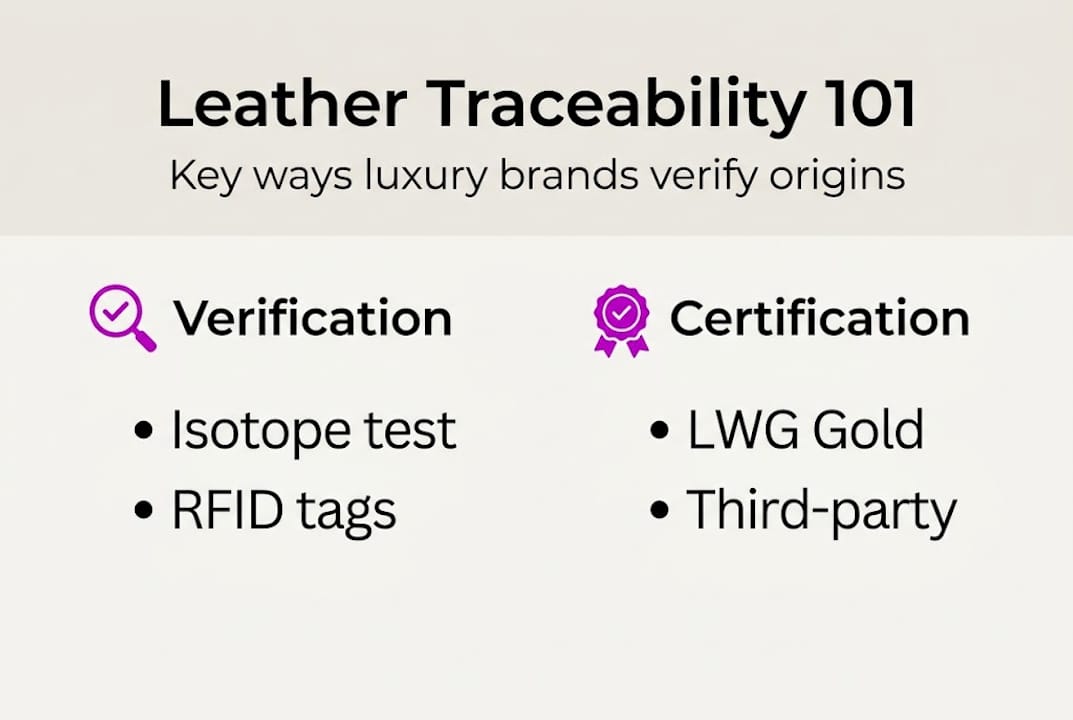
With the basics covered, let’s dive deeper into the advanced methods reshaping traceability for luxury fashion. Key methodologies include forensic isotopic analysis, blockchain, RFID/IoT, GS1 standards, and digital platforms for chain of custody. Each approach has distinct strengths and real-world limitations.
- Forensic isotopic analysis: Scientists measure the ratio of stable isotopes in leather to determine geographic origin. This method is nearly impossible to fake and is gaining traction through companies like Oritain, which has extended isotopic verification for leather specifically for EUDR readiness.
- Blockchain: Creates an immutable digital ledger of each transaction in the supply chain. Highly transparent once data is entered, but only as reliable as the information submitted at each node.
- RFID and IoT tagging: Physical tags attached to hides or finished goods allow real-time scanning and location tracking throughout production. Effective in controlled environments, less reliable in fragmented supply chains.
- GS1 data standards: A globally recognized system for product identification and data sharing. Provides a common language across suppliers, tanneries, and brands.
- Digital chain-of-custody platforms: Software solutions that aggregate documentation, certifications, and audit results into a single accessible record.
| Method | Strength | Limitation |
|---|---|---|
| Isotopic analysis | Scientifically verifiable origin | High cost, requires lab access |
| Blockchain | Tamper-resistant digital record | Data quality depends on input |
| RFID/IoT | Real-time tracking | Tag loss in early processing stages |
| GS1 standards | Universal data compatibility | Requires industry-wide adoption |
| Digital platforms | Centralized documentation | Vulnerable to incomplete records |
Pro Tip: When evaluating a brand’s traceability claims, ask specifically whether they use third-party verification such as isotopic testing or independent audits. Self-reported data, however detailed, carries far less weight than externally validated results.
For collectors who appreciate the rigor behind scientific authenticity checks, these methods mirror the same precision applied to verifying a bag’s hardware, stitching, and serial numbers. The science is serious, and the best brands are investing accordingly.
Benchmarking sustainability: Leather Working Group and brand case studies
The technology is robust, but how do buyers and brands measure real progress on sustainability? That’s where formal benchmarks come in. The Leather Working Group (LWG) is the most recognized global standard for assessing tannery environmental performance. Its audit criteria cover 17 environmental criteria, with Gold awarded at 85% or above, Silver at 75% or above, and Bronze at 65% or above.
The LWG’s life cycle analysis for leather provides a rigorous framework for understanding the full environmental footprint of leather production, from water use and chemical management to energy consumption and waste treatment.

| Brand | Traceability commitment | LWG engagement |
|---|---|---|
| Tapestry | High traceability rate, digital tracking | Active LWG member |
| Kering | Published sourcing standards | Strong LWG alignment |
| Prada | Certified supplier program | LWG-compliant tanneries |
| Fendi | Documented hide sourcing | LWG-certified partners |
| Valentino | Transparency reporting | LWG participation |
Several key points help collectors interpret these certifications correctly:
- LWG Gold is the benchmark to seek. It signals that a tannery has met rigorous environmental standards across water, chemicals, and energy.
- Certification covers the tannery, not the entire supply chain. A Gold-rated tannery may still source hides from farms with limited traceability.
- Brand-level commitments vary widely. Some houses publish detailed supplier lists; others offer only general policy statements.
- Third-party audits matter. Self-certification without independent verification carries significantly less credibility.
Understanding LWG certification gives collectors a concrete tool for evaluating brand claims. A bag crafted from leather processed at an LWG Gold-rated tannery represents a meaningfully higher standard than one with no certification at all. That distinction is worth knowing before you invest.
Limits, challenges, and industry debates: The reality behind traceability
As impressive as these advances are, collecting with confidence also means recognizing industry limitations. Edge cases persist: loss of origin at slaughter, paperwork fraud, EUDR mandates, and challenges in farm-level tracing remain significant hurdles for even the most committed brands.
The EUDR, which requires companies to prove their products do not contribute to deforestation, has created both urgency and confusion. Geolocation requirements for farms are technically demanding. Small-scale farmers in Brazil, Argentina, and other major hide-producing regions often lack the infrastructure to generate compliant documentation. The EUDR modernization efforts underway in Brazil’s leather industry illustrate just how much investment is required to meet these standards at scale.
Common challenges collectors should understand include:
- Loss of origin at slaughter: Hides from multiple animals are often mixed early in processing, making individual-level tracing extremely difficult without forensic intervention.
- Paperwork fraud: Fraudulent certificates of origin remain a documented risk, particularly in regions with weaker regulatory oversight.
- Regulatory uncertainty: EUDR deadlines have shifted, creating compliance ambiguity for brands and suppliers alike.
- Small-farm gaps: The majority of cattle hides come from farms too small to implement digital traceability systems independently.
“Full supply chain transparency in luxury leather is an aspiration that the industry is actively working toward, not a standard that has been universally achieved.”
Pro Tip: When a brand claims full traceability, ask for specifics. Does their documentation cover the farm level, or only from the tannery forward? The answer reveals the true depth of their commitment.
For deeper handbag sourcing insights, understanding these gaps helps you ask better questions and make more informed purchases. Authenticity in sourcing is not just about the bag itself. It is about the entire story behind the material.
Our take: The uncomfortable truth about traceability in luxury leather
Here is what the data and the industry debates make clear: no traceability system is perfect, and the complexity of luxury leather’s global supply chain means absolute origin control remains genuinely elusive. That is not a failure of ambition. It is a reflection of how intricate and geographically dispersed leather production truly is.
What we find most significant is that buyer demand is the single most powerful accelerant of progress. When collectors ask hard questions, brands respond. When purchasing decisions favor certified, transparent sourcing, investment flows toward better systems. But this same pressure creates a new risk: the rise of traceability theater, where brands publish polished sustainability reports that obscure rather than illuminate real supply chain practices.
Discerning collectors must balance genuine optimism about technological progress with clear-eyed realism about what certifications actually cover. Understanding how exclusivity shapes luxury handbags means recognizing that rarity and ethical sourcing are not competing values. The most coveted pieces can and should represent the highest standards. Progress is real. But it is uneven, and the gap between aspiration and reality is still worth acknowledging honestly.
Connect with provenance-driven luxury: Your trusted resource
Knowing the depth of what goes into ethical leather sourcing makes every purchase more meaningful. At BV Privé, we believe that informed collectors deserve both exceptional pieces and the confidence that comes from understanding provenance.
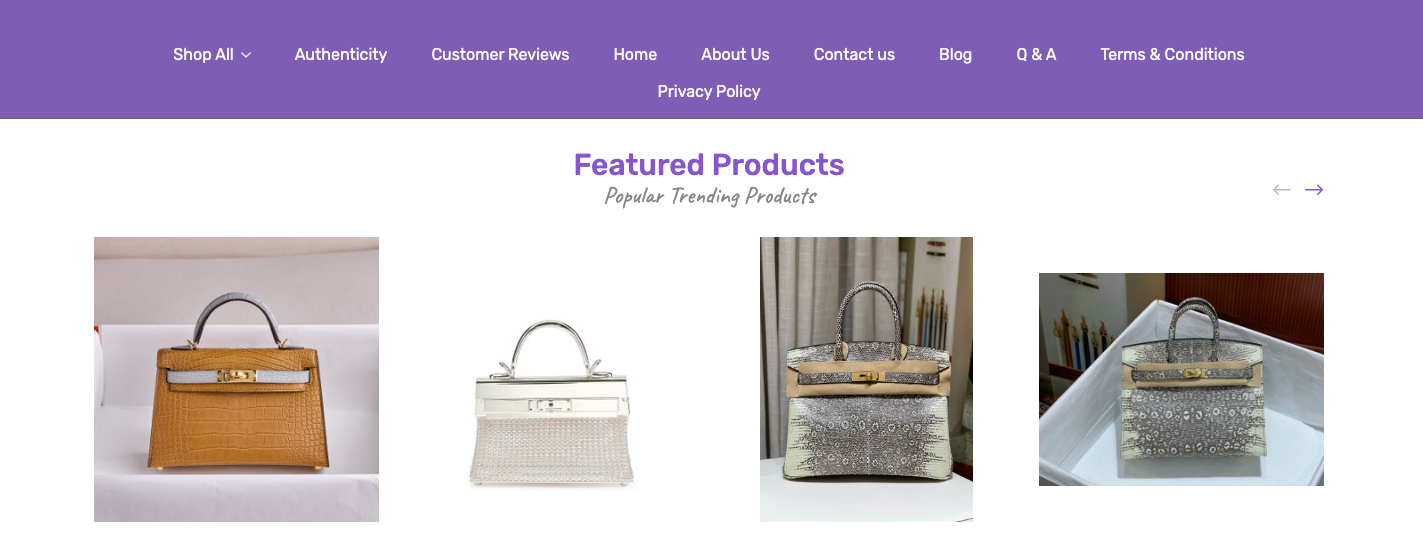
Our curated platform is built for buyers who take authenticity seriously at every level. Whether you are exploring rare Hermès pieces or seeking guidance on what to look for in a traceable, certified leather bag, our resources are here to support your decisions. Discover curated luxury handbags sourced with the rigor you expect, and explore our luxury resale workflow to understand exactly how we verify and present every piece in our collection.
Frequently asked questions
How can I tell if a luxury bag’s leather is truly traceable?
Look for chain-of-custody documentation, LWG Gold or Silver compliance, and evidence of third-party scientific testing such as isotopic analysis provided directly by the brand or an independent verifier.
Why is traceability becoming a bigger issue in luxury fashion?
Luxury buyers increasingly expect proof of ethical sourcing, while EUDR mandates and counterfeiting risks are forcing brands to document and disclose supply chain details that were previously kept internal.
What’s the difference between LWG and other certifications?
LWG benchmarks environmental performance specifically at the tannery level using defined Gold, Silver, and Bronze thresholds, while other certifications may address different sustainability dimensions such as farm-level animal welfare or chemical use.
Is it possible to trace leather all the way to the individual animal?
In most cases, forensic testing and certified sourcing are required to achieve full-chain traceability to the individual animal, and this level of verification remains rare outside of brands that have made significant infrastructure investments.