


Role of Trends in Designer Bags – Impact on Investment Value
BVPRIVE Editorial Team on 22nd Feb 2026
Role of Trends in Designer Bags – Impact on Investment Value
Luxury handbag collectors know that every acquisition can shift the balance of their investment portfolio. Rising disposable incomes and evolving fashion preferences worldwide have elevated designer bags from statement accessories to bona fide assets, making them attractive to investors seeking high-value opportunities. This article reveals how market growth, brand heritage, and scarcity shape current designer bag trends, helping you identify pieces poised for long-term appreciation.
Table of Contents
- Designer Bag Trends And Investment Fundamentals
- Key Categories Driving Collector Demand
- Fashion Cycles And Resale Market Dynamics
- Authenticity Verification And Scarcity Factors
- Risks, Liquidity, And Strategic Portfolio Tips
Key Takeaways
| Point | Details |
|---|---|
| Investment Potential | Designer bags are now viewed as tangible assets, with features such as brand prestige and limited production driving their appreciation. |
| Collector Demand | Certain bag categories, such as totes and crossbody bags, are favored for their functionality and aesthetic appeal, impacting investment strategies. |
| Fashion Cycle Dynamics | The collapse of traditional fashion cycles has altered resale behaviors, increasing demand for heritage pieces in place of trend-driven styles. |
| Authentication Importance | Verified authenticity and proven rarity are crucial for maintaining investment value, mitigating risks associated with counterfeits and market fluctuations. |
Designer bag trends and investment fundamentals
Designer bags have evolved far beyond fashion accessories. Today, they represent tangible assets with genuine investment potential, driven by measurable market dynamics and consumer behavior shifts.
The global handbag market reflects this transformation clearly. Rising disposable incomes and changing fashion preferences fuel consistent market growth, positioning luxury bags as both lifestyle statements and financial holdings. This dual appeal attracts a diverse collector base.
What makes designer bags investment-worthy comes down to specific fundamentals:
- Brand prestige drives long-term value retention and appreciation potential
- Craftsmanship quality ensures durability that justifies premium pricing across decades
- Limited production runs create scarcity that strengthens resale demand
- Iconic heritage pieces outperform trend-driven styles in value appreciation
- Material provenance (exotic leathers, precious metals) commands sustained collector interest
The market currently experiences a CAGR exceeding 6%, driven by rising female workforce participation globally. Working professionals view designer bags as functional investments that project status while serving daily needs.
Trends shape investment fundamentals in real ways. Sustainable materials like vegan leather and upcycled fabrics attract environmentally conscious collectors willing to pay premiums. Minimalist aesthetics influence which vintage pieces appreciate versus depreciate. Color trends matter—classic blacks and neutral tones outperform season-specific hues over five-year horizons.
The strongest investment pieces balance trend awareness with timeless design DNA that transcends seasonal fashion cycles.
Authenticity acts as the foundation of investment value. When you examine bags through the BVPRIVE Authentication Guarantee, every stitch and material component undergoes multi-point physical inspection by in-house experts. This verification process reveals whether a piece meets the museum-grade “Full Set” standard—including original boutique receipts and complete original packaging. Beyond simple checks, we verify the DNA of every stitch and skin to ensure investment-grade authenticity.
Understanding current market trends helps you identify pieces positioned for appreciation. Designer bag investment fundamentals require balancing trend awareness with timeless appeal, rarity with functional use, and current market pricing with long-term holding potential.
Pro tip: Focus your collection on pieces from houses with consistent heritage (think Hermès, Chanel, Louis Vuitton) rather than trend-dependent contemporary brands—established houses weather trend cycles while maintaining appreciation trajectories.
Key categories driving collector demand
Collector demand in designer bags concentrates on specific styles that balance aesthetic appeal with exclusivity and functionality. Understanding which categories command premium valuations helps you build an investment portfolio with stronger appreciation potential.
The dominant collector categories are remarkably consistent across global markets:
- Tote bags dominate for their versatility and everyday functionality combined with prestige signaling
- Crossbody bags appeal to collectors seeking hands-free sophistication and travel practicality
- Mini and micro bags attract status-conscious collectors despite limited capacity due to their exclusivity positioning
- Clutches maintain collector interest as evening wear staples that showcase craftsmanship detail
- Satchels retain appeal for professionals who need structure and heritage-brand authenticity
Limited production runs and rarity significantly amplify demand for specific subcategories. Collectors actively pursue pieces from discontinued product lines, season-exclusive drops, and collaboration releases because scarcity directly translates to resale value appreciation.
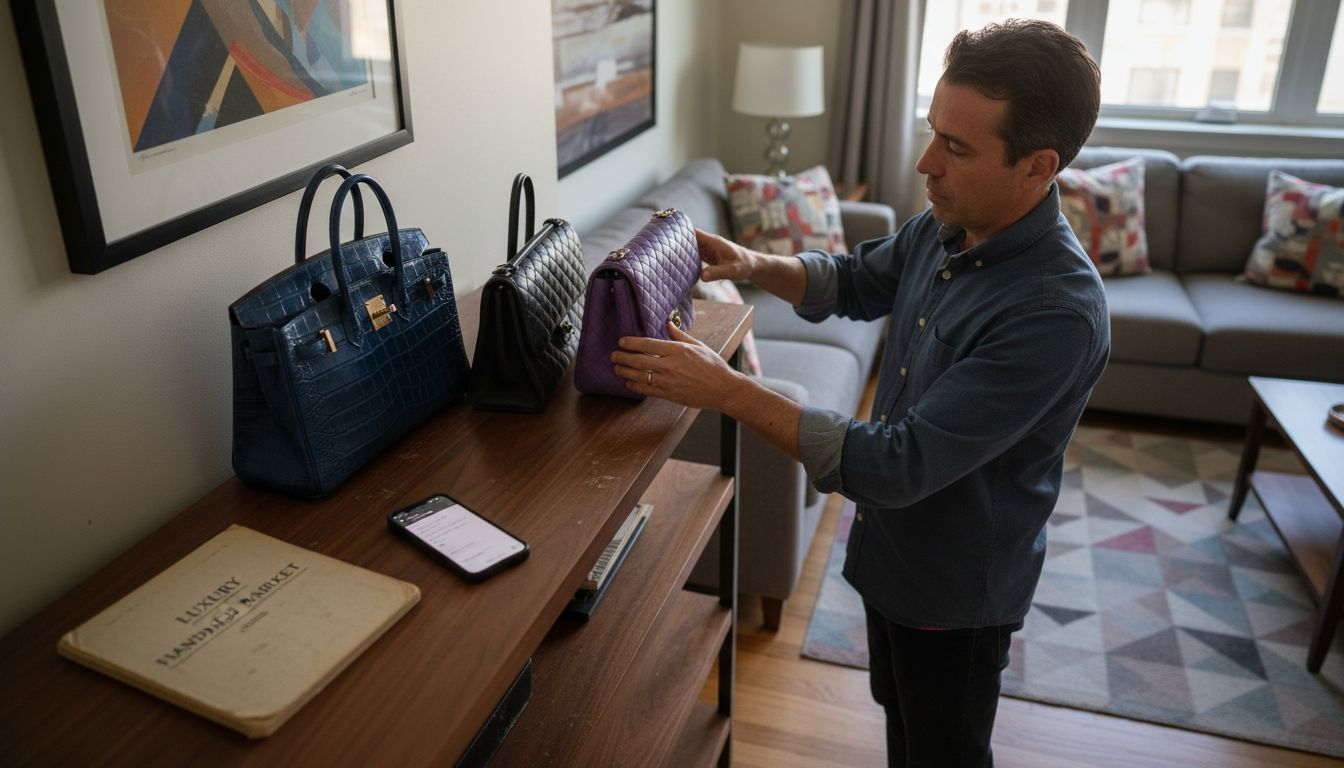
Here’s a summary comparing the main collector bag categories and their unique investment drivers:
| Bag Category | Investment Driver | Typical Collector Preference |
|---|---|---|
| Tote | Everyday functionality | Professionals, versatile usage |
| Crossbody | Travel practicality | Urban collectors, hands-free appeal |
| Mini/Micro | Exclusivity positioning | Status-conscious, trend influencers |
| Clutch | Craftsmanship showcase | Evening events, detail appreciators |
| Satchel | Heritage authenticity | Structured needs, brand loyalists |
Heritage brand appeal shapes collector priorities more than trend cycles. Pieces from Hermès, Chanel, and Louis Vuitton command sustained demand because these houses maintain decades-long production histories and established secondary markets. Newer brands struggle to retain value despite creative designs because collectors prioritize heritage and proven liquidity.
Social media visibility accelerates demand for specific categories at unpredictable intervals. Influencer endorsements and celebrity ownership create temporary spikes in collector interest for particular styles, though this trend-driven demand often peaks and deflates. Savvy collectors distinguish between sustainable collector interest and fleeting viral moments.
The most valuable collector categories combine heritage brand prestige with functional design that transcends seasonal fashion trends.
Sustainable materials now influence collector demand patterns. Pieces crafted from vegan leather and upcycled fabrics attract environmentally conscious collectors willing to pay premiums, creating new collector segments alongside traditional luxury-focused buyers. This shift expands the collector base beyond status-symbol motivations.
When evaluating categories for investment, consider rarity and brand heritage as primary filters. The BVPRIVE Authentication Guarantee ensures every piece meets museum-grade “Full Set” standards—original receipts, complete packaging, and verified provenance. Beyond simple checks, we verify the DNA of every stitch and skin to guarantee investment-grade authenticity.
Pro tip: Prioritize collector categories from within your preferred heritage house rather than chasing different brands—building a focused collection within one house creates liquidity advantages and deeper appreciation potential than scattered ownership across multiple houses.
Fashion cycles and resale market dynamics
Fashion cycles no longer follow the rigid seasonal patterns of decades past. Designer bag investment requires understanding how resale market dynamics reshape traditional fashion timelines and create new value appreciation windows.
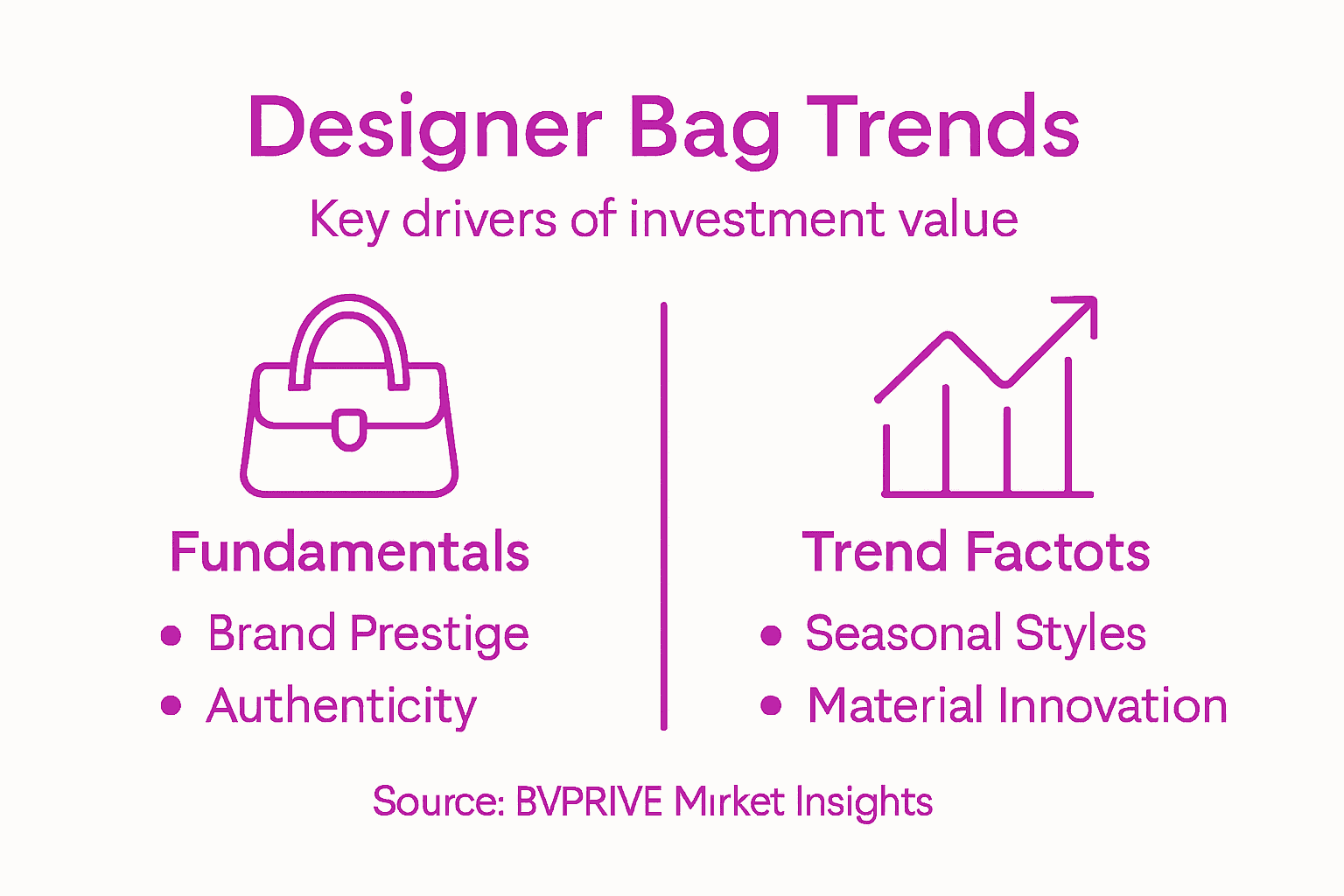
The traditional fashion cycle moved in predictable phases: spring collections launched, summer peaked, fall introduced new styles, and winter clearance dominated. This linear model is collapsing. Circular economy business models now extend product longevity by encouraging resale at multiple touchpoints, fragmenting what used to be cohesive seasonal demand.
Resale fundamentally alters how bags appreciate or depreciate:
- Extended use phases keep pieces in active circulation for 5-10 years instead of 2-3 seasons
- Secondary market pricing establishes value baselines independent of original retail price points
- Sustainability motivation drives broader collector participation beyond luxury enthusiasts
- Supply fragmentation reduces inventory concentration that powered past seasonal peaks and valleys
- Demand redistribution shifts volume away from new collections toward proven heritage pieces
Sustainability concerns now shape market dynamics more than pure fashion trends. Consumers are motivated by unique, budget-friendly alternatives and environmental consciousness, fundamentally changing when and why bags sell. This creates counterintuitive market behavior where a five-year-old bag might command stronger demand than a current-season equivalent.
Traditional fashion cycles favored early adopters who purchased at full retail and sold quickly. Modern resale dynamics reward patient collectors who understand that heritage pieces appreciate steadily while trend-driven styles depreciate sharply. The window for profitable exit timing has expanded dramatically.
Fashion cycles no longer dictate resale value—scarcity, heritage provenance, and functional design now determine appreciation trajectories across extended holding periods.
Regional variations increasingly matter. Asian markets show different resale patterns than European markets, driven by demographic preferences and local fashion heritage. Understanding regional demand variations helps you identify pieces positioned for stronger appreciation in specific geographic markets.
Authenticity becomes more critical as resale volume increases. The BVPRIVE Authentication Guarantee protects collectors in this fragmented marketplace through multi-point physical inspection by in-house experts. Beyond simple checks, we verify the DNA of every stitch and skin to ensure museum-grade quality that commands premium resale valuations across market cycles.
Timing exits strategically matters more now than ever before. Designer bag reseller platforms evaluate pieces based on current market positioning within extended fashion cycles rather than seasonal sell-through pressure.
Pro tip: Track when heritage houses introduce updated versions of iconic styles—this timing signals when older editions enter sustained demand phases, creating optimal windows for collector acquisition before secondary market prices accelerate sharply.
Authenticity verification and scarcity factors
Authenticity and scarcity function as dual pillars of designer bag investment value. Without verified authenticity, even scarce pieces lose investment appeal. Without scarcity, authentic pieces struggle to appreciate significantly. Understanding how these factors interact determines your portfolio success.
Scarcity drives psychological urgency among collectors. Psychological factors such as Fear of Missing Out (FoMO) and social comparison interact with scarcity to shape consumer behavior and perceived value. When a piece becomes harder to locate, demand intensifies and resale prices climb—but only if collectors trust the authenticity.
Authentication methods now span multiple approaches:
- Traditional expert verification relies on decades of pattern recognition and material knowledge
- Advanced digital technologies including blockchain systems enhance transparency in resale transactions
- Multi-point physical inspection examines construction details, material consistency, and manufacturing marks
- Provenance documentation traces ownership history and establishes clear chain of custody
- Museum-grade standards verify complete “Full Set” packaging, original receipts, and accessories
The BVPRIVE Authentication Guarantee protects your investment through comprehensive verification processes. Every item undergoes multi-point physical inspection by in-house experts who verify the DNA of every stitch and skin to ensure museum-grade quality. This goes beyond simple checks—we establish investment-grade certainty.
Digital authentication methods enhance trust and transparency in resale markets, strengthening investment appeal when combined with genuine scarcity. Collectors increasingly demand verified authentication before committing to premium pricing on secondary purchases.
Scarcity without authenticity equals financial risk. How to spot rare designer bags requires understanding both rarity indicators and authentication markers. A “rare” counterfeit holds zero investment value and creates legal exposure.
Authenticity without scarcity means modest appreciation potential. Common pieces from established houses appreciate steadily but predictably. Limited-edition variants from the same house appreciate dramatically faster because scarcity accelerates demand.
Verified authenticity combined with genuine scarcity creates the optimal investment condition—trust plus urgency equals sustained value appreciation.
Consumer trust in verified products enhances brand equity and sustains demand despite luxury market saturation. When you acquire pieces with documented authenticity and confirmed scarcity, you acquire pieces positioned for appreciation across market cycles.
Pro tip: Prioritize pieces with complete provenance documentation and original “Full Set” packaging over cheaper alternatives lacking authentication history—the authentication premium paid upfront translates to faster resale appreciation and higher liquidity when you exit the investment.
Risks, liquidity, and strategic portfolio tips
Designer bag investment carries real risks that separate successful collectors from those who experience losses. Understanding liquidity constraints and building strategic portfolios protects your capital and maximizes returns across market cycles.
Liquidity risk represents the primary challenge in designer bag investing. Unlike stocks or bonds, you cannot instantly convert a Hermès Birkin into cash at market value. Liquidity risk requires assessment of constraints and strategic tools including scenario analysis to optimize your asset allocation and ensure you can exit positions when needed.
Key investment risks include:
- Market timing risk where trend-driven pieces appreciate then crash when trends shift
- Authentication risk where counterfeit pieces circulate and destroy portfolio value
- Condition deterioration from improper storage or wear that reduces resale valuations
- Market saturation risk when supply increases and demand fails to match
- Illiquidity risk when you need to sell quickly but buyers won’t pay fair market prices
Liquidity management requires careful planning. Pricing arrangements and notice periods help manage liquidity risk in portfolios containing assets with limited marketability. Build your collection expecting 2-5 year holding periods minimum—shorter timelines expose you to unfavorable exit pricing.
Portfolio diversification reduces concentration risk significantly. Avoid allocating 50% of capital to a single piece. Spread investments across multiple heritage houses, styles, and price points to cushion against category-specific market downturns.
Authentication risk demands absolute vigilance. The BVPRIVE Authentication Guarantee protects you through multi-point physical inspection by in-house experts. Beyond simple checks, we verify the DNA of every stitch and skin to ensure museum-grade quality that maintains resale value.
Strategic diversification across multiple heritage houses, holding periods, and price points transforms designer bag investing from speculative gambling into disciplined portfolio management.
Condition management directly impacts liquidity. Pieces stored improperly deteriorate faster, commanding lower resale prices when you exit. Use climate-controlled storage, avoid direct sunlight, and handle pieces minimally to preserve investment value across holding periods.
To help you assess risks and build a sound portfolio, here’s a side-by-side overview:
| Risk Type | Portfolio Management Strategy | Impact on Investment |
|---|---|---|
| Liquidity | Plan for 2-5 year holding periods | Affects ability to exit at premium |
| Authentication | Use rigorously verified sources | Protects against total value loss |
| Condition | Employ proper storage and handling | Preserves resale potential |
| Market Timing | Avoid trend-dependent pieces | Prevents abrupt depreciation |
Market research before acquisition prevents impulse purchasing that destroys returns. Track which pieces appreciate consistently versus which fade after trend cycles. This intelligence helps you identify pieces positioned for appreciation before secondary market premiums accelerate.
Pro tip: Maintain detailed acquisition records including purchase date, price, condition notes, and authentication documentation—this provenance history strengthens resale value and simplifies exit execution when liquidity needs arise.
Elevate Your Designer Bag Investment With Authenticity and Timeless Value
Navigating the changing role of trends in designer bag investments can feel overwhelming. The article highlights how balancing trend awareness with heritage brand prestige, scarcity, and verified authenticity is essential to maximize long-term value. Many collectors struggle with risks like market timing, counterfeit items, and fluctuating demand. If you want to build a strategic collection of rare and limited-edition handbags from iconic houses such as Hermès, Chanel, and Louis Vuitton, prioritizing authenticity and scarcity is critical.
BVPRIVE specializes in curating museum-grade luxury handbags that meet strict authentication standards. With our focus on exclusive models like Birkin, Kelly, and 2.55 crafted from exotic leathers, we help you acquire investment-worthy bags that fuse timeless design with functional appeal. Our experts ensure every piece undergoes multi-point verification so you can trust your purchase stands the test of fashion cycles and resale market dynamics.
Secure your investment today by exploring our curated collection of exceptional handbags that transcend fleeting trends and embody lasting value.
Discover your next investment piece at BVPRIVE
Learn more about securing authentic luxury bags
Start building a timeless collection now
Frequently Asked Questions
How do trends affect the investment value of designer bags?
Trends can significantly influence the investment value of designer bags by dictating which styles and materials are in demand. Pieces that align with current trends may see short-term value appreciation, while timeless designs tend to retain their value over the long term.
What types of designs are currently trending in the designer bag market?
Current trends include sustainable materials like vegan leather and upcycled fabrics, minimalistic aesthetics, and classic colors such as blacks and neutrals. Understanding these trends can help identify bags positioned for appreciation.
How can I determine which designer bags are likely to appreciate in value?
To determine which designer bags may appreciate, consider factors such as brand prestige, craftsmanship quality, limited production runs, and whether the piece belongs to an iconic heritage collection. Analyzing trends along with these fundamentals will guide investment decisions.
Why is authenticity important for the investment value of designer bags?
Authenticity is crucial for investment value because verified pieces command higher resale prices and protect against significant losses from counterfeits. Authenticity ensures that collectors are willing to pay premium prices for pieces with established provenance.