


Role of Limited Edition Bags: Impact on Luxury Collectors
BVPRIVE Editorial Team on 25th Feb 2026
Role of Limited Edition Bags: Impact on Luxury Collectors
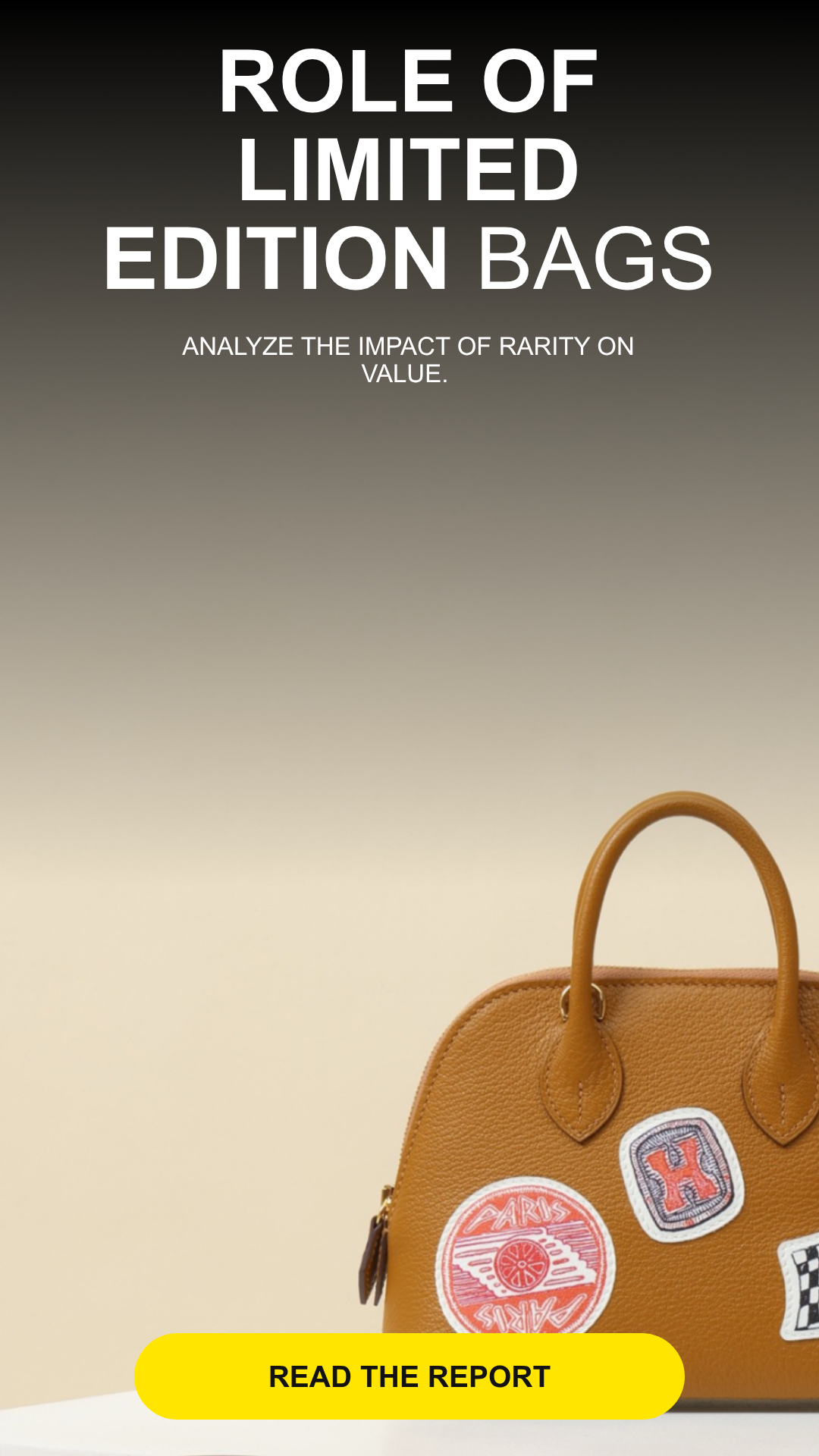
Owning a truly rare Hermès or Chanel bag sets you apart in a world where exclusivity signals status and discernment. For collectors who crave more than the ordinary, a limited edition bag offers much more than style—it represents scarcity and uniqueness designed to satisfy both personal identity and social prestige. Discover how influential brands craft these coveted releases and what defines a bag as genuinely limited in today’s elite fashion circles.
Table of Contents
- What Defines A Limited Edition Bag
- Scarcity As Marketing Strategy
- How Limited Editions Differ From Regular Releases
- Investment Perspective
- Types And Iconic Examples Explained
- Collector Appeal, Trends, And Future Outlook
Key Takeaways
| Point | Details |
|---|---|
| Limited Edition Bags Create Scarcity | The controlled production and unique designs generate demand, elevating their perceived value. |
| Investment Potential Is High | Limited editions often appreciate rapidly in the resale market due to their rarity and exclusivity. |
| Collaborations Enhance Desirability | Partnerships between brands and artists can produce highly sought-after limited editions, driving collector interest. |
| Authentication Ensures Value | Proper documentation and provenance are crucial for confirming authenticity and maintaining resale value. |
What Defines a Limited Edition Bag
A limited edition bag is a designer handbag created in restricted quantities over a specific timeframe, intentionally designed to generate exclusivity and demand. Unlike mass-produced collection pieces that remain available year-round, limited edition bags exist in deliberately controlled numbers.
These bags work through scarcity principles. When you know only a handful exist worldwide, the psychological impact changes everything. The fear of missing out becomes real, not theoretical.
The Core Characteristics
Scarcity and uniqueness define the foundation. Limited edition bags are produced in small batches—sometimes just a few hundred units globally. This restricted availability immediately separates them from standard offerings.
The intentional design approach matters equally. Brands don’t accidentally create limited editions. Production intensity, themes, and design elements are deliberately controlled to differentiate these pieces from regular inventory.
Here’s what typically distinguishes a true limited edition:
- Fixed production quantity with a predetermined ceiling (often disclosed to the public)
- Exclusive design elements not found in standard collections
- Specific timeframe for availability—usually 1-2 seasons maximum
- Unique collaborations with artists, designers, or heritage houses
- Premium materials or exotic leathers in rare colorways
- Numbered certificates documenting the edition’s exclusivity
Limited edition bags leverage psychological scarcity to create demand beyond the product’s functional value—this is where emotional investment transforms into financial value.
Scarcity as Marketing Strategy
Scarcity tactics deliberately create a sense of limited offer through atypical design elements and restricted availability. Brands engineer the conditions that make collectors feel they must act now or lose the opportunity forever.
When Hermès releases a limited Birkin in Taurillon leather with hardware available only in that season, collectors understand the window closes permanently. That’s calculated scarcity, not circumstance.
How Limited Editions Differ From Regular Releases
A standard collection bag might be restocked annually in different colors. A limited edition arrives once, in one color, then vanishes. The difference creates entirely different ownership psychology.
Regular bags emphasize functionality and timeless design. Limited editions emphasize rarity, prestige, and investment potential. One is meant to be used; the other becomes a vault piece.
This distinction matters for authentication. At BVPRIVE, we verify that every piece undergoes multi-point physical inspection—our Authentication Guarantee ensures limited edition bags demonstrate museum-grade quality through the original boutique receipts and complete packaging that proves provenance.
Here’s how limited edition bags differ from standard collection bags at a glance:
| Aspect | Limited Edition Bags | Standard Collection Bags |
|---|---|---|
| Availability | Strictly time-limited | Ongoing, restocked |
| Design Approach | Highly curated, unique features | Consistent, classic designs |
| Investment Potential | High appreciation, collector value | Steady or minor appreciation |
| Authentication Needs | Full documentation essential | Basic proof of purchase suffices |
Investment Perspective
Collectors pursue limited edition bags not just for ownership but for appreciation. Rarity drives value in ways regular releases cannot match. As supplies diminish further and demand persists, scarcity becomes the primary value driver.
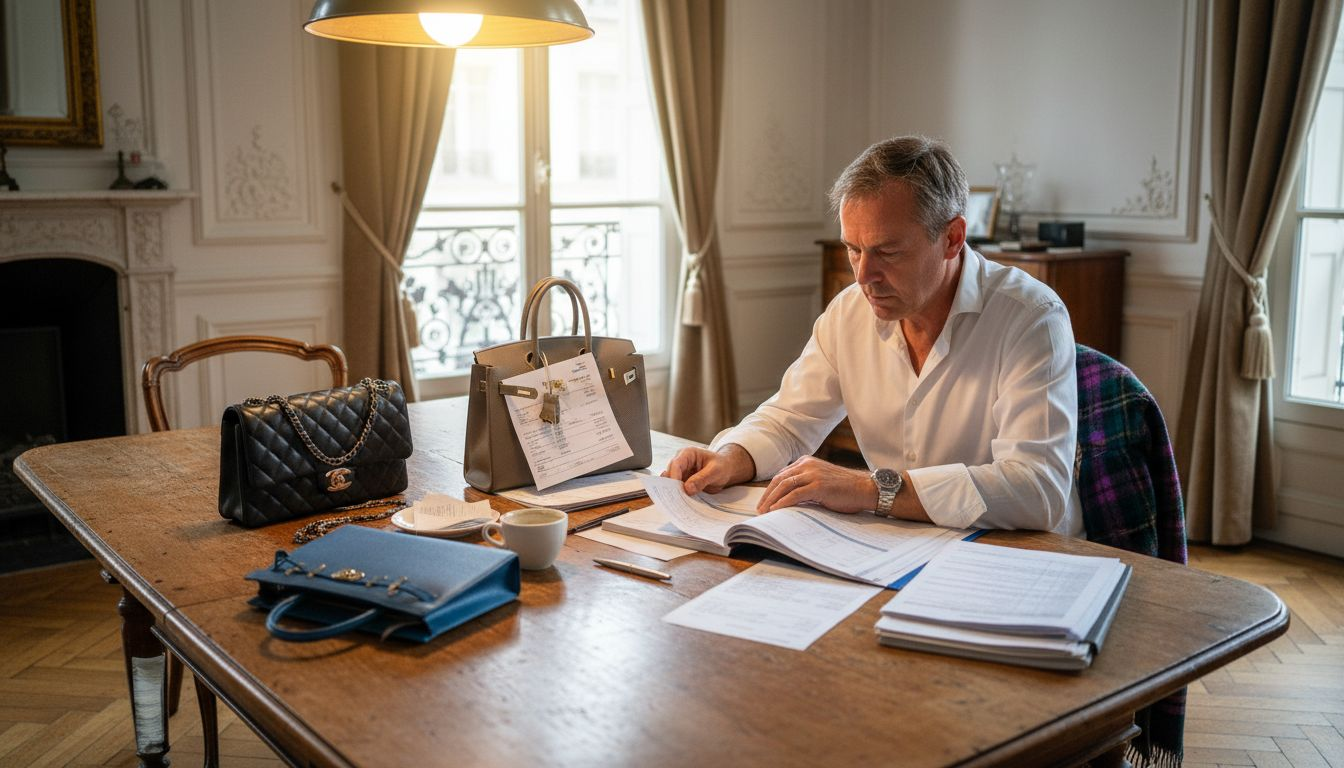
A limited edition Chanel 2.55 from 2015 now commands premiums that standard versions never achieve—the scarcity that defined it at release intensifies with each passing year.
Pro tip: When evaluating a limited edition bag, verify the production number against brand records and confirm all original packaging includes the limited edition documentation, which separates authentic collector pieces from counterfeit claims.
Types and Iconic Examples Explained
Limited edition bags fall into distinct categories, each serving different collector motivations and social functions. Understanding these types helps you recognize what you’re pursuing and why it matters in the luxury market.
Conspicuous vs. Non-Conspicuous Limited Editions
Conspicuous limited editions are designed to signal prestige and exclusivity to others. These bags satisfy social needs—when you carry a Hermès limited edition Birkin in a rare color, observers recognize its scarcity immediately.
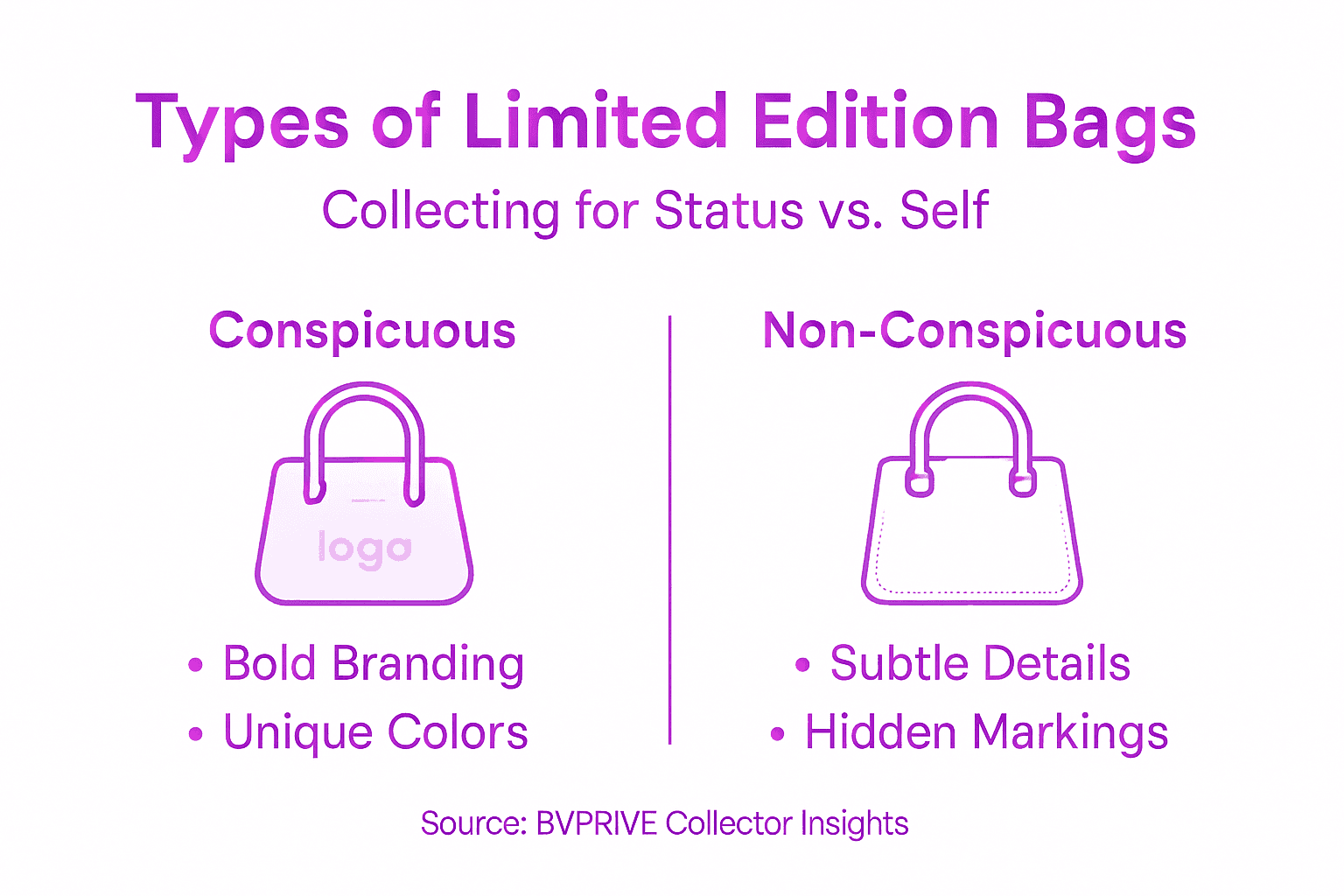
Non-conspicuous limited editions appeal to collectors seeking personal satisfaction over social display. These pieces might feature subtle design tweaks or exclusive materials that only serious collectors recognize.
Luxury limited edition bags typically fall into the conspicuous category because they balance self-expression with social status. The bag speaks both to you and your audience.
Brand Collaborations: A Defining Type
Limited edition collaborations represent some of the most coveted pieces in collecting. When two luxury powerhouses unite, they create something neither could achieve alone.
These collaborations transfer brand characteristics between houses, resulting in bespoke features that heighten desirability. Think of a Hermès designer partnering with an artist to reimagine iconic hardware or leather treatments.
Key collaboration examples include:
- Hermès × Artisan Designers: Custom leather treatments and hardware finishes
- Chanel × Street Culture: Crossover collections blending heritage with contemporary aesthetics
- Louis Vuitton × Artist Takeovers: Canvas reimagined through creative collaborations
- Fendi × Fashion Icons: Limited seasonal partnerships with renowned designers
Heritage Line Limited Editions
Brands celebrate milestone anniversaries with heritage limited editions. A Chanel 2.55 from 2020 (75th anniversary edition) carries historical significance alongside its production limits.
These pieces tell stories—they mark moments when houses revisited their archives and brought something forward that honors the past while feeling contemporary.
Exotic Materials and Regional Exclusives
Some limited editions exist because the materials themselves are scarce. A Birkin in Niloticus crocodile from a single tannery worldwide becomes limited by resource availability, not just brand choice.
Regional exclusives limit availability to specific countries or boutiques. Japanese Chanel editions, Middle Eastern Louis Vuitton collections, and European Fendi releases create natural scarcity through geography.
Real-World Iconic Examples
The 2008 Hermès Birkin in Rose Tyrien set collector expectations. Only hundreds produced, in a color so specific it never repeated. Today it commands 3-4x retail.
The Chanel Limited Edition Quilted Camera Bag (2019 collaboration) sold out in hours globally. Its success proved that conspicuous design innovation drives collector urgency.
The Fendi Peekaboo Essentially shows how simplification becomes luxury. By stripping back the design and limiting production, Fendi created mysterious desirability.
Iconic limited editions become legendary not because they were rare at release, but because their rarity intensifies as demand grows and no replacements exist.
At BVPRIVE, our Authentication Guarantee verifies that every limited edition bag demonstrates museum-grade quality through multi-point inspection. We verify production numbers, examine design authenticity, and confirm all original documentation—the Full Set standard including boutique receipts ensures you’re acquiring genuine collector pieces, not replicas claiming limited edition status.
Pro tip: Research the exact production year and documentation for any limited edition before purchasing—collaboration details, regional release codes, and original retail receipts verify authenticity far better than rarity claims alone.
Rarity, Exclusivity, and Brand Strategies
Luxury brands engineer limited edition releases using carefully calculated psychology and business strategy. Understanding how they create scarcity reveals why collectors respond with such intensity to these launches.
The Psychology of Scarcity
Scarcity triggers urgency. When you know a limited edition bag exists in only 200 units worldwide, your brain activates fear of missing out immediately. This isn’t accidental—brands leverage this reaction deliberately.
Scarcity and exclusivity are core psychological drivers that create emotional engagement beyond the product itself. They confer social status and reinforce personal identity in ways regular releases cannot match.
This psychology works because exclusivity feels like belonging to something elite. You’re not just buying a bag; you’re joining a group of people discerning enough to recognize value.
Brand Strategies Behind Limited Releases
Brands don’t randomly create limited editions. They deploy specific tactics across marketing, pricing, and distribution:
- Controlled production: Setting hard caps on units, often announced publicly
- Themed releases: Tying limited editions to anniversaries, collaborations, or cultural moments
- Strategic pricing: Often charging premiums that signal exclusivity rather than cost
- Limited distribution: Releasing through select boutiques, not full retail networks
- Time-bound availability: Creating specific windows that close permanently
How Exclusivity Maintains Brand Prestige
Luxury brands protect their prestige through strategic unavailability. A Hermès limited Birkin exists partly because Hermès controls how many reach the market, not because leather or craftsmanship disappeared.
When you can’t have something, you want it more. Brands use this principle to maintain desirability at premium price points. The scarcity isn’t incidental—it’s the product strategy.
They adjust marketing mix elements intentionally. Limited editions receive different promotional treatment, distribution channels, and pricing structures than standard collections. Every decision reinforces the exclusivity message.
The Value Amplification Effect
Rarity amplifies perceived value exponentially. A standard Chanel 2.55 in black caviar holds steady. A limited edition 2.55 in a color released only once appreciates because its scarcity deepens with time.
Brands understand investment value in rare handbags attracts serious collectors willing to pay premiums. This knowledge influences their limited edition strategy—they time releases to capture collectors seeking both emotional satisfaction and financial appreciation.
Year after year, as supplies diminish and awareness spreads, scarcity compounds. The bag becomes more valuable simply because fewer remain accessible.
Brands engineer scarcity to create emotional investment; collectors pursue limited editions because that emotional investment transforms into tangible financial value over time.
Maintaining Prestige Through Strategic Limits
What separates true luxury from aspirational brands? Limited editions. When anyone can access something, it loses prestige value. Hermès maintains its position partly because a Kelly bag in certain configurations simply stops being made.
This strategy keeps collectors engaged perpetually. Once a limited edition closes, speculation begins immediately about whether it will return, appreciate, or disappear forever.
At BVPRIVE, we authenticate limited editions through our multi-point inspection process, verifying production numbers and documentation that proves scarcity claims. Our Authentication Guarantee confirms you’re acquiring genuine pieces where rarity is documented, not assumed—the Full Set standard with original receipts ensures your investment reflects actual exclusivity, not marketing fiction.
Pro tip: Track brand release patterns across multiple seasons to anticipate limited edition drops—brands often signal future scarcity strategies through prior announcements, giving collectors time to prepare financially and emotionally for competitive releases.
Investment Value and Market Performance
Limited edition bags perform differently in the resale market than standard releases. Understanding these dynamics helps collectors make informed purchasing decisions beyond emotional appeal.
Market Performance Fundamentals
Limited edition bags command premium pricing in secondary markets. A Hermès Birkin from a standard release might hold 60-70% of retail value. A limited edition Birkin in a rare color often appreciates to 150-200% of original retail within five years.
This performance gap stems from supply constraints. When production ends permanently, buyers competing for remaining pieces bid prices upward. Demand stays constant while availability shrinks—that’s the math driving appreciation.
Not all limited editions perform equally. Limited edition product performance depends on brand quality, product uniqueness, and scarcity levels. High-quality brands with strong exclusivity benefit most, while lesser-known collaborations may plateau or decline.
Factors Driving Investment Returns
Three elements determine whether a limited edition appreciates or stagnates:
- Brand heritage: Hermès and Chanel limited editions consistently appreciate; emerging brands fluctuate
- Design significance: Iconic, instantly recognizable pieces outperform experimental designs
- Material rarity: Exotic leathers and precious hardware amplify value gains
- Production scarcity: Fewer units produced typically means stronger appreciation potential
- Cultural moment: Limited editions tied to major moments (anniversaries, collaborations) appreciate faster
The Authenticity Premium
Authenticity documentation directly impacts resale value. A limited edition bag with complete original packaging, receipts, and certificates commands 20-30% premiums over the same bag without documentation.
At BVPRIVE, our Authentication Guarantee verifies every piece through multi-point inspection—we confirm original receipts, packaging completeness, and production numbers. This Full Set standard proves rarity claims and protects your investment value by providing marketplace credibility.
Key factors influencing limited edition bag investment value:
| Factor | Impact on Value | Collector Consideration |
|---|---|---|
| Brand Heritage | Boosts long-term appreciation | Prioritize top luxury houses |
| Material Rarity | Raises exclusivity and demand | Seek exotic or restricted materials |
| Documentation | Adds 20-30% resale premium | Always secure full set receipts |
Market Trends Affecting Value
Trends in designer bags influence whether limited editions appreciate or depreciate. A limited edition in a color that becomes unfashionable may underperform, while timeless colorways (black, neutral tones) maintain or gain value.
Trend cycles move faster now than historically. What felt exclusive five years ago might feel dated. Collectors should prioritize timeless aesthetics over trendy experimental designs when purchasing for investment.
Competitive Pressures and Brand Strategy
Saturation affects returns. When brands release too many limited editions, each loses exclusivity. A brand that launches five limited editions annually trains collectors to expect scarcity, potentially depressing individual piece appreciation.
Conversely, brands that release limited editions sparingly—once or twice yearly—maintain stronger investment performance because true scarcity persists.
Investment value in limited edition bags correlates directly with three factors: declining supply, stable-to-increasing demand, and documented authenticity proving rarity claims.
Building a Portfolio Perspective
Think of limited edition bags like fine art portfolios. You need diversity. One iconic Hermès Birkin limited edition anchors value; three experimental pieces from emerging brands dilute returns.
Collectors building investment portfolios prioritize established brands with proven appreciation tracks, documented scarcity through production numbers, and timeless design appeal over trend-dependent aesthetics.
Pro tip: Before purchasing any limited edition for investment, research comparable sales on resale platforms to verify actual market appreciation—projected scarcity value and documented market performance don’t always align, so real transaction data prevents overpaying for pieces that underperform historically.
Collector Appeal, Trends, and Future Outlook
Limited edition bags captivate collectors for reasons extending far beyond fashion. Understanding what drives appeal today reveals what will matter to collectors tomorrow.
Why Collectors Pursue Limited Editions
Exclusivity satisfies a primal human need. You want what others cannot have. Limited editions tap into identity expression—the bag becomes a statement about who you are and what you value.
Collectors aren’t just accumulating objects; they’re building narratives. Each limited edition piece tells a story: this Hermès color existed for exactly one season. This Chanel collaboration happened only once. That narrative permanence creates emotional attachment that transcends utility.
The prestige factor matters enormously. Owning a limited edition bag signals to the world that you understand luxury, recognize rarity, and possess resources to secure scarce items. That social currency attracts serious collectors.
Current Collector Trends
What excites collectors right now differs markedly from five years ago:
- Heritage and storytelling: Pieces tied to brand history appreciate faster than experimental designs
- Ethical sourcing: Collectors increasingly prioritize limited editions using sustainable, responsibly sourced materials
- Artist collaborations: Limited editions partnering with visual artists attract younger, trend-conscious collectors
- Regional exclusives: Japanese and Middle Eastern limited editions generate international demand
- Investment positioning: More collectors evaluate limited editions for financial appreciation, not just personal enjoyment
The Collaboration Revolution
Luxury brand collaborations represent the most pivotal trend shaping collector appeal. When Hermès partners with an emerging artist or Chanel collaborates with a cultural figure, they expose the brand to new collector segments while deepening loyalty among existing ones.
These collaborations create natural scarcity narratives. The collaboration exists for a defined moment, then closes forever. That temporal limitation amplifies desirability.
Sustainability and Future Direction
Future limited editions will increasingly emphasize sustainable innovation. Collectors today want rarity paired with responsibility—limited editions using lab-grown diamonds, recycled leathers, or blockchain-verified ethical sourcing will command premiums.
Brands that balance exclusivity with environmental consciousness will attract the next generation of collectors. Limited editions aren’t just scarce; they’ll be consciously produced.
The Digital Collector Shift
Blockchain authentication and NFT partnerships represent emerging trends. Limited edition bags may soon include digital certificates verifying authenticity and ownership history across multiple hands. This documentation transforms resale confidence.
The future of limited edition collecting combines three forces: strategic partnerships creating fresh narratives, sustainable production proving brand values, and digital verification enabling confident international trade.
Long-Term Collector Outlook
Limited editions will remain central to luxury collecting because they satisfy fundamental psychological needs—exclusivity, identity expression, and investment potential. These drivers won’t fade.
What changes is how brands deliver limited editions. Expect fewer, higher-quality releases. Expect stronger storytelling around each piece. Expect deeper collaboration integration. Expect transparent documentation of scarcity claims.
Collectors who understand why luxury bags hold value position themselves best for future appreciation. BVPRIVE’s Authentication Guarantee supports this by verifying through multi-point inspection that every limited edition meets museum-grade standards—our Full Set documentation including original receipts ensures your investment reflects authentic scarcity, not future regret.
Pro tip: Monitor brand collaboration announcements before official releases to identify limited editions with strongest appreciation potential—early awareness lets you assess design significance and scarcity levels before public launch drives competitive bidding.
Elevate Your Collection With Authentic Limited Edition Luxury Bags
Navigating the intricate world of limited edition bags presents challenges like verifying authenticity, securing full documentation, and ensuring true scarcity. Collectors understand the emotional and financial stakes tied to pieces with unique design elements, numbered certificates, and museum-grade provenance. At BVPRIVE, we address these critical pain points by providing a curated selection of authentic, rare, and limited-edition handbags from iconic brands such as Hermès, Chanel, Louis Vuitton, Fendi, and Christian Dior.
Our commitment to authenticity shines through our multi-point inspection and the exclusive Full Set standard that includes original receipts and packaging. This guarantees that your investment encompasses verified rarity and documented exclusivity. Unlock the prestige and lasting value only genuine limited editions can deliver. Explore our carefully selected collection at BVPRIVE to experience unparalleled access to coveted collector pieces.
Looking to secure a rare Hermès Birkin or a limited edition Chanel 2.55 today
Visit BVPRIVE now to browse our authentic, limited-edition bags crafted for discerning luxury enthusiasts. Don’t miss your chance to own a piece where exclusivity meets impeccable provenance. Elevate your luxury collection with confidence and style.
Discover how we bring authenticity and scarcity together to meet your collector goals at BVPRIVE. Start your journey toward owning a true collector’s dream today.
Frequently Asked Questions
What are limited edition bags?
Limited edition bags are designer handbags produced in restricted quantities over a specific timeframe, emphasizing exclusivity and scarcity compared to standard collections.
How do limited edition bags differ from regular collection pieces?
Limited edition bags are available for a short, predetermined period, often in unique designs and using premium materials, whereas regular collection pieces are continually restocked and typically follow classic design trends.
Why do collectors pursue limited edition bags?
Collectors pursue limited edition bags for their rarity, potential for appreciation in value, and the emotional connection tied to owning exclusive items that signify prestige and status.
What factors influence the investment value of limited edition bags?
The investment value of limited edition bags is influenced by brand heritage, material rarity, documentation authenticity, production scarcity, and cultural significance associated with the release.