


How to Spot Rare Designer Bags for Authentic Collectors
BVPRIVE Editorial Team on 21st Feb 2026
How to Spot Rare Designer Bags for Authentic Collectors
Spotting a true collector’s gem requires more than just taste—it takes an eye for rarity, brand legacy, and material excellence. For collectors aiming to build lasting value, the world’s most coveted bags from Hermès, Chanel, Louis Vuitton, and Dior command premium prices thanks to limited production runs and iconic status. This guide covers how to identify iconic models, decode production scarcity, examine craftsmanship, and verify authenticity to ensure your designer acquisitions stand out for both exclusivity and investment potential.
Table of Contents
- Step 1: Research Iconic and Limited-Edition Bag Models
- Step 2: Examine Materials, Hardware, and Craftsmanship Details
- Step 3: Verify Serial Numbers, Stamps, and Authenticity Markers
- Step 4: Consult Trusted Experts and Professional Authentication Services
Quick Summary
| Key Insight | Explanation |
|---|---|
| 1. Research Iconic Bag Models | Understand and identify designer bags known for their collector value and limited production. |
| 2. Evaluate Materials and Craftsmanship | Authentic luxury bags require examination of quality materials, stitching, and hardware details for verification. |
| 3. Verify Serial Numbers and Stamps | Authentic pieces feature specific date codes and maker’s stamps that distinguish them from fakes. |
| 4. Consult Professional Authenticator | Engage third-party services for expert evaluations, ensuring documentation of authenticity and provenance. |
Step 1: Research Iconic and Limited-Edition Bag Models
Becoming fluent in designer bag models is your foundation for spotting rare pieces. You need to understand which bags hold collector appeal, which ones were produced in limited quantities, and why certain styles command premium prices in the resale market.
Start by identifying the iconic models from your target brands. Hermès Birkin and Kelly bags, Chanel 2.55 and Classic Flap, and Louis Vuitton’s Speedy represent timeless designs with decades of production history. These brands maintain strict heritage narratives around their signature pieces, making them instantly recognizable to knowledgeable collectors.
Next, research production rarity. Limited edition runs differ dramatically from standard collections. Some bags were produced for only one or two seasons, while others represent special collaborations or exotic material variations. Understanding rarity drivers in luxury goods helps you recognize which pieces have genuine scarcity value versus those simply marketed as exclusive.
Dig into brand archives and collector databases:
- Manufacturer press releases announcing limited editions
- Official brand websites listing discontinued models
- Collector forums where enthusiasts document production years and specifications
- Auction house catalogs tracking comparable sales and demand patterns
Investigate seasonal variations and material exclusivity. A Birkin crafted from matte crocodile differs fundamentally from a standard leather version. Research how exotic leathers affect desirability. Color exclusivity matters too—certain hues were produced in smaller batches or released only in specific markets.
Study investment potential and iconic status across different models to understand pricing trends and collectibility factors. This research reveals which bags appreciate over time versus those that stagnate or depreciate.
Document everything you discover. Create a personal reference guide listing iconic models, their production years, material variants, and current market values. This becomes your authentication checklist when evaluating actual pieces.
Here’s a comparison of iconic designer bag models and their key hallmarks:
| Brand | Iconic Model | Unique Feature | Typical Rarity Factor |
|---|---|---|---|
| Hermès | Birkin | Signature lock and flap | Limited seasonal releases |
| Chanel | Classic Flap | Quilted pattern & chain | Occasional color exclusivity |
| Louis Vuitton | Speedy | Monogram canvas & shape | Special editions & collabs |
| Hermès | Kelly | Trapezoidal silhouette | Rare leathers, small batches |
| Chanel | 2.55 | Mademoiselle lock design | Vintage color/material runs |
Limited edition status combined with strong brand legacy creates the scarcity that drives collector demand and establishes long-term value.
Beyond a simple check, BVPRIVE verifies the DNA of every stitch and skin through our Authentication Guarantee, ensuring museum-grade quality backed by multi-point physical inspection and original boutique receipts.
Pro tip: Follow fashion historian accounts and collector communities on social platforms to stay current on newly discovered rare variations and emerging market trends for models you’re tracking.
Step 2: Examine Materials, Hardware, and Craftsmanship Details
This is where authenticity reveals itself. Luxury designer bags tell stories through their materials and construction, and counterfeiters struggle to replicate these details consistently across an entire piece.
Start by evaluating the leather quality. Authentic luxury bags use full-grain leather or premium exotic skins. Run your fingers across the surface—genuine leather develops a natural patina and feels supple, not plastic-like. Examine how light reflects off the leather. Authentic pieces show subtle variation in tone and texture, while fakes often appear uniformly flat or artificially shiny.
Understanding craftsmanship in luxury bags teaches you why superior construction distinguishes real pieces from imitations. Look for these markers of quality craftsmanship:
- Hand-stitching with consistent, even spacing and reinforced corners
- Interior linings made from silk or high-quality fabric, never cheap polyester
- Logos embossed or stamped with crisp, clean edges
- Seams that follow the bag’s contours without puckering or wavering
- Color consistency throughout—dye should penetrate evenly
Inspect the hardware closely. Authentic pieces use solid brass, gold-plated metal, or stainless steel. Counterfeit hardware feels lightweight and cheap, with uneven plating that shows base metal underneath. Check engraving on clasps and feet—genuine pieces have sharp, precise lettering. Run your fingernail across logos. Real hardware resists scratching; fake plating flakes or scratches easily.
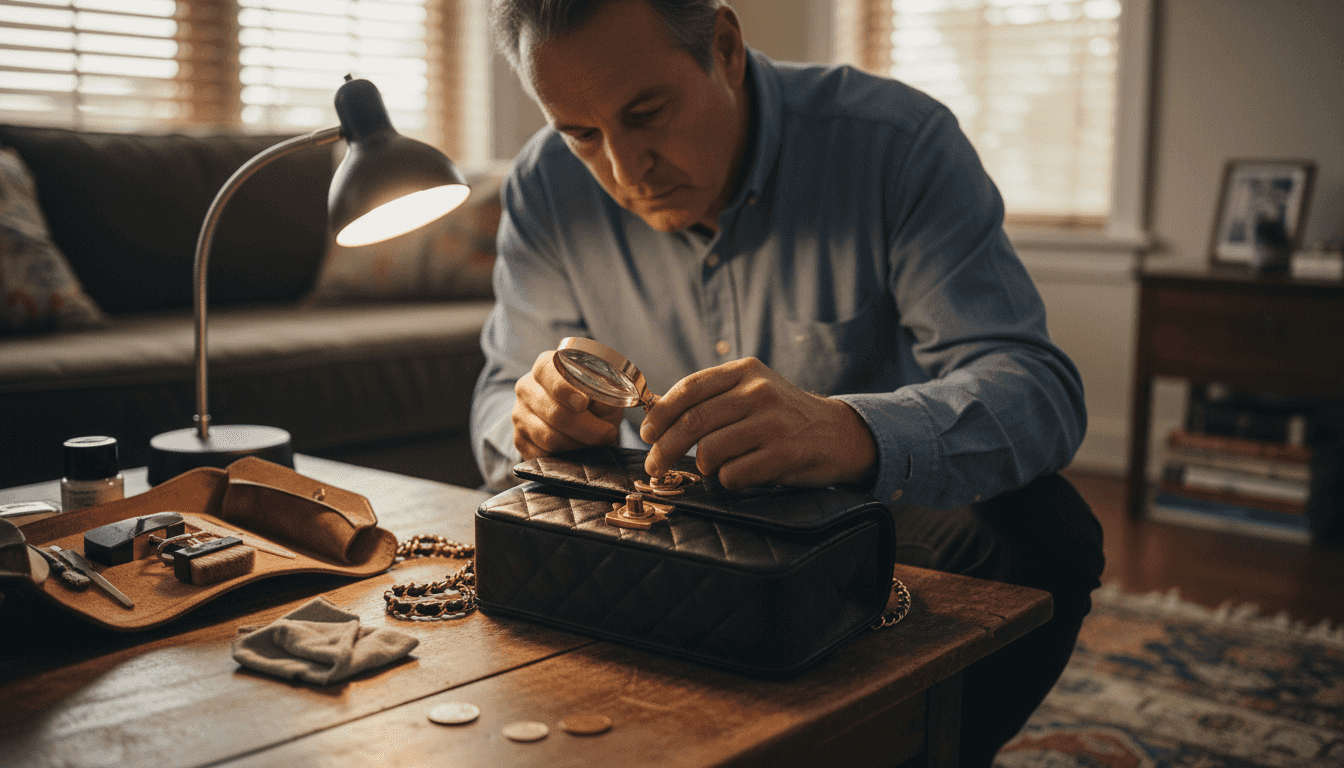
Examine the interior details. Authentic designer bags feature precisely positioned date codes or serial numbers laser-etched into leather or metal plates. The formatting, font, and placement matter enormously. Counterfeiters often get these wrong because they’re brand-specific.
Research Italian leather craftsmanship techniques if your target bags come from European manufacturers. Understanding regional tanning methods and hand-stitching traditions helps you spot authentic construction versus mass-produced imitation.
Exceptional craftsmanship cannot be rushed or faked—every stitch, texture, and hardware detail must align perfectly across the entire piece.
BVPRIVE’s Authentication Guarantee reflects this commitment. Every item undergoes multi-point physical inspection verifying material integrity, stitching precision, and hardware authenticity. We examine the DNA of every stitch and skin to ensure museum-grade quality backed by original boutique receipts.
Pro tip: Photograph the interior serial numbers, hardware engravings, and leather grain patterns from multiple angles to build your reference library for comparing similar models across different production years.
Step 3: Verify Serial Numbers, Stamps, and Authenticity Markers
Serial numbers and maker’s stamps are your forensic evidence. Every authentic designer bag carries specific identification marks that counterfeiters struggle to replicate accurately, and understanding these markers separates genuine pieces from sophisticated fakes.
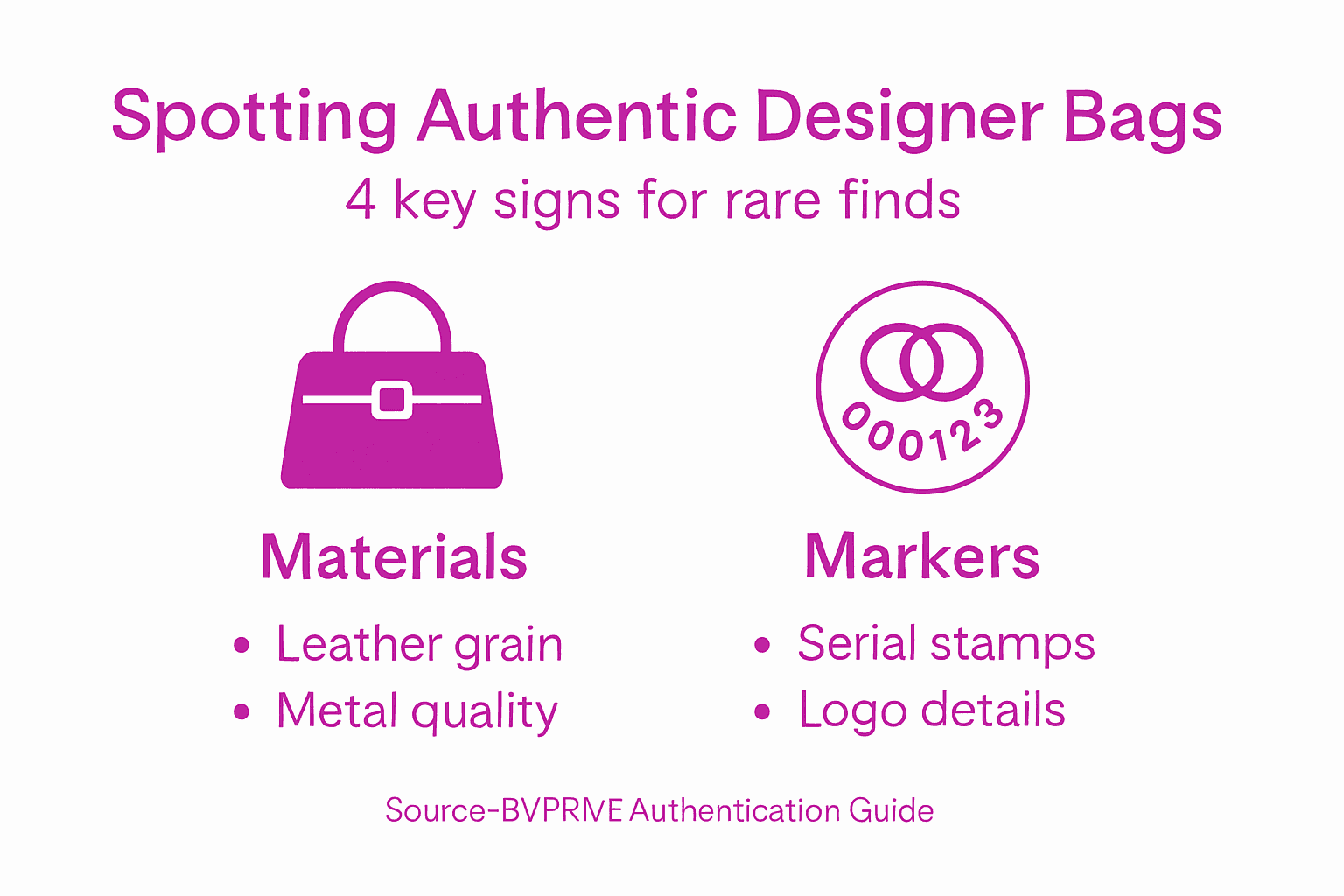
Locate the date code or serial number. Most luxury brands place these inside the bag on leather patches, metal plaques, or embossed directly into leather. The format varies by brand and production year. Hermès uses date stamps with letters and numbers that correspond to specific workshop locations and years. Chanel uses a two-line format with numbers indicating production date and location codes.
Examine the stamp quality. Authentic stamps are crisp, evenly spaced, and consistent in depth. The font should match your brand’s specifications exactly. Counterfeit stamps often appear blurry, unevenly pressed, or with irregular spacing. Run your finger across the stamped area—genuine marks feel slightly raised or recessed, never flat or painted-on.
Verify luxury bag authentication methods specific to your target brand. Each manufacturer uses distinct identification systems:
- Hermès stamps include specific letters corresponding to production locations and years
- Chanel serial numbers follow precise formatting rules that change with production periods
- Louis Vuitton uses date codes within specific date ranges by model
- Fendi incorporates Roman numerals and sequential numbering patterns
- Dior uses specific alphanumeric codes tied to production batches
Cross-reference your findings with brand archives and authentication databases. Counterfeiters often use generic or recycled serial numbers, which creates inconsistencies when compared against authentic production records. A serial number format might match the right era, but the specific code might not exist in that brand’s documentation.
Check for maker’s marks and logos. Interior stamps should show the brand’s name or logo with precise clarity. The positioning matters—logos should sit in exact locations relative to date codes. Placement variations between authentic pieces and counterfeits reveal quality control differences that indicate manufacture origin.
Serial numbers tell a story of when and where your bag was made, and authentic manufacturers maintain detailed records that match genuine pieces perfectly.
BVPRIVE’s Authentication Guarantee includes verification of every serial number, date code, and stamp against our comprehensive database. Beyond a simple check, we verify the DNA of every stitch and skin, cross-referencing all identification markers with official brand records to ensure museum-grade quality backed by original boutique receipts.
Pro tip: Create a spreadsheet documenting serial numbers, production locations, and dates for all models you collect—this reference library becomes invaluable for spotting inconsistencies when examining potential acquisitions.
Step 4: Consult Trusted Experts and Professional Authentication Services
Even experienced collectors benefit from professional verification. Third-party authentication services provide objective assessment and official documentation that protects your investment and establishes provenance for future sales.
Understand what professional authenticators evaluate. They examine materials, logos, serial numbers, stitching patterns, and hardware against comprehensive brand databases. Many services use AI-enhanced analysis combined with expert human review to catch details invisible to the untrained eye.
Research authentication options available to you. Expert luxury authentication services combine human expertise with virtual technology, allowing you to upload photos for review by multiple specialists. Most deliver results within 12 to 24 hours with detailed reports and certificates of authenticity.
When selecting an authenticator, look for these credentials:
- Industry certification and recognized credentials
- Years of experience specifically with your target brands
- Transparent methodology and detailed reporting
- Insurance coverage protecting your items during evaluation
- Recognition by major resale platforms and collectors
- Clear pricing without hidden fees
Prepare your submission carefully. High-quality photographs from multiple angles help authenticators assess details accurately. Include close-ups of serial numbers, hardware, stitching, and leather texture. Provide complete provenance information including purchase receipts and any previous authentication documents.
Understand the certification process and expert evaluation methods. Independent laboratories utilize both technological analysis and expert assessment to examine materials, logos, and craftsmanship. They provide certificates of conformity quickly, giving you documented proof of authenticity.
Consider authentication timing strategically. Before making high-value acquisitions, get professional verification. Before selling rare pieces, certification adds credibility and justifies premium pricing. Building relationships with trusted authenticators helps you access priority evaluation when time-sensitive opportunities arise.
Professional authentication transforms subjective opinions into objective documentation that protects your collection and increases resale value significantly.
BVPRIVE goes further with our Authentication Guarantee. Every item undergoes multi-point physical inspection by in-house experts examining the DNA of every stitch and skin. We cross-reference findings with official brand records, verify original boutique receipts, and maintain complete provenance documentation—ensuring museum-grade quality for every acquisition.
The table below summarizes expert authentication methods and their main benefits:
| Method | Main Focus | Benefit to Collector |
|---|---|---|
| Serial number analysis | Production year & batch | Ensures accurate provenance |
| Material inspection | Leather, hardware, lining | Detects high-quality finishes |
| Professional review | Brand standards expertise | Adds resale and investment value |
| Database cross-referencing | Serial, stamp, logo archives | Identifies fakes and discrepancies |
Pro tip: Request detailed authentication reports that specifically address why a piece is authentic, not just confirmation that it is—these detailed assessments become invaluable reference materials for evaluating similar models in the future.
Discover Authentic Rare Designer Bags with Confidence
Spotting rare designer bags requires deep knowledge of iconic models, craftsmanship, and authenticity markers. You want to avoid costly mistakes by ensuring every leather texture, serial number, and hardware detail matches trusted standards. At BVPRIVE, we understand the challenges collectors face when verifying limited-edition Hermès Birkins or Chanel 2.55s. We offer a curated selection of genuinely rare luxury handbags verified by experts through our Authentication Guarantee, so you can shop with absolute trust.
Whether you seek exclusive exotic leather versions or iconic vintage pieces, browse our collection that reflects the highest craftsmanship and provenance standards. Shopping at BVPRIVE means gaining access to tax-free worldwide delivery, VIP personal shopping services, and detailed authenticity documentation that makes your investment safer and more rewarding.
Elevate your luxury collection today with confidence.
Explore our unparalleled inventory of rare designer bags and experience the secure, expert-backed buying process only at BVPRIVE. Start your journey now to own authentic masterpieces from the world’s most coveted luxury brands.
Frequently Asked Questions
How can I identify iconic designer bag models?
To identify iconic designer bag models, research bags that are known for their long-standing popularity and collector appeal. Start by familiarizing yourself with models from brands like Hermès, Chanel, and Louis Vuitton, which consistently hold their value in the resale market.
What factors contribute to the rarity of designer bags?
The rarity of designer bags can depend on production limits, material variations, and exclusive collaborations. Investigate bags that were released in limited quantities and those made with exotic materials to understand which ones might appreciate in value over time.
How do I verify the materials and craftsmanship of a designer bag?
To verify the materials and craftsmanship, closely examine the leather quality, stitching, and hardware details. High-quality bags use full-grain leather and precise hand-stitching, so run your fingers over the texture and check for consistent craftsmanship throughout the bag.
What should I look for in a designer bag’s serial number and stamps?
When evaluating a designer bag’s serial number and stamps, look for the correct format, sharp and clear impressions, and consistent depth. Thoroughly check the location and formatting against known standards for that brand, as counterfeit pieces often exhibit irregularities in these marks.
Why should I consult professional authentication services for designer bags?
Consulting professional authentication services provides objective verification of your designer bags and protects your investment. These experts evaluate multiple aspects of the bag, ensuring you receive documentation that validates its authenticity and enhances its resale potential.
What essential steps can I take to build my knowledge about rare designer bags?
To build your knowledge, start documenting key information about iconic bag models, including production years and current market values. Regularly engage with fashion historian accounts and collector communities on social media to stay updated on emerging trends and rare variations.