


How exclusivity shapes luxury handbags in 2026
BVPRIVE Editorial Team on 16th Mar 2026
How exclusivity shapes luxury handbags in 2026
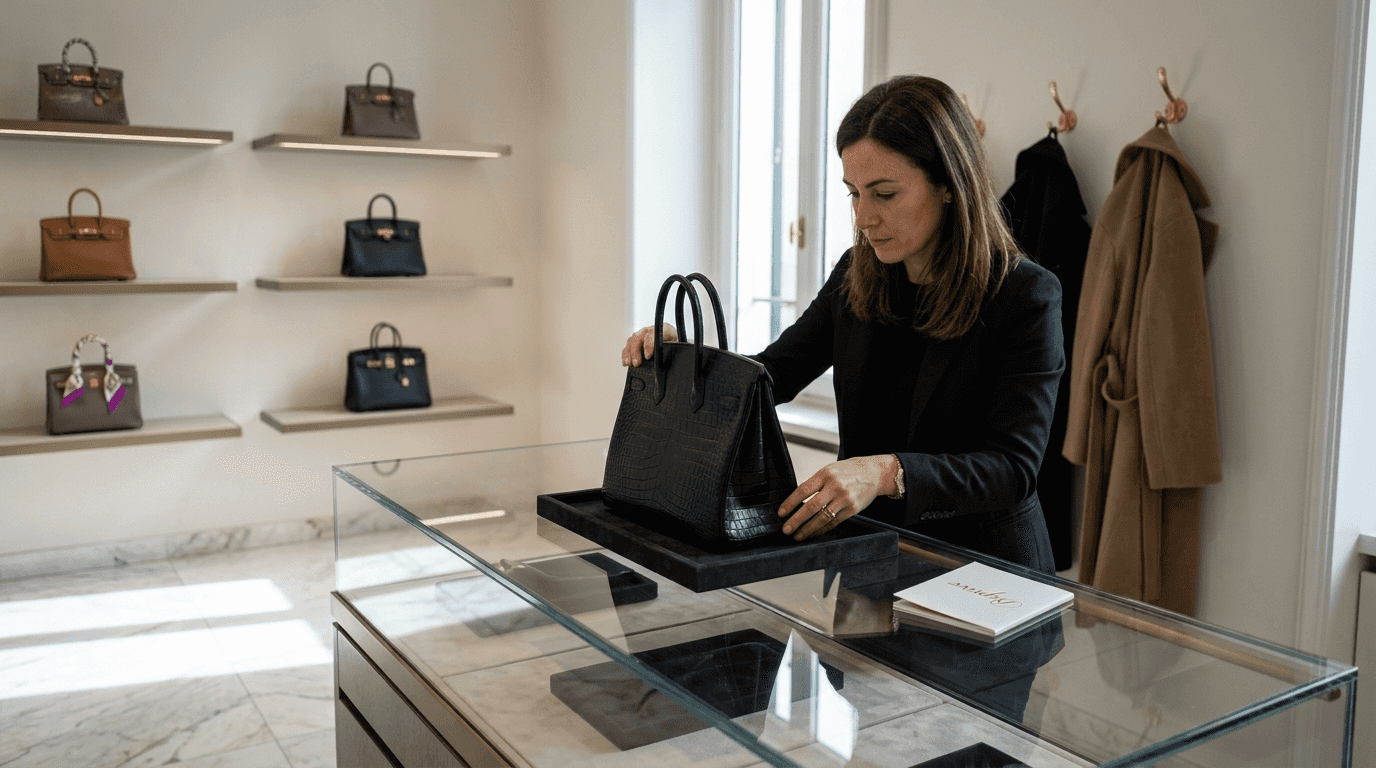
Exclusivity in luxury handbags extends far beyond price tags. Controlled production, selective sales practices, and strategic scarcity transform these accessories into coveted status symbols commanding extraordinary resale premiums. Understanding how brands create and maintain exclusivity reveals why wealth alone cannot guarantee access to the most sought-after pieces. This guide explores the mechanisms behind luxury handbag exclusivity in 2026, from artisanal production controls to digital strategies and secondary market dynamics. You’ll discover how these factors influence investment value and collector strategies.
Table of Contents
- How Luxury Brands Create Exclusivity Through Controlled Production
- The Role Of Selective Sales And Market Scarcity In Exclusivity
- Digital Strategies: Maintaining Exclusivity In An Online World
- Exclusivity’s Impact On Secondary Markets And Investment Value
- Discover Rare Luxury Handbags At BVPRIVE
- Frequently Asked Questions
Key takeaways
| Point | Details |
|---|---|
| Controlled scarcity drives demand | Limited production and artisanal craftsmanship create rarity that elevates desirability and resale value beyond retail prices. |
| Exclusive access reinforces status | Invitation-only sales, quota systems, and loyalty requirements ensure handbags signal privilege beyond financial capacity. |
| Digital strategies preserve mystique | Luxury brands use waitlists, VIP-only online access, and limited e-commerce to maintain exclusivity in modern markets. |
| Resale premiums reflect rarity | Secondary market prices often exceed retail costs significantly, demonstrating how scarcity creates investment-grade assets. |
| Tiered systems control distribution | Brands employ sophisticated access hierarchies that reward loyal clients and restrict availability to newcomers. |
How luxury brands create exclusivity through controlled production
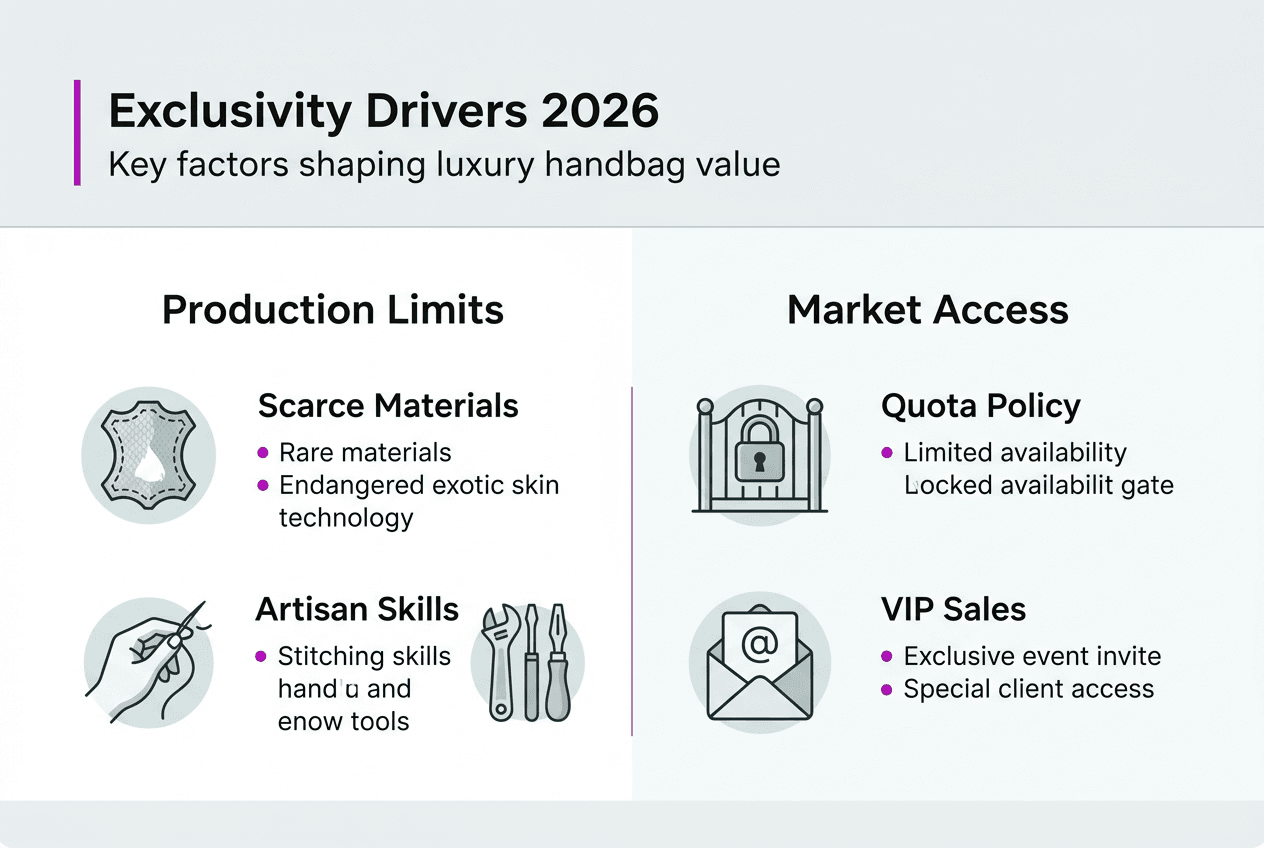
Luxury houses engineer scarcity through deliberate production constraints that make coveted handbags genuinely rare. Hermès controls supply deliberately with craftsmanship focus and disciplined distribution resulting in high resale premiums. Each Birkin bag requires 18 to 24 hours of meticulous handwork by a single artisan, limiting annual output regardless of demand. This production philosophy prioritizes quality over volume, creating authentic scarcity rather than artificial limitations.
Artisan training programs span years, restricting the number of craftspeople qualified to produce flagship models. Hermès trains leatherworkers for up to five years before they can independently create signature pieces. This extended apprenticeship naturally caps production capacity while ensuring exceptional quality standards. The result is a workforce that cannot be rapidly expanded to meet market demand, making increased production physically impossible without compromising brand values.
Manufacturing constraints translate directly into market dynamics that favor existing collectors. Limited production means retailers receive small allocations, creating competition among potential buyers. Sales associates gain discretion over distribution, allowing them to prioritize clients with established purchase histories. This system rewards loyalty and patience, transforming handbag acquisition into a relationship-building process rather than a simple transaction.
Secondary market prices reflect the genuine scarcity created by production controls. Birkin bags routinely sell for 50% to 200% above retail prices on resale platforms. Rare materials and colors command even higher premiums, with some pieces appreciating to multi-million dollar valuations. These price dynamics demonstrate how craftsmanship luxury bags value extends beyond aesthetics into investment territory.
Key production control methods:
- Single artisan construction limiting output velocity
- Extended training periods restricting qualified workforce
- Material sourcing constraints for exotic leathers
- Deliberate capacity management preventing rapid scaling
- Quality standards that prioritize perfection over speed
Pro Tip: Research a brand’s production philosophy before investing in luxury handbags. Brands with genuine artisanal constraints tend to maintain value better than those using artificial scarcity tactics.
The role of selective sales and market scarcity in exclusivity
Access to the most exclusive handbags requires demonstrating loyalty through substantial prior purchases. Hermès’ quota bag system and selective sales create artificial scarcity and strengthen exclusivity. Clients must establish relationships with sales associates and build purchase histories before receiving offers for Birkin or Kelly bags. This gatekeeping ensures handbags signal social capital and insider status beyond mere financial resources.
Quota systems formalize access hierarchies by limiting how many exclusive pieces each client can purchase annually. Even wealthy, established customers face restrictions, typically one or two quota bags per year regardless of spending capacity. These policies prevent hoarding and speculation while maintaining distribution across a broader client base. The system creates perpetual demand by ensuring supply remains constrained even for privileged buyers.

Sales associate discretion amplifies exclusivity by introducing subjective evaluation into purchasing decisions. Associates assess client relationships, purchase patterns, and brand engagement when deciding who receives offers. This personal dimension means wealth alone cannot guarantee access. Collectors must cultivate genuine relationships, attend brand events, and demonstrate authentic appreciation for the house’s heritage and craftsmanship.
Secondary market premiums reveal how selective sales drive economic value. Limited retail access forces buyers to resale platforms where prices reflect true scarcity. Bags that retail for $10,000 routinely command $20,000 to $40,000 on secondary markets. This price gap demonstrates the economic impact of controlled distribution and the premium collectors pay for immediate access.
Legal scrutiny has challenged whether these practices constitute unfair business tactics. Recent lawsuits allege tying arrangements that force ancillary purchases to access desired products. However, courts have generally recognized luxury brands’ rights to control distribution and maintain brand image through selective sales. The tension between exclusivity and consumer access continues evolving as markets and regulations adapt.
Selective sales mechanisms:
- Purchase history requirements establishing minimum spending thresholds
- Relationship building through repeated store visits and brand engagement
- Quota limitations capping annual exclusive bag purchases per client
- Sales associate discretion introducing subjective approval processes
- Invitation-only events providing exclusive purchasing opportunities
“The handbag has become a symbol of wealth and status, with access controlled through loyalty programs and purchase histories that money alone cannot buy.”
Understanding these dynamics helps collectors navigate acquisition strategies. Building relationships with sales associates, diversifying purchases across product categories, and demonstrating genuine brand appreciation increase access to buy limited edition bags exclusivity offerings.
Digital strategies: maintaining exclusivity in an online world
Luxury brands adapt exclusivity tactics for digital channels while preserving the scarcity that defines their appeal. Luxury brands maintain exclusivity online through waitlists, VIP-only services, and avoiding mass e-commerce. Digital platforms introduce new challenges as e-commerce democratizes access, threatening the controlled distribution that underpins luxury positioning. Brands respond with sophisticated online strategies that replicate physical boutique exclusivity.
Waitlist systems create digital scarcity by limiting purchasing opportunities even when inventory exists. Customers register interest and receive notifications when products become available, introducing time delays that mirror physical store allocation processes. These waitlists often span months or years for the most coveted items, maintaining anticipation and desire. The digital queue replaces physical store visits but preserves the exclusivity of limited access.
Invitation-only online sales restrict purchasing to pre-approved clients with established relationships. Brands send private links to select customers, allowing them exclusive access to new releases or rare pieces before broader availability. This approach maintains the privilege of insider access while leveraging digital convenience. Collectors receive VIP treatment through personalized digital experiences that feel exclusive despite the online medium.
Many luxury houses deliberately avoid direct e-commerce for their most exclusive lines. Hermès, for example, does not sell Birkin or Kelly bags through its website, requiring in-store purchases. This strategy preserves the relationship-building aspect of luxury retail and prevents online accessibility from undermining brand mystique. Digital channels showcase products and build desire, but acquisition requires traditional retail engagement.
VIP concierge services personalize digital interactions for high-value clients. Dedicated representatives provide private consultations, early access to inventory, and customized recommendations through secure digital channels. These services replicate the personalized attention of physical boutiques while offering digital convenience. Collectors receive white-glove treatment that reinforces their status and strengthens brand loyalty.
Digital exclusivity tactics:
- Password-protected product pages limiting visibility to invited clients
- Tiered membership programs with exclusive digital access levels
- Limited-time flash sales for VIP customers only
- Private appointment booking systems for virtual consultations
- Restricted product information requiring login for full details
Pro Tip: Join brand loyalty programs and engage with digital content to improve your access to exclusive online opportunities. Many brands track digital engagement when determining VIP status.
| Strategy | Purpose | Impact on Exclusivity |
|---|---|---|
| Waitlists | Control purchase timing | Maintains scarcity perception |
| Invitation-only sales | Restrict access to VIPs | Reinforces insider status |
| Limited e-commerce | Preserve in-store relationships | Protects traditional luxury model |
| VIP concierge | Personalize digital service | Enhances high-value client experience |
These approaches demonstrate how limited edition handbag rarity translates into digital environments. Brands successfully maintain exclusivity while adapting to modern consumer expectations for online convenience.
Exclusivity’s impact on secondary markets and investment value
Scarcity transforms luxury handbags into investment-grade assets commanding extraordinary returns. The Birkin bag commands extraordinary resale prices fueled by rarity and exclusivity, exemplifying luxury as an investment. Secondary markets reveal the economic impact of controlled distribution, with resale premiums demonstrating how scarcity creates tangible financial value. Collectors increasingly view exclusive handbags as alternative investments comparable to art or vintage automobiles.
Resale prices routinely exceed retail costs by substantial margins for the most exclusive pieces. Standard Birkin bags appreciate 20% to 50% above retail within months of purchase. Rare configurations featuring exotic leathers, unique colors, or limited editions command premiums of 100% to 300%. Some exceptional pieces have sold for over $500,000 at auction, demonstrating the investment potential of the rarest handbags.
Limited editions and special materials drive the highest appreciation rates. Crocodile, alligator, and ostrich leathers significantly increase value due to material scarcity and production complexity. Seasonal colors or collaborations with artists create additional rarity layers. These factors combine to make certain handbags genuinely scarce, supporting sustained value appreciation over time.
Cultural status reinforces economic value by maintaining demand among affluent collectors. Handbags featured in media, carried by celebrities, or associated with cultural moments gain additional cachet. This cultural dimension creates intangible value that complements material scarcity. Collectors pay premiums for pieces with provenance or cultural significance, further driving secondary market prices.
Market dynamics favor sellers in the luxury handbag resale ecosystem. Limited supply and strong demand create seller’s markets where prices trend upward. Authentication services, specialized resale platforms, and collector communities support robust secondary markets. These infrastructures enable liquid markets where collectors can realize gains, reinforcing handbags’ status as investment vehicles.
| Handbag Model | Retail Price | Average Resale Premium | Investment Factors |
|---|---|---|---|
| Hermès Birkin 25 | $10,000 | 40-80% | Size rarity, high demand |
| Hermès Kelly Exotic | $30,000+ | 100-200% | Exotic leather scarcity |
| Chanel Classic Flap | $8,000 | 20-40% | Timeless design, steady demand |
| Limited Edition Collaborations | Varies | 150-300% | Unique designs, extreme rarity |
Investment value drivers:
- Production scarcity ensuring limited supply
- Brand heritage and sustained market positioning
- Material rarity for exotic leathers and unique components
- Condition and provenance documentation
- Cultural relevance and celebrity associations
Understanding these dynamics helps collectors make informed acquisition decisions. Handbags collectible value depends on multiple factors beyond brand name, requiring market knowledge and strategic selection. Investors who understand exclusivity mechanisms can identify pieces with strong appreciation potential.
Discover rare luxury handbags at BVPRIVE
Navigating the complex world of exclusive luxury handbags requires expertise and access to authenticated rare pieces. BVPRIVE offers a curated selection of limited-edition handbags from Hermès, Chanel, Louis Vuitton, and other prestigious houses. Our platform connects discerning collectors with authenticated rare items that embody the exclusivity principles explored throughout this guide.
Our specialists provide personalized guidance on investment potential, rarity factors, and market dynamics. Whether you’re building a collection or seeking a specific rare piece, BVPRIVE delivers the expertise and access that exclusivity demands. We understand the nuances of luxury handbag markets and help clients make informed decisions aligned with their collecting goals. Experience white-glove service and gain access to pieces that exemplify true luxury exclusivity. Explore our BVPRIVE luxury handbag collection and discover how expert curation enhances your collecting journey.
Frequently asked questions
What makes a handbag exclusive?
A handbag achieves exclusivity through limited production, controlled distribution, and restricted purchasing access. Brands use artisanal craftsmanship that naturally limits output, creating genuine scarcity rather than artificial constraints. Selective sales practices requiring purchase histories and relationship building add social barriers beyond price. These factors combine to make certain handbags rare and difficult to acquire, elevating their status and desirability. Exclusivity transforms handbags from accessories into symbols of privilege and insider access. Understanding limited edition bags role helps collectors identify truly exclusive pieces.
How do luxury brands limit production without losing customers?
Brands grow capacity slowly and control product availability to maintain exclusivity and customer loyalty. They invest in artisan training programs that take years to complete, preventing rapid production scaling. Limited output creates waiting lists that build anticipation rather than frustration among target customers. Brands cultivate loyalty by rewarding patient, engaged clients with eventual access. This approach maintains desirability by ensuring supply never meets demand, preserving the scarcity that defines luxury positioning.
Why can’t wealthy buyers easily purchase exclusive handbags?
Exclusive handbags require prior spending and sales associate discretion, making wealth insufficient alone to guarantee purchase. Brands use loyalty programs that track purchase histories and relationship depth over time. Quota systems limit how many exclusive pieces even established clients can buy annually. Sales associates exercise judgment about who receives offers, introducing subjective evaluation beyond financial capacity. These mechanisms ensure handbags signal social capital and insider status rather than just monetary resources.
Are exclusive handbags a good investment in 2026?
Scarcity-driven resale premiums and limited editions have made certain handbags lucrative investment assets. Exclusive pieces from top brands routinely appreciate 20% to 200% above retail prices. Investment success depends on brand strength, edition rarity, material scarcity, and condition maintenance. Collectors who understand market dynamics and select strategically can achieve returns comparable to traditional alternative investments. However, handbag investment requires expertise, authentication diligence, and patience to realize gains. Research invest in rare handbags strategies before committing significant capital to this asset class.