



Hermès certification: how to authenticate true luxury
BVPRIVE Editorial Team on 14th Apr 2026
Hermès certification: how to authenticate true luxury

TL;DR:
- Hermès certification provides a documented verification of authenticity beyond simple authentication.
- Certified bags command higher resale value and are preferred on major resale platforms.
- The certification process involves detailed inspection of leather, hardware, stamps, stitching, and documentation.
Prestige alone does not guarantee authenticity. A Hermès Birkin or Kelly bag carries extraordinary cultural and financial weight, yet the secondary market is flooded with counterfeits so refined that even experienced buyers have been deceived. Hermès certification is the single most reliable differentiator between a genuine piece and an expensive mistake. This guide breaks down exactly what Hermès certification means, how the authentication process works, what it does for resale value, and how you can use it to protect every purchase or sale you make in the luxury market.
Table of Contents
- What is Hermès certification?
- How Hermès items are authenticated and certified
- Why Hermès certification matters in the luxury resale market
- Best practices for buyers and sellers seeking certification
- Our take: The real value of Hermès certification beyond paperwork
- Get expert support for certified Hermès luxury purchases
- Frequently asked questions
Key Takeaways
| Point | Details |
|---|---|
| Certification means authenticity | Hermès certification guarantees a handbag is genuine and increases confidence in buying or selling. |
| Boosts resale value | Certified Hermès items consistently command higher resale prices and are more desirable for collectors. |
| Follow expert steps | Using checklists and reputable experts ensures proper Hermès certification and helps avoid costly mistakes. |
| Beyond paperwork | Certification offers not just proof, but peace of mind and a lasting legacy for luxury collectors. |
What is Hermès certification?
Hermès certification refers to the formal verification that a Hermès item is genuine, documented, and traceable. It goes well beyond a seller’s word or a visual inspection. True certification involves a combination of physical identifiers, official documentation, and in many cases a third-party expert report that confirms the item meets Hermès’s exacting standards.
Several elements contribute to a certified status:
- Blind stamps: Each Hermès bag carries a blind stamp indicating the year of production and the craftsperson who made it. These stamps are pressed into the leather, not printed, and follow a specific coding system that changes annually.
- Hermès-branded hardware: Authentic pieces feature hardware engraved with the Hermès name. The weight, finish, and engraving depth are consistent and measurable.
- Clochette and lock: The accompanying lock and key set carries its own serial number, and the clochette stitching mirrors the bag’s body stitching exactly.
- Original receipt or invoice: While not always available, original purchase documentation from a Hermès boutique significantly strengthens certification.
- Third-party authentication report: Reputable services issue written reports that document every identifier checked, providing a paper trail for future resale.
Certification differs from simple authentication. Authentication is a yes-or-no determination of whether an item is real. Certification is a documented record of that determination, issued by a credentialed expert or recognized service, that travels with the item through its ownership history.
“Hermès certification influences the reputation, price, and desirability of items on the resale market.”
For serious collectors and investors, this distinction is not a formality. It is the foundation of every sound acquisition. Knowing how to spot genuine Hermès bags is a starting point, but certified documentation is what converts knowledge into protected value.
How Hermès items are authenticated and certified
Now that we’ve defined certification, let’s examine how authentic Hermès status is established beyond the basics. The process is methodical, and understanding each step helps you ask the right questions before committing to a purchase.
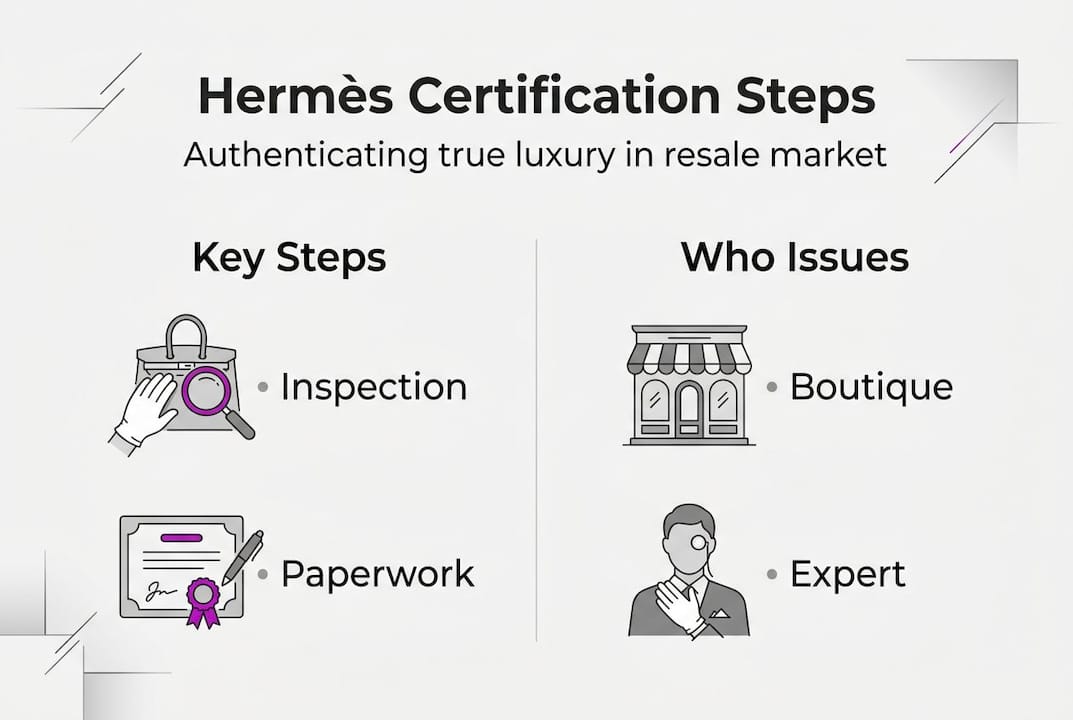
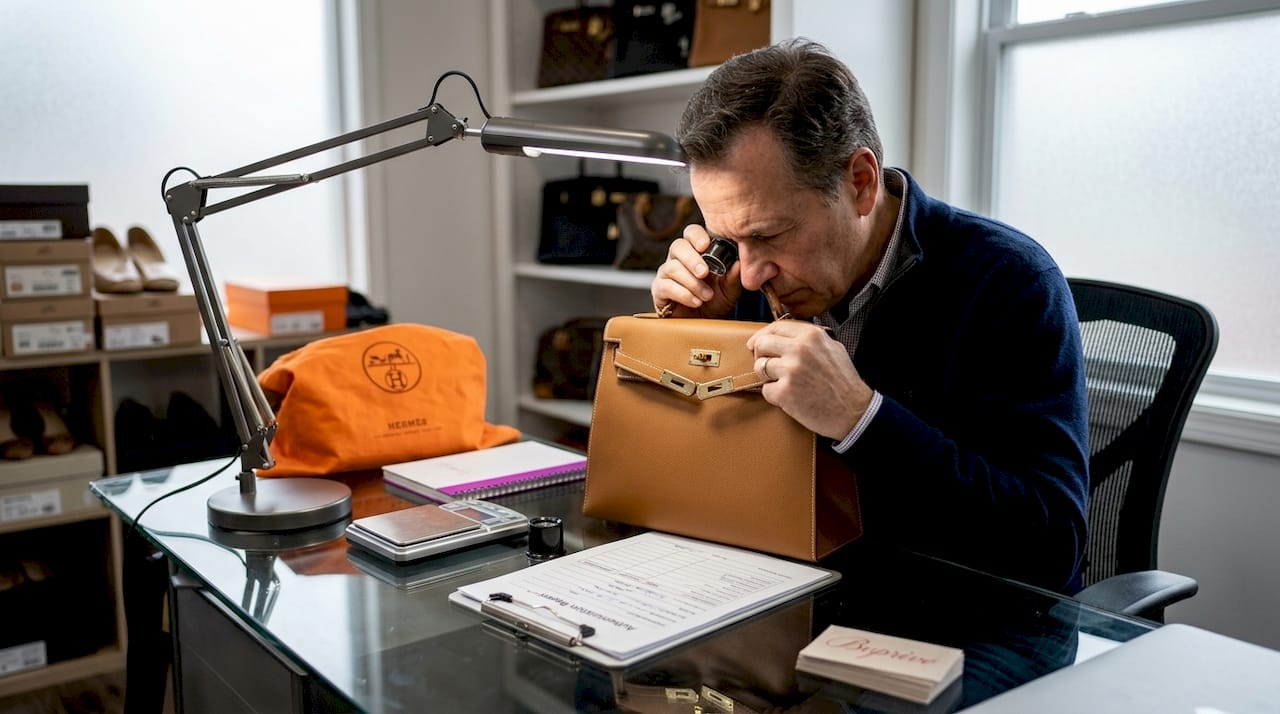
The professional authentication process follows a clear sequence:
- Visual and tactile inspection of leather: Experts examine grain consistency, dye saturation, and the suppleness of the leather. Hermès uses specific tanneries, and the texture of genuine Togo, Epsom, or Clemence leather has a distinct quality that counterfeit materials cannot replicate precisely.
- Blind stamp verification: The craftsperson’s letter code and year symbol are cross-referenced against known Hermès stamp records. Placement, depth, and font are all assessed.
- Hardware examination: Each clasp, buckle, and lock is weighed and measured. Authentic hardware has a specific heft and a clean, sharp engraving.
- Stitching analysis: Hermès bags are hand-stitched using the saddle stitch method. Stitch count per inch, thread color, and tension are consistent across genuine pieces.
- Lining and interior inspection: Interior stamps, thread color, and zipper pulls carry their own markers. Even the smell of the leather and lining is noted by experienced authenticators.
- Documentation review: Any accompanying paperwork, dust bags, boxes, and receipts are examined for authenticity and consistency with the bag’s production year.
The official authentication standards for retailers require this level of rigor. A reputable certification report will document findings from every step above, not just a general pass or fail.
| Certification type | Issued by | Includes written report | Accepted by resale platforms |
|---|---|---|---|
| Boutique purchase documentation | Hermès directly | No | Yes, as supporting evidence |
| Third-party expert certification | Recognized authenticators | Yes | Yes |
| Generic seller authentication | Individual sellers | Rarely | No |
Pro Tip: Always request a written authentication report, not just a verbal confirmation. A report that names the authenticator, lists each identifier checked, and provides a unique reference number is the only documentation worth keeping.
For a deeper look at the full process, the authenticate luxury bags guide provides a step-by-step framework that applies across major luxury houses.
Why Hermès certification matters in the luxury resale market
Understanding the process clarifies its stakes. Now, let’s look at why certification is so highly valued in the luxury market and what it means for your investment.
Certified Hermès bags command measurably higher prices. Rare Birkins offer 40% higher resale value compared to uncertified equivalents, and that premium grows when documentation is complete and verifiable. Buyers in the luxury resale market are increasingly sophisticated. They know what certified status means, and they pay for it.
| Item | Certified resale premium | Without certification |
|---|---|---|
| Hermès Birkin 30 (Togo) | Up to 40% above retail | Discounted or unsellable |
| Hermès Kelly 25 (Epsom) | 25 to 35% above retail | Significant buyer hesitation |
| Hermès Constance (exotic leather) | 50%+ above retail | Extremely difficult to place |
The reasons behind these numbers are straightforward:
- Buyer confidence: Certified status removes doubt. A buyer willing to spend $20,000 or more on a single bag needs certainty, not hope.
- Platform eligibility: Major resale platforms require certification documentation before listing high-value Hermès pieces. Without it, your item simply cannot be sold through reputable channels.
- Insurance and appraisal: Insurers and estate appraisers rely on certification reports to assign accurate values. Without documentation, coverage gaps are common.
- Faster transactions: Certified items sell faster. Buyers do not need to negotiate extended inspection periods or request additional verification.
The Birkin resale value data tells a clear story: certified pieces consistently outperform uncertified ones, regardless of leather type or colorway. For collectors treating their Hermès pieces as assets, certification is not optional. It is the mechanism that converts craftsmanship into documented, transferable value.
Best practices for buyers and sellers seeking certification
With certification’s impact clear, here’s how to put that knowledge to use and minimize risk on your next Hermès investment.
Before purchasing any Hermès item, verify the following:
- Request the full authentication report: Ask for the document, not a summary. Review the authenticator’s credentials and confirm the service is recognized by major resale platforms.
- Cross-reference the blind stamp: Use publicly available stamp guides to verify the year code matches the bag’s stated age and condition.
- Inspect hardware serial numbers: The lock number on the padlock should match any documentation provided. Mismatches are an immediate red flag.
- Confirm provenance: Where possible, trace the item’s ownership history. Original boutique receipts, even decades old, add substantial credibility.
- Use a reputable platform or certified retailer: Purchasing through a platform that conducts its own authentication adds a second layer of protection.
For sellers, the luxury handbag resale workflow recommends obtaining fresh certification even if you purchased the item with documentation. Authentication standards evolve, and a current report from a recognized service carries more weight than older paperwork.
Pro Tip: Never accept a certificate that lacks the authenticator’s name, credentials, and a unique item reference number. Generic certificates with no traceable issuer are worthless in any serious transaction.
Common pitfalls to avoid:
- Relying on photos alone to assess authenticity before purchase
- Accepting seller-issued certificates without third-party backing
- Overlooking the condition of accompanying accessories (dust bag, box, clochette) which are also authenticated
- Skipping certification for “lower value” Hermès items, since even scarves and belts carry significant resale potential
If you’re building a collection, resources like must-have luxury bags for 2026 and the expert guide on how to choose a Hermès Birkin provide valuable context for making informed decisions at every price point.
Our take: The real value of Hermès certification beyond paperwork
After all the practical takeaways, it’s worth stepping back to consider what Hermès certification truly represents for collectors and investors in 2026.
We believe certification is not just a transaction formality. It is the bridge between Hermès’s extraordinary heritage and the future of your collection. A certified piece carries more than proof of authenticity. It carries a verifiable story, a documented chain of custody, and a foundation for insurance, inheritance, and legacy planning that no visual inspection can provide.
Relying solely on visual cues or a seller’s reputation is no longer sufficient. The quality of counterfeits has reached a level where even trained eyes can be misled. Certification, issued by credentialed experts, is the only standard that holds up under legal, financial, and personal scrutiny.
Collectors who understand this use certification not just to buy and sell, but to build estates. The iconic rare Hermès bags that appreciate most dramatically over time are always the ones with complete, traceable documentation. That is not a coincidence. It is the market recognizing that certified provenance is itself a form of craftsmanship.
Get expert support for certified Hermès luxury purchases
Navigating Hermès certification with confidence requires more than research. It requires access to verified pieces, expert guidance, and a platform built on genuine standards.
At BVPRIVE, every Hermès item in our curated collection is authenticated to the highest standard before it reaches you. From rare Birkins to meticulously sourced Kelly bags, our team ensures that your investment is protected at every step. Whether you’re purchasing your first certified Hermès piece or expanding a serious collection, our Hermès authenticity guide and VIP personal shopping service are here to support you. Explore our collection and experience the confidence that comes with certified luxury.
Frequently asked questions
What documentation proves Hermès certification?
Hermès certification is typically proven with branded certificates, unique stamps, or digital authentication reports issued by Hermès or trusted third-party experts. The official authentication standards for retailers outline exactly which documents carry recognized weight.
Does Hermès certification increase resale value?
Yes, certified Hermès bags typically command higher prices in the resale market due to guaranteed authenticity. Rare Birkins command 40% higher resale premiums when full certification documentation is present.
Can I get a Hermès item certified after purchase?
Yes, you can obtain authentication and certification for Hermès items through reputable experts or third-party services specialized in luxury goods. Following a structured resale workflow ensures the certification you obtain will be recognized by buyers and platforms alike.
Does Hermès certification protect against fakes?
Hermès certification provides strong assurance against counterfeits because it follows detailed, expert-reviewed standards. The step-by-step authentication process examines every physical identifier that counterfeit producers consistently fail to replicate accurately.