


Handbag sourcing explained: Key insights for luxury collectors
BVPRIVE Editorial Team on 4th Apr 2026
Handbag sourcing explained: Key insights for luxury collectors
TL;DR:
- True luxury handbag collectors source rare pieces primarily through secondary markets, not boutiques.
- Sourcing involves research, relationships, and targeting channels like auctions, resellers, and vintage boutiques.
- Rarity, condition, provenance, and documentation are key factors influencing long-term value and investment growth.
The assumption that a boutique visit is all it takes to secure a rare Hermès Birkin or a vintage Chanel 2.55 is one of the most persistent myths in luxury collecting. The reality is far more layered. True collectors know that the most coveted designer handbags rarely sit on a shelf waiting to be purchased. They exist in private hands, estate sales, curated resale platforms, and decades-old vintage shops in Tokyo or Paris. This article breaks down what handbag sourcing actually means for serious collectors, where the best pieces are found today, what makes sourced bags so compelling as investments, and how to build a strategy that goes beyond impulse buying.
Table of Contents
- Understanding handbag sourcing: The collector’s lens
- Where collectors source rare handbags today
- What sets sourced bags apart: Rarity, appreciation, and provenance
- Advanced sourcing strategies and collector best practices
- The overlooked realities of handbag sourcing for affluent collectors
- Elevate your collection with expert help
- Frequently asked questions
Key Takeaways
| Point | Details |
|---|---|
| Handbag sourcing defined | Sourcing involves acquiring rare, authentic designer handbags, usually via secondary markets, not from retail stores or direct wholesale. |
| Multiple sourcing channels | Collectors buy through auctions, specialized resale platforms, vintage boutiques, and private networks to access top pieces. |
| Value driven by rarity | Rarity, pristine condition, and established provenance are the most important factors in both appreciation and collectibility. |
| Authenticity is paramount | Verification through trusted experts and platforms is essential to avoid counterfeits and maintain investment value. |
| Strategy maximizes rewards | Smart sourcing, timing, and collector networks can dramatically enhance both portfolio value and enjoyment. |
Understanding handbag sourcing: The collector’s lens
Most people think of buying a luxury handbag as a retail transaction. You walk in, you choose, you pay. But for collectors pursuing rare, investment-grade pieces, the process looks entirely different. Handbag sourcing for luxury collectors involves acquiring rare, authentic designer handbags primarily through secondary markets rather than manufacturing or wholesale counterfeits. It is a specialized discipline that rewards patience, knowledge, and relationships.
At its core, sourcing is about identifying and securing pieces that are no longer available through standard retail channels. This includes discontinued colorways, limited-edition collaborations, exotic leather variants, and bags with significant provenance. A collector sourcing a Kelly 28 in matte alligator is not shopping. They are researching, networking, and negotiating.
Why are boutiques rarely the answer for rare pieces? Several reasons:
- Allocation systems: Brands like Hermès control supply tightly, reserving ultra-rare pieces for their most loyal clients.
- Limited production: Many coveted styles are produced in extremely small quantities, often spoken for before they reach the floor.
- Waitlist culture: Even with a strong purchase history, waitlists for iconic bags can span years.
- Geographic exclusivity: Certain colorways or leathers are produced exclusively for specific regional markets.
This is why the designer handbag buying guide for serious collectors looks nothing like a retail shopping checklist. Sourcing prioritizes four pillars above all else: authenticity, rarity, provenance, and condition. A bag that checks all four boxes is not just a purchase. It is an acquisition.
“The difference between a buyer and a collector is the ability to see a handbag not just as an object of beauty, but as an artifact with a history and a future value.”
Understanding luxury handbag collectibility means recognizing that the secondary market is where the most interesting transactions happen. It is where true rarity lives.
Where collectors source rare handbags today
Knowing what sourcing means is one thing. Knowing where to actually find exceptional pieces is another. Top collectors draw from a range of channels, each with distinct advantages and trade-offs.
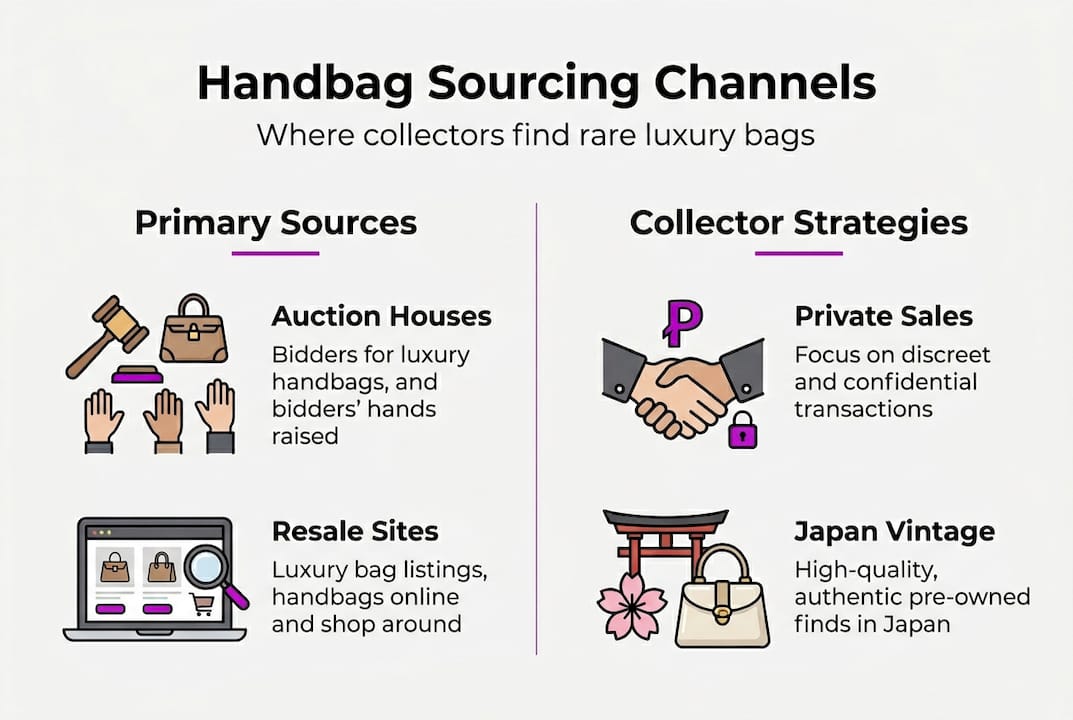
Key methodologies include auction houses such as Sotheby’s and Christie’s, specialized resale platforms like Vestiaire Collective, The RealReal, Fashionphile, and Rebag, vintage boutiques in Japan and Europe, estate sales, and private collector networks.
Here is how these channels compare:
| Sourcing channel | Strengths | Weaknesses |
|---|---|---|
| Auction houses | Provenance documentation, rare lots | High buyer’s premiums, competitive bidding |
| Resale platforms | Wide selection, authentication services | Variable condition, price inflation |
| Japan/Europe vintage boutiques | Pristine condition, unique finds | Travel required, language barriers |
| Estate sales | Below-market pricing possible | Inconsistent authentication |
| Private networks | Exclusive access, negotiable terms | Requires established relationships |
For collectors building a serious portfolio, the designer bag reseller list matters enormously. Not all resellers operate with the same standards of authentication or transparency.
Here is a practical approach to navigating these channels:
- Start with reputable platforms to build familiarity with condition grading and pricing benchmarks.
- Attend auction previews in person when possible to assess condition directly.
- Cultivate relationships with vintage boutique owners in cities like Osaka, Paris, and Milan.
- Join collector communities online and offline to gain access to private sales before they go public.
- Track the handbag resale workflow steps to understand how pieces move through the market.
Pro Tip: Platforms like Rebag offer same-day purchase offers on pieces you want to sell, which frees up capital quickly for new acquisitions without waiting weeks for a buyer.
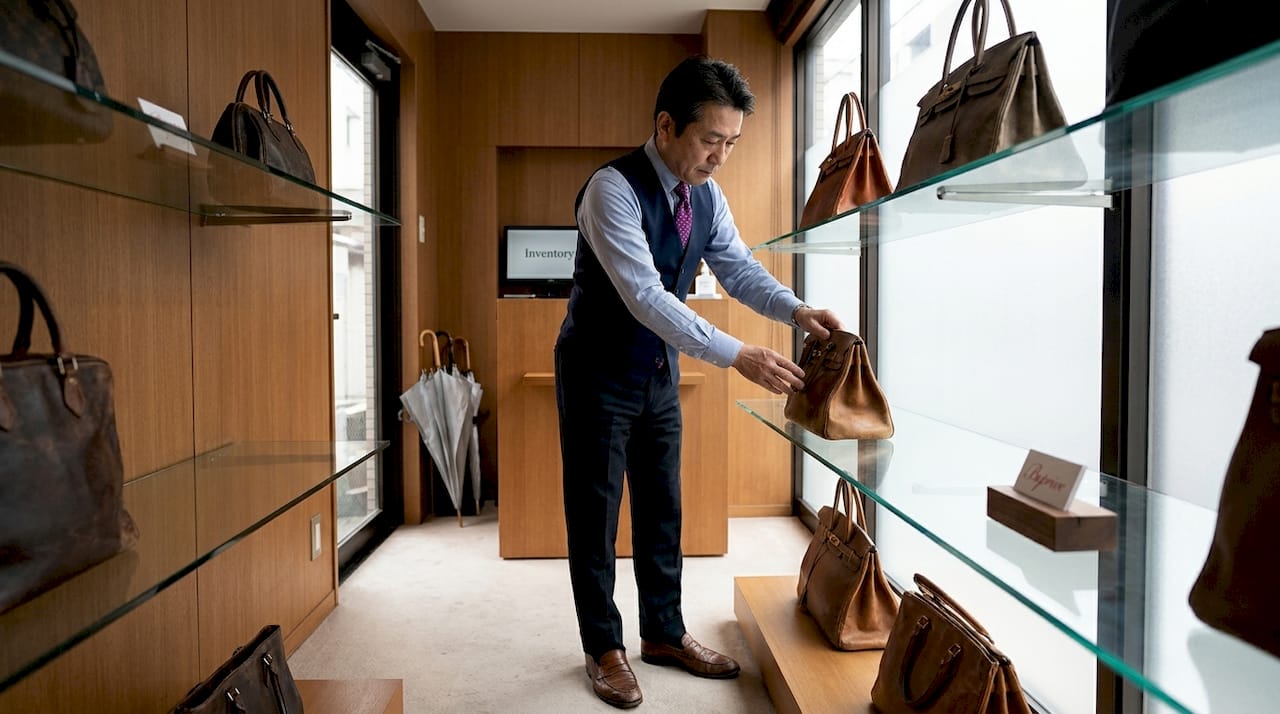
The Japan vintage scene deserves special mention. Japanese collectors are known for maintaining bags in near-pristine condition, often storing them with original dust bags, receipts, and packaging intact. Finding a 1990s Chanel flap from a Tokyo boutique in store-fresh condition is not unusual. It is one of the reasons serious collectors actively seek out Japanese inventory.
What sets sourced bags apart: Rarity, appreciation, and provenance
The financial case for sourced luxury handbags has grown significantly stronger over the past decade. Birkin bags have appreciated at 14% annually from 1980 through 2024, with the pre-owned market projected to exceed $52 billion by mid-2026, and Europe accounting for 36% of global luxury market share.
These are not trivial numbers. A well-sourced Birkin can outperform many traditional asset classes over a comparable holding period. But not every sourced bag delivers the same return. The variables that determine long-term value include:
- Rarity: Limited editions, discontinued leathers, and special orders command significant premiums.
- Condition: Store-fresh bags with full sets (box, dust bag, receipt, care booklet) are worth substantially more than pieces showing wear.
- Provenance: Documentation of original ownership, especially from a notable figure, adds measurable value.
- Colorway and hardware: Certain combinations are produced in extremely small runs and attract fierce collector demand.
Consider the handbag investment guide perspective: a Himalayan Birkin in niloticus crocodile with palladium hardware is not just rare. It is arguably the most sought-after handbag in existence, with auction records exceeding $400,000. That kind of appreciation does not happen by accident. It reflects decades of controlled supply, impeccable craftsmanship, and an almost mythological status in the collector world.
Provenance adds another dimension entirely. A bag once owned by a cultural icon, accompanied by photographs and documentation, carries an emotional and historical weight that pure market forces cannot fully price. This is where sourcing intersects with storytelling. The role of trends in designer bags also influences which styles gain traction in the resale market, making timing a critical factor for collectors who want to maximize returns.
Advanced sourcing strategies and collector best practices
Sophisticated collectors do not simply accumulate. They manage their collections with intention, regularly evaluating which pieces to hold and which to sell in order to fund higher-priority acquisitions.
Brands like Louis Vuitton and Hermès maintain strict distribution policies with no direct wholesale access, which forces collectors to be creative. Japan remains the gold standard for pristine vintage due to its deeply ingrained care culture, and upgrading a collection by selling new or limited editions to fund rarer pieces is a proven strategy among experienced buyers.
Here is a structured approach to advanced sourcing:
- Audit your current collection annually and identify pieces that have appreciated significantly but no longer align with your focus.
- Sell strategically to platforms or private buyers who understand value, not just price.
- Prioritize documentation from the moment of purchase. Store receipts, authentication cards, and original packaging meticulously.
- Target Japan-sourced inventory when seeking vintage pieces in exceptional condition.
- Build relationships with specialist dealers who have access to pieces before they reach the open market.
Pro Tip: Networking with other serious collectors is one of the most underrated sourcing strategies. Private sales between collectors often happen at fair prices, with full transparency on provenance and condition, bypassing platform fees entirely.
Authentication is non-negotiable at this level. Use third-party authentication services for any significant acquisition, and never rely solely on seller assurances. The guide to investing in designer handbags recommends building a relationship with at least one trusted authenticator who specializes in your target brands.
Protecting value also means understanding storage. Temperature control, humidity management, and proper stuffing to maintain shape are essential. Review luxury bag investment tips for detailed guidance on long-term preservation.
The overlooked realities of handbag sourcing for affluent collectors
There is a version of handbag sourcing that looks glamorous from the outside: rare finds, effortless connections, bags appearing as if by magic. The reality is considerably more demanding. Most serious collectors spend years building the knowledge base, relationships, and market intuition required to source at a high level. Timing matters enormously. A coveted piece listed on a Tuesday morning in Tokyo may be gone by Wednesday afternoon in New York.
The Japan advantage is real, but it is also increasingly well-known. As more international buyers have discovered Japanese vintage boutiques, pricing has adjusted accordingly. The edge now belongs to collectors who have cultivated direct relationships with shop owners rather than simply browsing online listings.
Emotional value is also worth acknowledging honestly. Some pieces in a collection will never be the strongest financial performers, but they carry personal significance that no appreciation rate can capture. Knowing when to hold a bag for its story rather than its market value is a mark of a truly mature collector. Equally, knowing when to sell without sentiment is what separates collectors who build wealth from those who simply accumulate beautiful objects. The exclusive designs insights available today can help you identify which pieces are gaining cultural momentum, making the hold-versus-sell decision more informed.
Elevate your collection with expert help
For collectors who want to move beyond independent research and into a more curated, supported sourcing experience, the right partnership makes all the difference.
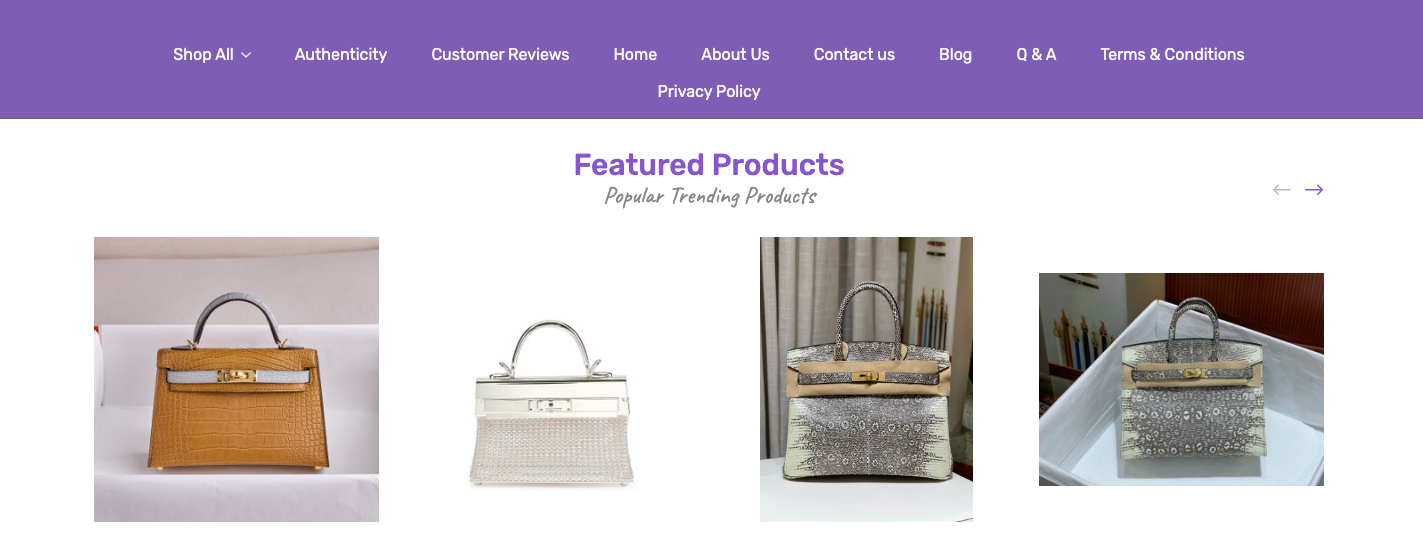
At BVPRIVE, we specialize in sourcing authentic, rare, and limited-edition designer handbags from Hermès, Chanel, Louis Vuitton, Fendi, and Christian Dior. Our curated inventory is meticulously authenticated, and our VIP personal shopping service connects you with pieces that match your specific collecting goals. Whether you are searching for a Birkin in a discontinued leather or a vintage Kelly with full documentation, our team brings the expertise and network to find what the open market cannot. Tax-free worldwide delivery and white-glove service are standard. Your collection deserves nothing less.
Frequently asked questions
How do you verify authenticity when sourcing handbags?
Work with reputable platforms, request full documentation including receipts and authentication cards, and engage third-party authentication services for any significant acquisition to ensure the piece is genuine.
Why are rare handbags often sourced from Japan or Europe?
Japan is renowned for pristine vintage condition due to a deeply ingrained care culture, while Europe’s proximity to original maisons and its 36% global luxury market share make it a natural hub for rare finds.
What is the investment potential of sourced luxury handbags?
Iconic bags like the Birkin have demonstrated 14% annual appreciation from 1980 through 2024, making them one of the most consistent performers among alternative asset classes.
Can you buy directly from brands like Hermès or Louis Vuitton for rare bags?
No. These brands maintain strict distribution policies with no direct wholesale access, which means collectors must rely on auctions, specialist resellers, or private networks to acquire their most coveted pieces.
What should I prioritize when sourcing a bag to ensure long-term value?
Focus on authenticity, rarity, pristine condition, and complete documentation including original packaging and purchase receipts, as these factors drive both appreciation and resale desirability.